Siding
Engineered Wood vs Fiber Cement Siding in Connecticut
Engineered wood siding costs less and cuts like lumber. Fiber cement resists moisture and fire better. Here is how the two compare on a Connecticut house.
Read the article
Choosing, pricing and installing siding in a climate that swings from Sound wind to valley snow — including what changes when the material changes.
Engineered wood siding costs less and cuts like lumber. Fiber cement resists moisture and fire better. Here is how the two compare on a Connecticut house.
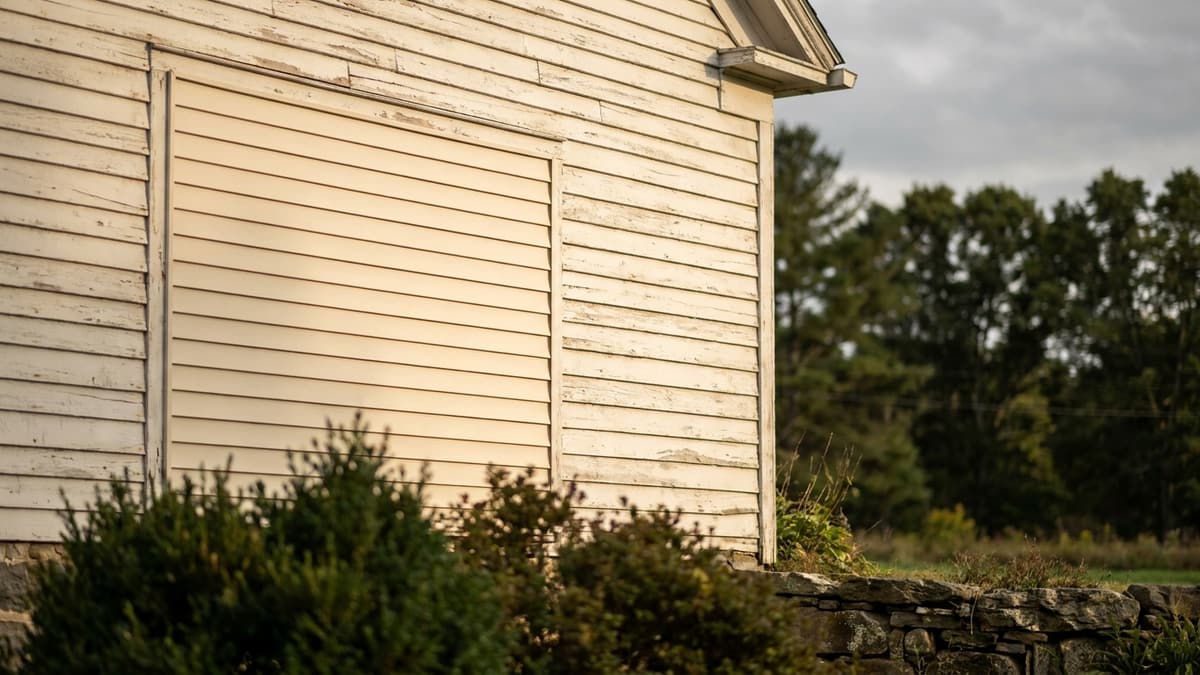
Read the articleA siding repair matches when the profile, color and panel line still exist. Here is how to check, what sun fading does, and when a wall section is the fix.
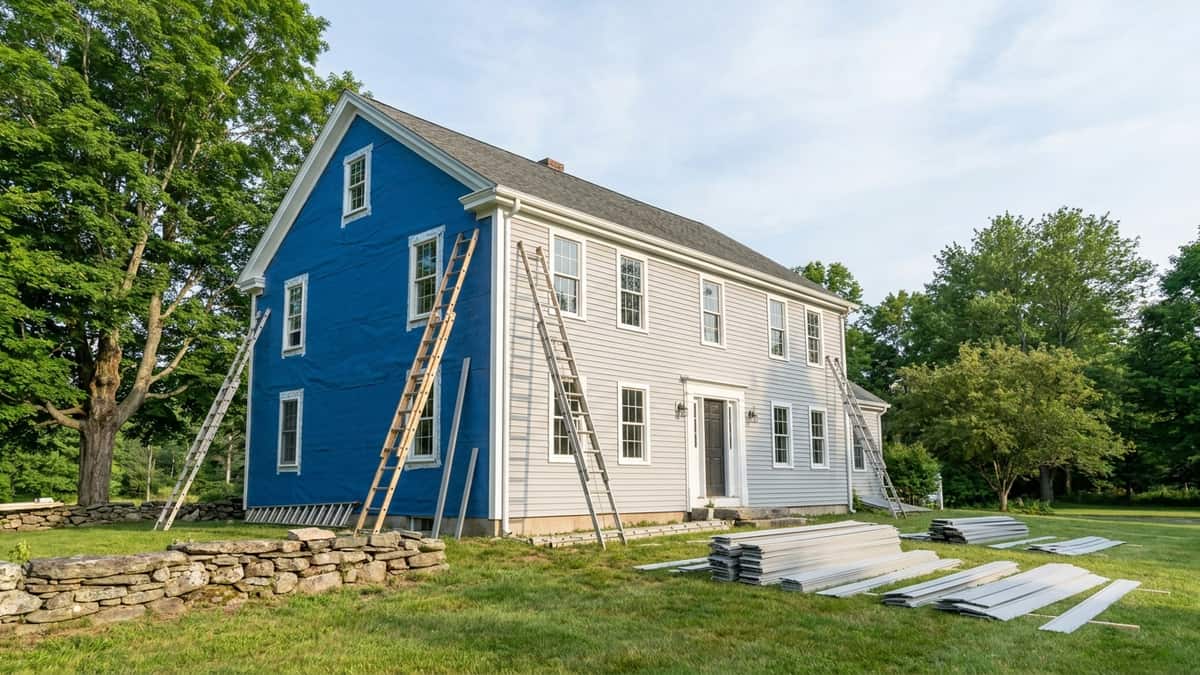
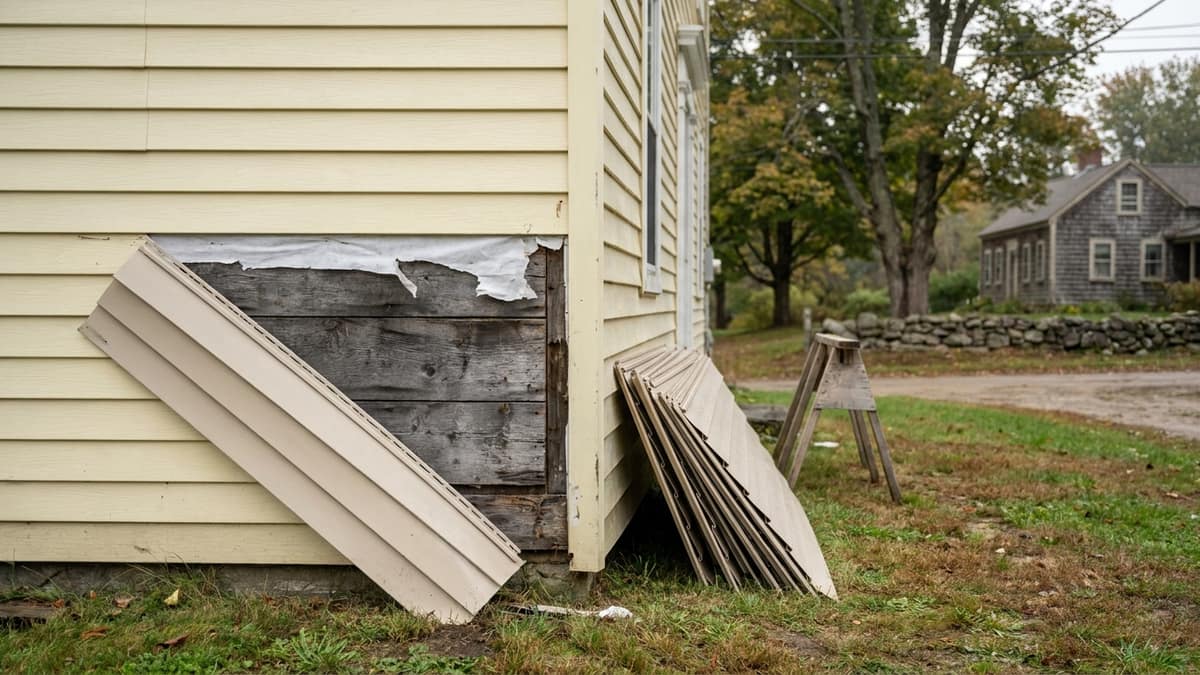
Most Connecticut siding jobs run three to ten days on site. Here is what sets the schedule, what stretches it, and what happens behind the old siding.
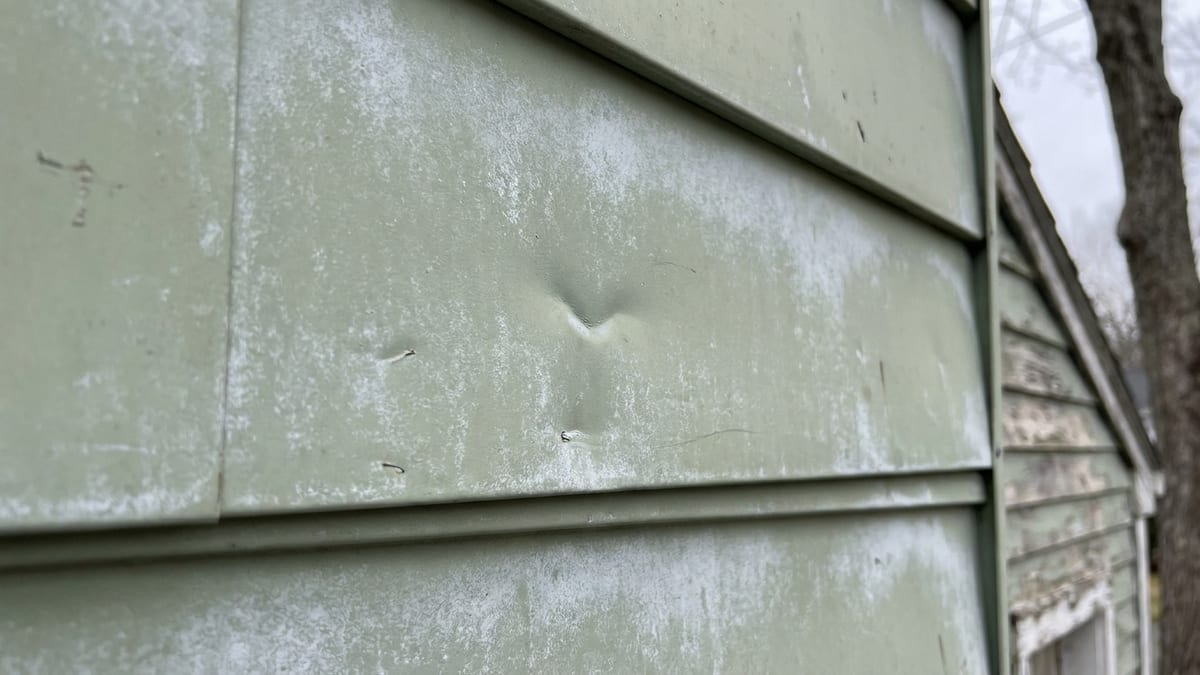
Aluminum siding that is only chalky and dented can be painted. Replacing it in Connecticut generally runs $8,000 to $35,000 for vinyl, more for fiber cement.
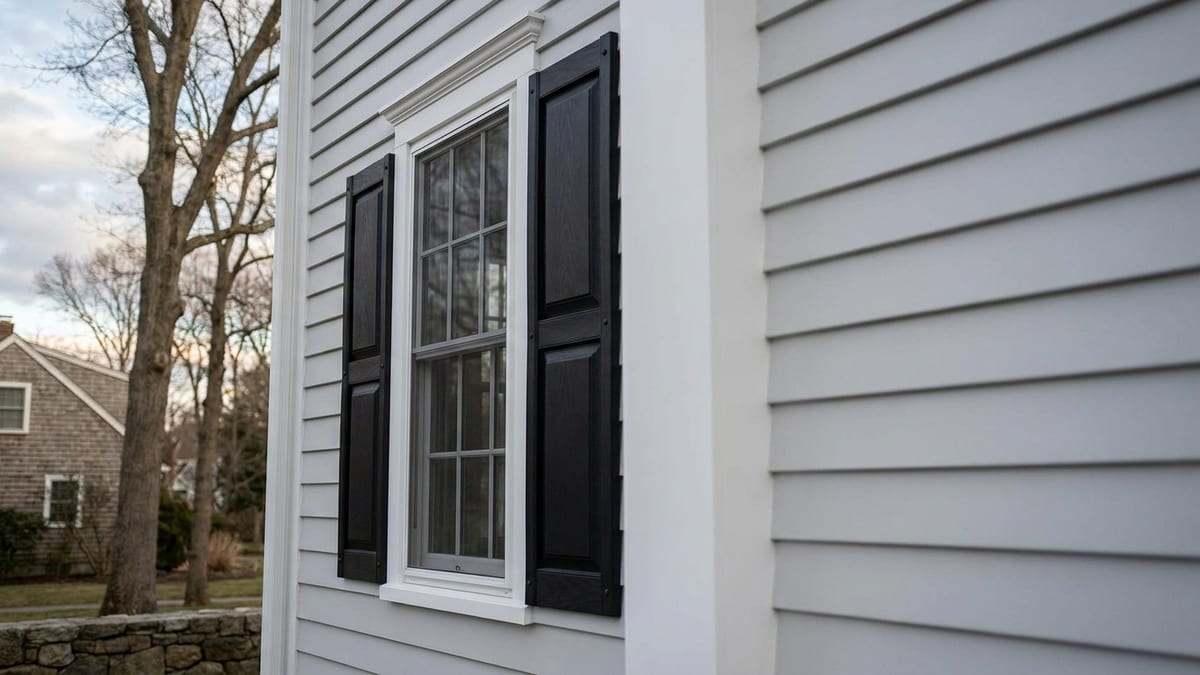
Most vinyl shutters do not survive removal, and new siding changes the wall they mount to. Here is when reusing shutters makes sense in Connecticut.
Replacing siding on just the second story or one wall costs less up front, but color match, scaffolding and flashing decide whether it is a real saving.
Vinyl siding can be installed in Connecticut winters. Cold makes the panels brittle and changes how they move, so cutting, nailing and spacing all change.
Manufactured stone veneer accents typically add a few thousand dollars to a Connecticut siding job. Here is what drives the price and when it is worth it.
PVC exterior trim costs more up front and never rots. Wood costs less, paints beautifully and needs repainting. Here is how the two compare on a Connecticut home.
Board and batten costs more than lap siding in the same material. Connecticut vinyl runs $8,000 to $35,000 and James Hardie $18,000 to $80,000 or more.
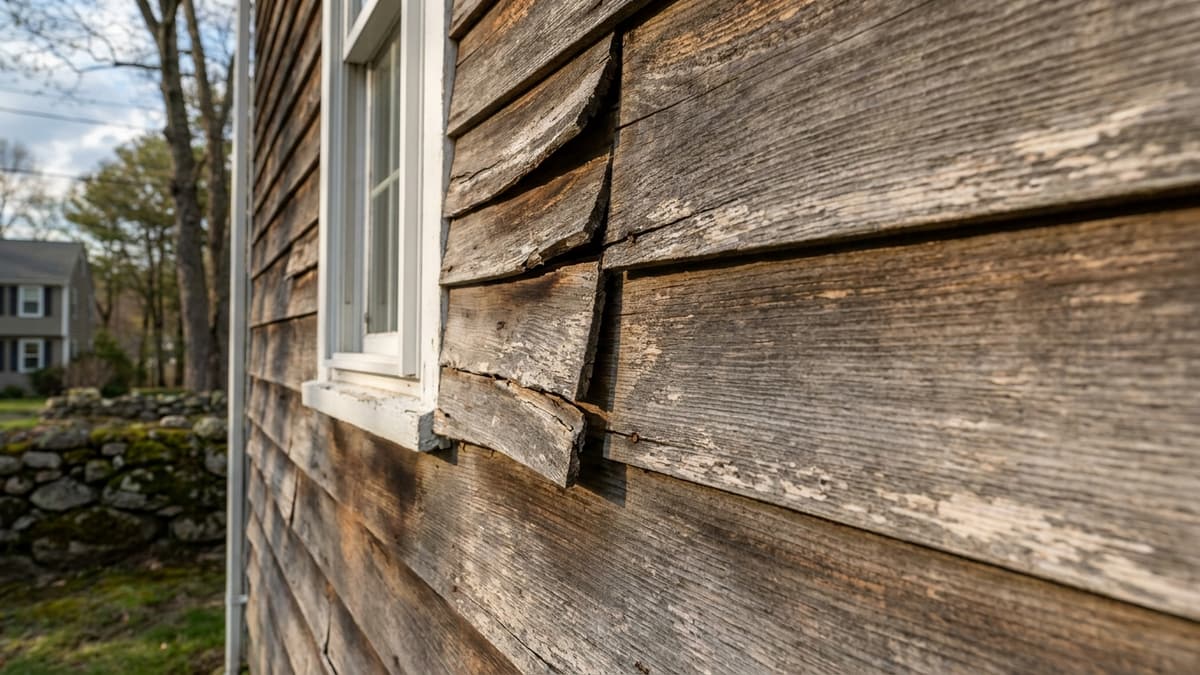
Cedar clapboard that is weathered but sound should be cleaned and restained. Replace boards once cupping, splitting and rot reach the sheathing behind them.
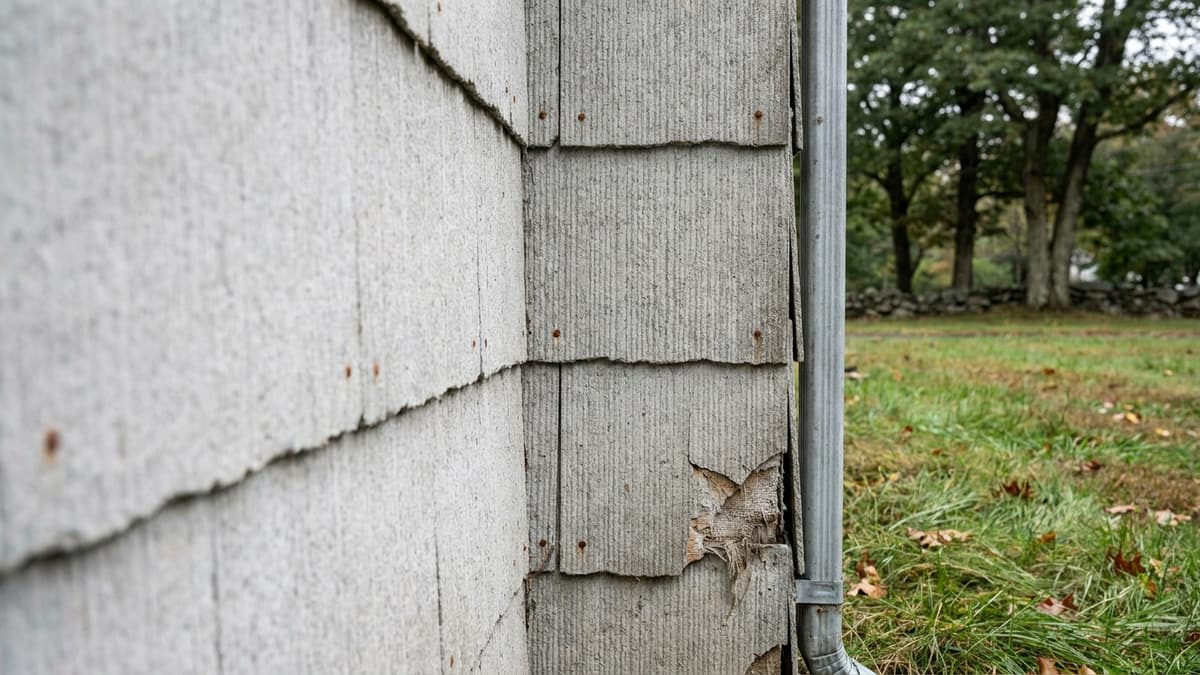
Asbestos cement siding is common on pre-1980 Connecticut homes. Here is what removal adds to a siding job, who is allowed to do it, and how to plan the cost.
Salt air corrodes fasteners and flashing faster than it damages siding. Here is how vinyl, fiber cement and cedar hold up on the Connecticut shoreline.
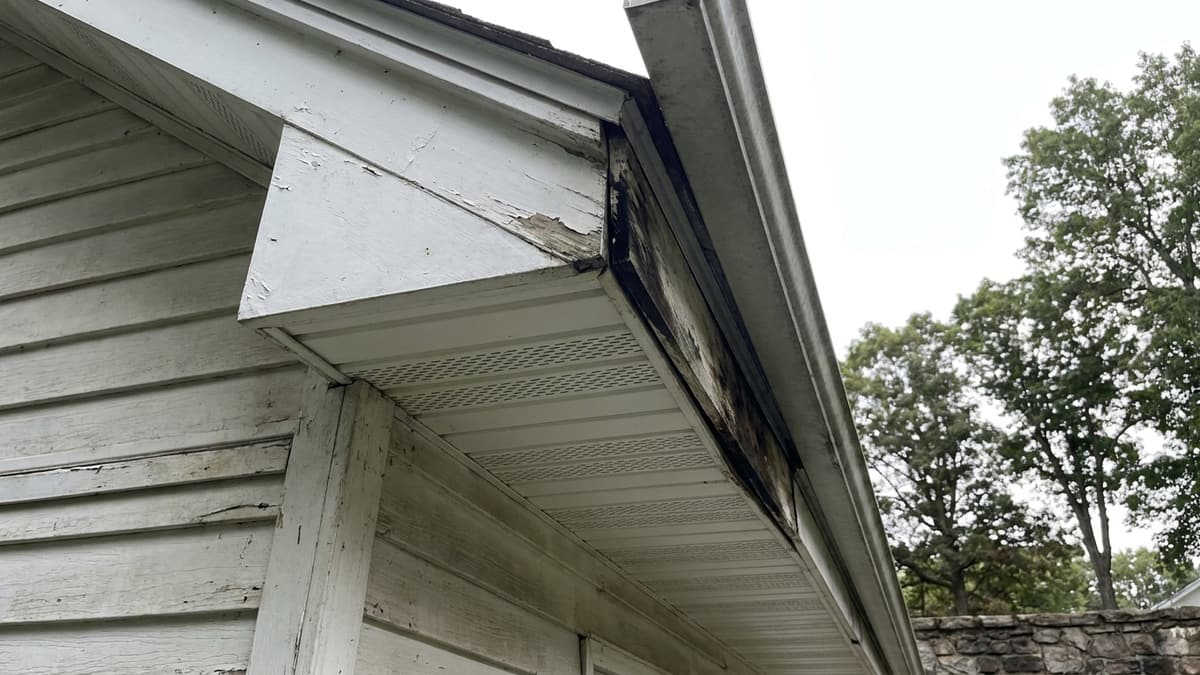
Soffit and fascia replacement is usually a line item on a siding quote, not a separate job. Here is what it costs, when it is needed, and when to skip it.
Repainting wood siding buys 5 to 10 years for a few thousand dollars. Replacement costs far more and lasts decades. Here is how the ten-year math works.
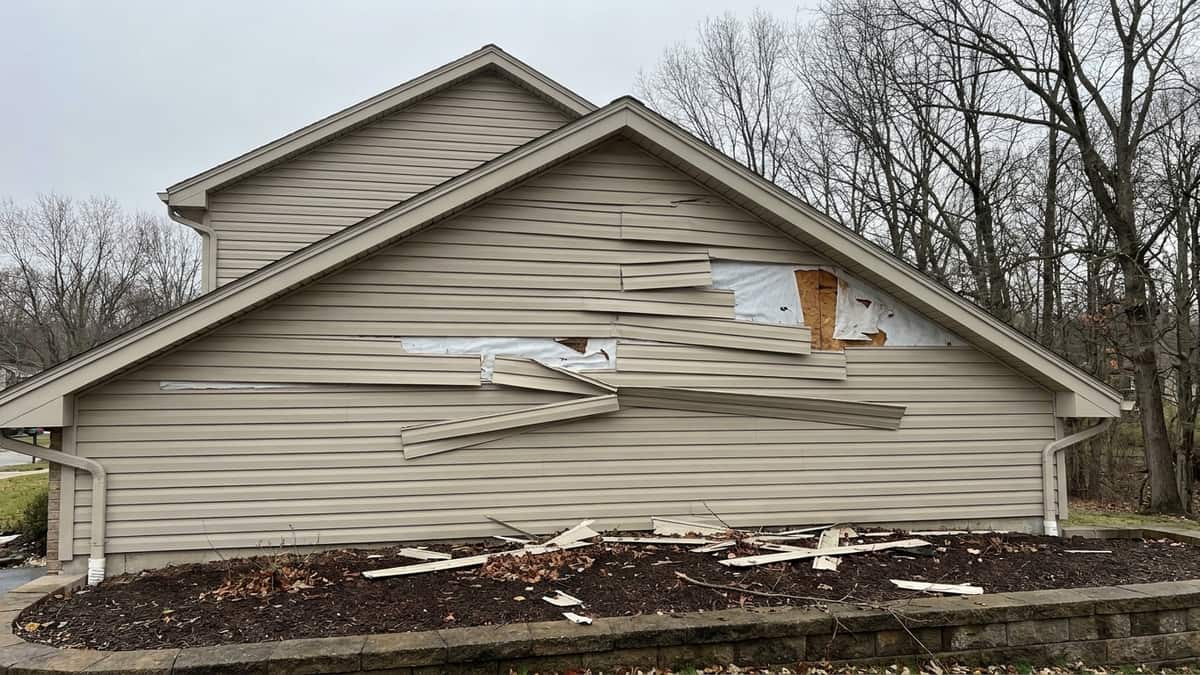
Wind can crack a few vinyl panels or open a whole wall. Here is how Connecticut homeowners decide between a patch, one wall, or a full siding replacement.
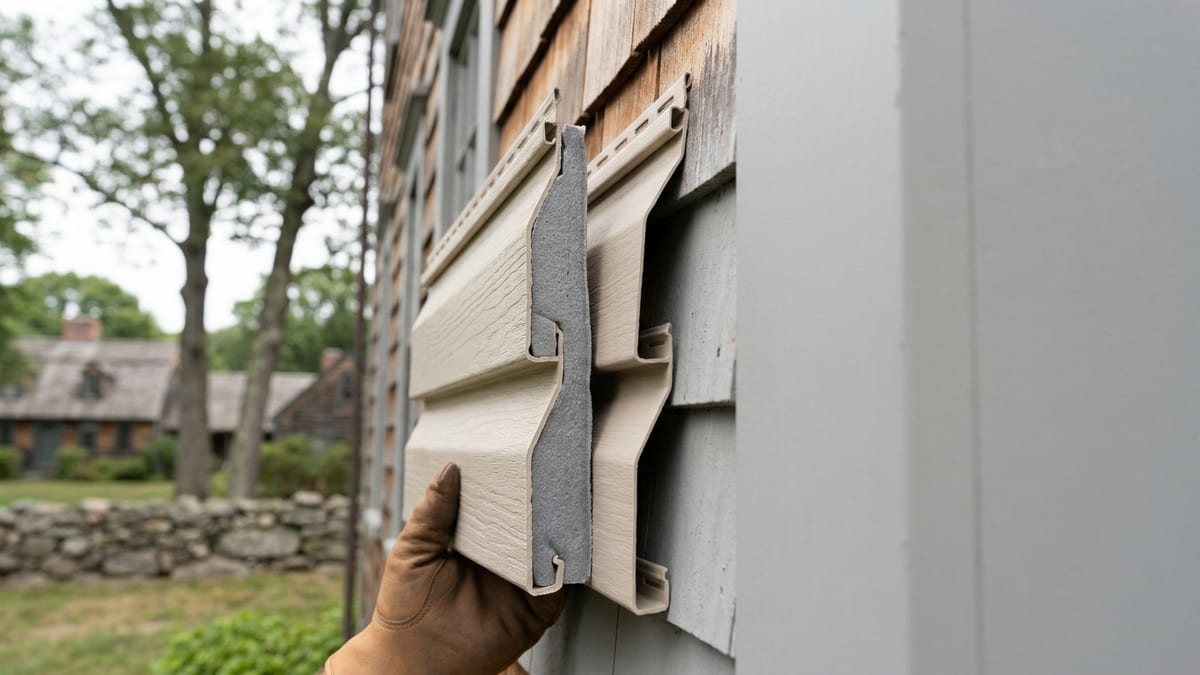
Insulated vinyl siding adds R-2 to R-3 and a rigid backing that resists dents and waviness. Here is when that upcharge pays off on a Connecticut home.
Siding over siding is legal in most cases but hides the wall. Here is when a layover works, when it costs you, and what Connecticut code requires.
Under CGS Sec. 7-147f(a), like-for-like siding in a Connecticut historic district needs no Certificate of Appropriateness. Changing material type does.
Vinyl siding panel thickness runs from about 0.040 to 0.055 inch, and the gauge changes rigidity, lock strength and price. Here is what it buys you in Connecticut.
Siding sheds most water, not all of it. The house wrap, lapping direction, window flashing and kickout flashing behind it are what keep a Connecticut wall dry.
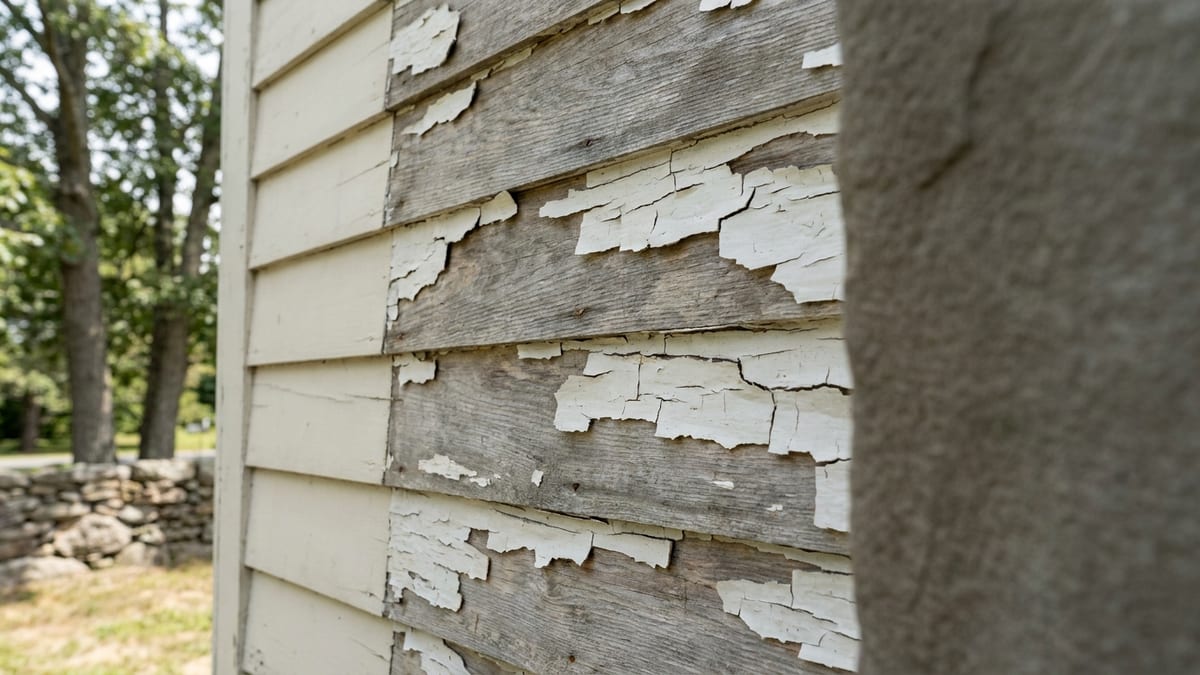
Faded siding is cosmetic. Soft sheathing, interior stains and gaps at the trim are not. Here is how to tell which problem you actually have on a Connecticut home.
Fiber cement and vinyl fail in different ways and cost very different money. An honest comparison for Connecticut houses, including when vinyl is the better buy.
Vinyl runs about $8,000 to $35,000 and fiber cement $18,000 to $80,000 in Connecticut. Here is what sets your position in those ranges, and what a quote should say.
Book a free on-site estimate and one of our team will look at what you actually have, measure it, and put the number in writing.