Short answer
Faded, chalky or dated siding is a cosmetic problem you can decide about on your own schedule. Siding that has failed lets water into the wall, and the signals for that are interior stains, soft or springy sheathing, gaps opening at trim and openings, and paint that will not hold on the inside of an exterior wall.
On this page
Siding gets replaced for two very different reasons, and mixing them up is expensive in both directions. One reason is that the house looks tired. The other is that the wall is getting wet. The first is a preference. The second is a deadline.
What is cosmetic
These will not damage your house. Address them when you feel like it.
- Fading. Every exterior finish fades. Darker colors more than lighter.
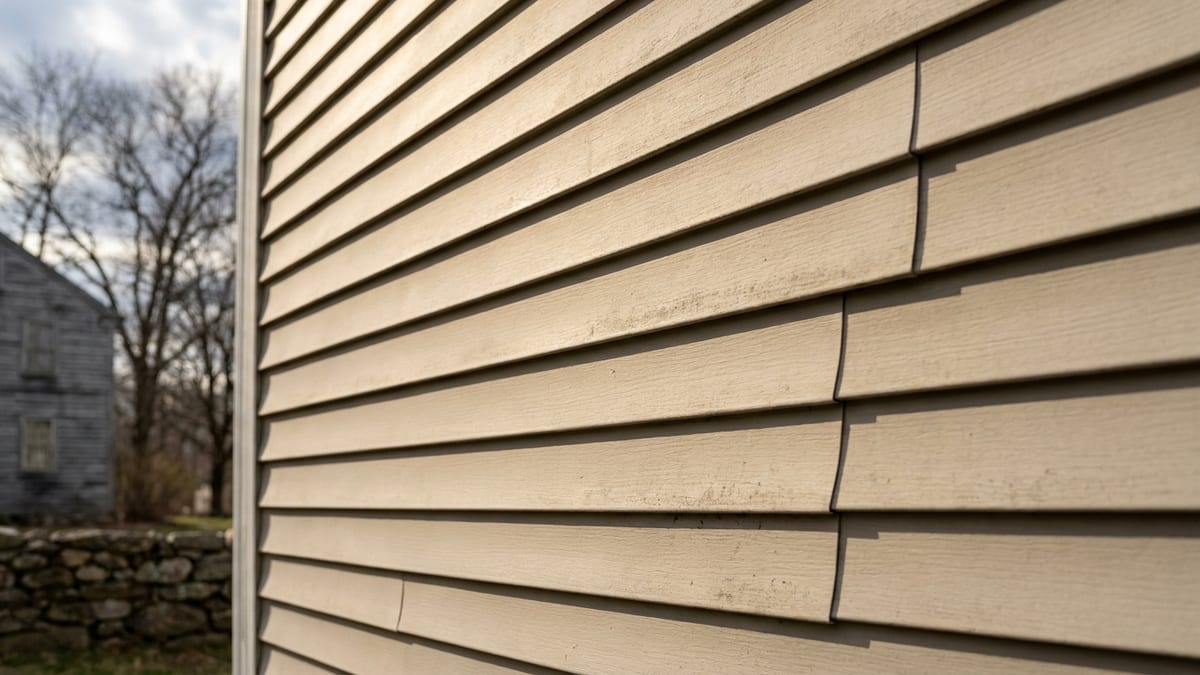
- Chalking. The powdery residue on older vinyl when you run a hand across it. It is surface oxidation.
- Dated profile or color. A style question, not a performance one.
- Minor dents and scuffs. Ugly, not structural.
If this is your list, you have a decorating decision with no clock on it. Take the time to get the material choice right.
What means water is getting in
These are the ones that matter.
Interior stains on an exterior wall
Discoloration on the inside face of an outside wall, particularly under a window or in a corner, means water has crossed the wall assembly. By the time it shows on drywall it has been going on for a while.
Soft or springy sheathing
Press firmly on the wall — low down, near outside corners, under windows. Solid sheathing feels solid. If it gives, the boards or plywood behind the siding are wet and softening.
This is the single most reliable check a homeowner can do without tools, and almost nobody does it.
Gaps at trim, corners and openings
Look at where the siding meets a window, a door, a corner post or the roofline. Those junctions are where water is directed away by flashing and sealant. Open gaps mean that detail has failed. Water follows gravity into whatever is behind it.
Paint that will not hold
On painted siding, paint that peels within a season or two is usually being pushed off from behind by moisture in the wall, not failing from the front. Repainting it again will produce the same result.
Growth on the wall
Moss or persistent damp patches low on a wall mean water sitting where it should be draining.
Pests
Carpenter ants and similar are attracted to damp, softened wood. Finding them at the base of an exterior wall is a symptom of a moisture problem, not just a pest problem.
Where Connecticut walls actually fail
The failures cluster in predictable places:
- Under windows. Water runs off the glass and down. If the sill flashing is wrong or absent, it goes into the wall instead of out over the siding.
- At the bottom of walls. Splashback, snow banked against the wall, and grade that is too high all put water where siding was not designed to hold it.
- Where roof meets wall. A roof edge terminating into a wall needs kickout flashing to throw water out onto the siding. Missing kickout flashing is one of the most common causes of a rotted wall cavity in this region.
- On the weather side. Along the shoreline, wind off the Sound drives rain horizontally onto whichever elevation faces it. Horizontal rain gets behind cladding that would shed vertical rain fine.
Note what all four have in common: they are flashing and detailing failures, not panel failures. The siding material is rarely the thing that failed.
Repair or replace
Repair when the damage is in one place, the material is still available to match, and the wall behind is sound.
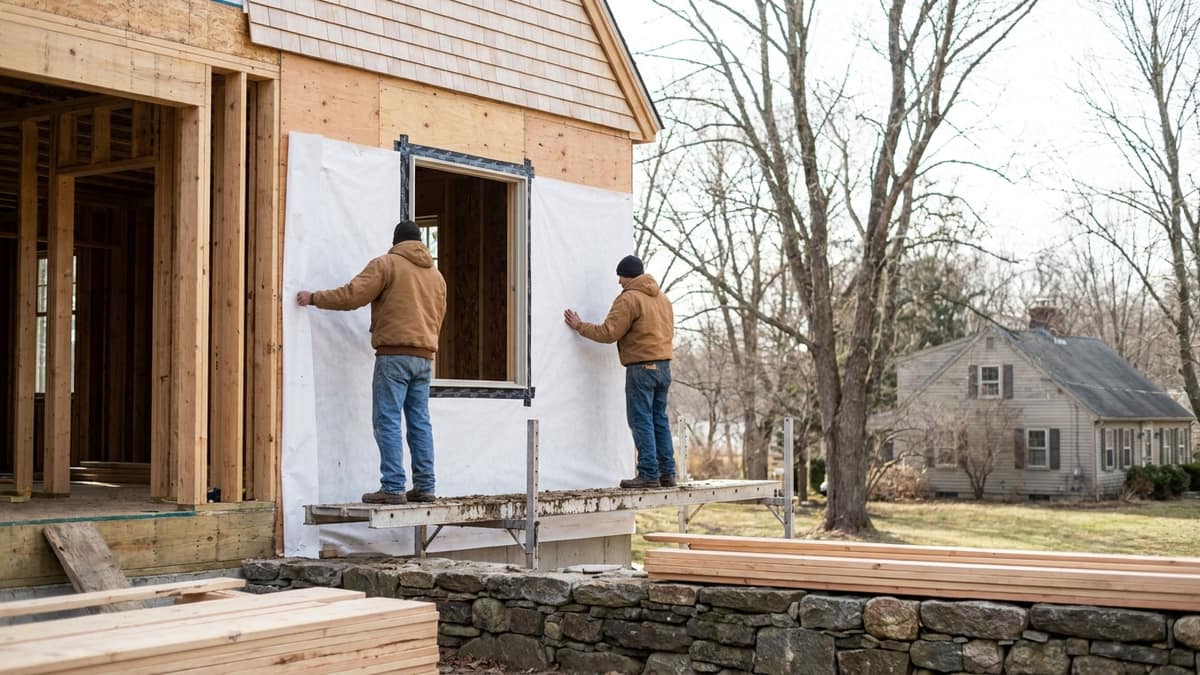
Replace when failures are showing in several places, when the sheathing is soft over an area rather than a spot, or when you are opening the wall up anyway and the siding is old enough that putting it back makes no sense.
The honest middle case: a wall gets opened for a localized repair and the rot turns out to be wider than expected. That is why a good siding quote states a sheathing repair rate before work starts — so the discovery is priced, not negotiated. There is more on that in what siding costs in Connecticut.
What to do next
If you found cosmetic items only, you have time. If you found soft sheathing or an interior stain, get the wall looked at before the next wet season rather than after it.
We work across fifteen Connecticut towns and will tell you honestly which of the two lists you are on. A free estimate includes checking the junctions where these failures actually start, not just the panels you can see from the driveway. You can also read about our siding work.