Short answer
Vinyl siding on a Connecticut home generally runs $8,000 to $35,000, James Hardie fiber cement $18,000 to $80,000 or more, and cedar $25,000 to $60,000 or more. Where you land depends far more on wall area, trim complexity and what is found behind the old siding than on the material alone.
On this page
Siding quotes vary more than roofing quotes, and for a reason that is easy to miss: two contractors can propose genuinely different amounts of work behind the same visible result.
Here are the ranges, what moves them, and where the money usually hides.
The ranges
General figures for Connecticut homes. Your own number depends on the specifics below.
| Material | Typical range |
|---|---|
| MaterialVinyl siding | Typical range$8,000 – $35,000 |
| MaterialJames Hardie fiber cement | Typical range$18,000 – $80,000+ |
| MaterialCedar siding | Typical range$25,000 – $60,000+ |
Those ranges are wide because they cover everything from a small ranch to a large colonial. Fairfield County projects tend to sit higher, which is a size and complexity effect more than a market one.
What actually sets the price
Wall area, not floor area
Siding is priced on the area of wall being covered. A two-story house with the same footprint as a ranch has roughly twice the wall. Gable ends, dormers and bump-outs all add area that never shows up in the square footage of the house as listed.
Trim and detail count
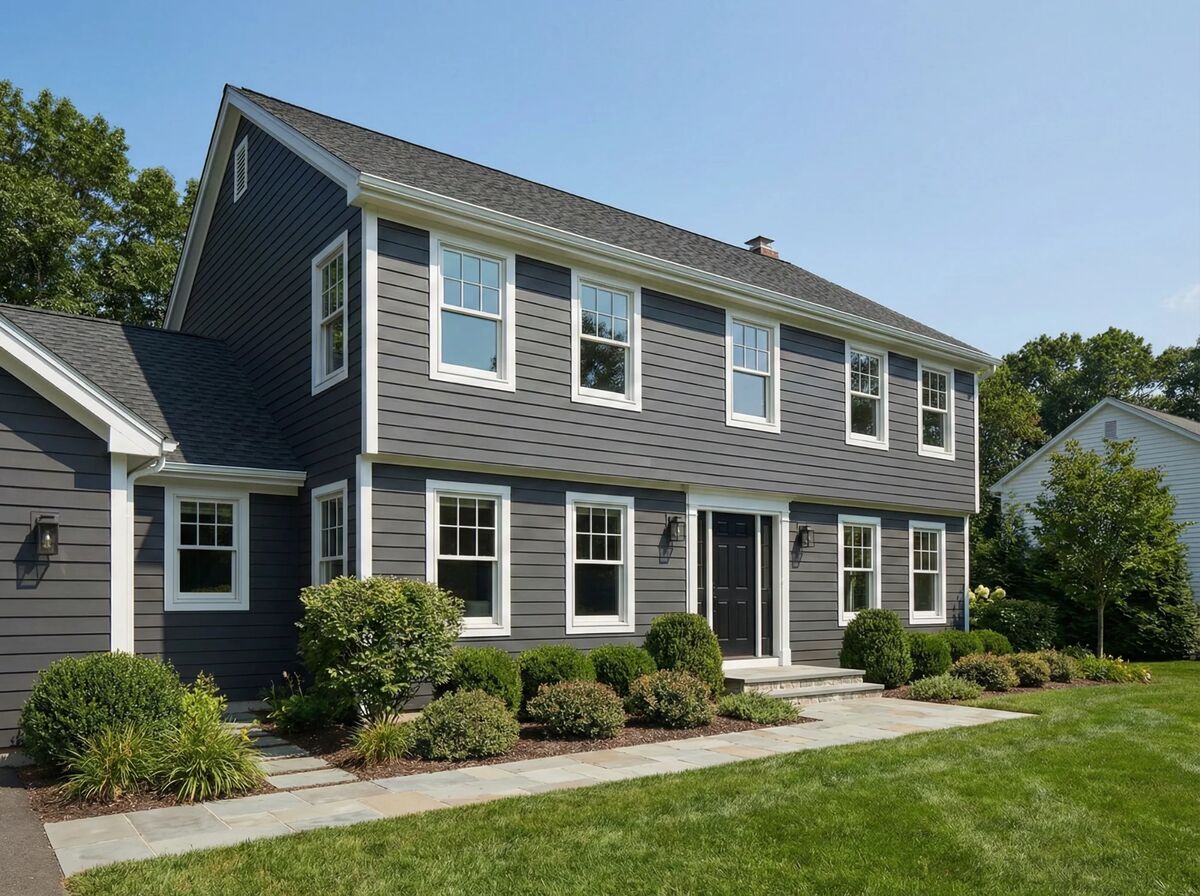
This is the item homeowners underestimate most. Every window and door needs to be trimmed and flashed. Every outside corner needs a corner treatment. Soffit, fascia, frieze boards, water table, rakes — the material is a fraction of the labor on a detailed house.
A house with twenty windows costs meaningfully more to side than a house with twelve, at identical wall area.
What is behind the old siding
The sheathing under your siding has been out of sight for decades. Once the old cladding is off, you find out. Rot around windows, at the base of walls, and anywhere flashing failed is common — and it is the single most likely reason a siding job comes in above the quoted number.
A good quote states a per-sheet or per-square-foot rate for sheathing replacement before work begins. That way the discovery is a line item at a known price rather than a negotiation with a crew already on site.
Removal and disposal
Taking off one layer of vinyl is straightforward. Taking off cedar shingle over board sheathing, or two layers of anything, is more labor and more disposal weight.
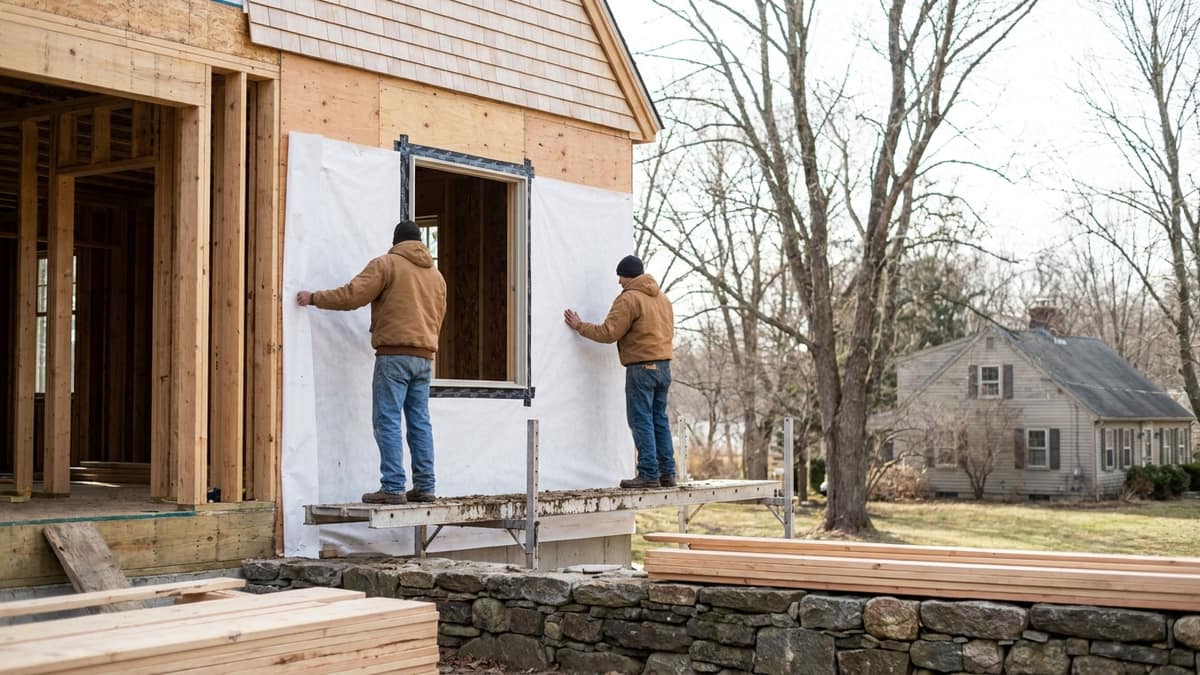
The house wrap and moisture barrier
Behind the siding there is a weather-resistive barrier whose job is to handle any water that gets past the cladding — because water always eventually gets past the cladding. The quality of that layer and the way it is lapped and flashed around openings is invisible after installation and is the difference between a wall that dries and a wall that rots.
Material differences that matter in this climate
Connecticut runs a hard cycle: wet springs, humid summers, freeze-thaw winters, and along the shoreline, wind off the Sound with salt in it.
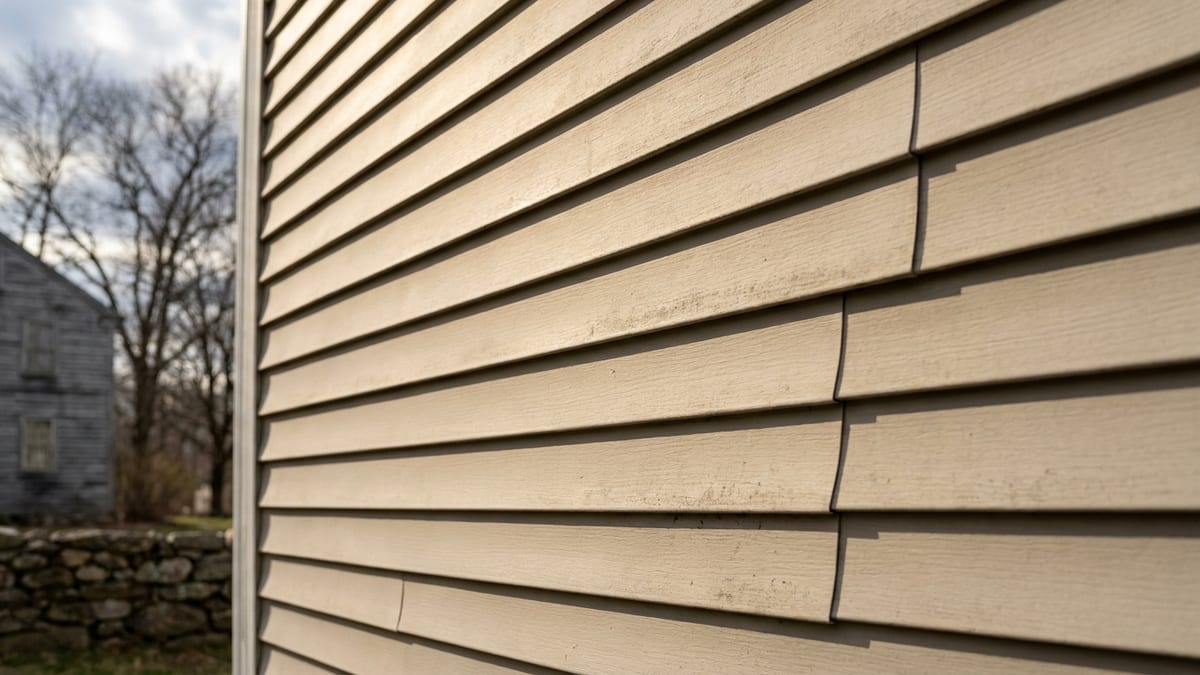
- Vinyl is the volume product. It does not rot, needs no painting, and is the least expensive to install. It expands and contracts with temperature, which is why correct nailing matters — a vinyl panel nailed tight instead of allowed to float will buckle in summer.
- Fiber cement is heavier, more dimensionally stable and holds paint well. It carries a 30-year non-prorated warranty from James Hardie. It costs more to install because it is heavier and needs different cutting and fastening.
- Cedar is a natural material with a natural material's maintenance schedule. It is the most expensive to buy and to keep.
We compare the two most common choices in detail in James Hardie vs Vinyl Siding.
What a siding quote should tell you
Before you compare totals, make sure both quotes state:
- The product line, not just the material. Vinyl grades vary widely in thickness and lock design.
- The trim package. What gets wrapped, in what, and around what.
- The house wrap and how openings are flashed.
- The sheathing repair rate.
- Whether a permit is needed. For a like-for-like replacement in most towns, no. Add exterior insulation or replace sheathing and that changes — see our post on permits.
- What happens to the old material.
Historic districts
If the house is in a local historic district, changing the material type — wood to vinyl, for instance — requires a Certificate of Appropriateness under Connecticut General Statutes Sec. 7-147f(a). Replacing like with like does not. That single distinction decides whether the project starts on schedule or waits for a commission meeting, and it is worth resolving before ordering material. More on that in historic district rules.
Getting your number
Ranges help you budget. They cannot tell you what your house costs, because the two biggest variables — detail count and what is behind the old siding — are specific to your walls.
We are a James Hardie Elite Preferred Contractor and install vinyl, fiber cement and cedar across our Connecticut service area. A free estimate gets you a measured wall area, a written trim package and a sheathing rate, which is everything you need to compare us against anyone else properly. You can also read more about our siding work.