Short answer
Most Connecticut siding replacements take three to ten working days on site, and a typical single-family house usually lands around four to six. Vinyl goes up faster than James Hardie fiber cement, but wall area, trim detail and what the crew finds behind the old siding move the number more than the material does. Before any of that, expect a few weeks between signing and the first day on site for measuring, color selection and material delivery.
On this page
Most Connecticut siding replacements take three to ten working days on site. A straightforward ranch in vinyl can be done in three or four. A two-story colonial in James Hardie with wide trim, dormers and a porch can run two to three weeks. The honest answer for a specific house depends on wall area, trim complexity, access and what is behind the old siding, which nobody knows until the first wall comes off.
This post is about the calendar, not the cost. If you are still deciding what to spend, the siding cost ranges for Connecticut homes are a better starting point.
The weeks before the crew shows up
Homeowners usually ask how long the installation takes and are surprised by how much of the timeline sits ahead of it. The install is the short part.
| Stage | What happens | Typical span |
|---|---|---|
| StageEstimate visit | What happensSomeone comes out, measures the walls and openings, looks at trim and condition | Typical span45 minutes to a couple of hours |
| StageWritten price | What happensAn itemized quote follows the measurement | Typical spanCommonly within a day or two |
| StageColor and profile selection | What happensSamples, panel width, trim color, corner style | Typical spanHowever long you take |
| StageOrdering and delivery | What happensStock colors move quickly, factory-finished and special orders take longer | Typical spanA week or more |
| StageScheduling | What happensYour slot in the crew calendar, weather-dependent | Typical spanVaries by season |
The single biggest self-inflicted delay is color selection. A homeowner who signs in March and decides on a color in May did not get a slow contractor. Look at full-size samples on the actual wall, in morning and afternoon light, and commit.
What each day on site actually looks like
Setup and tear-off
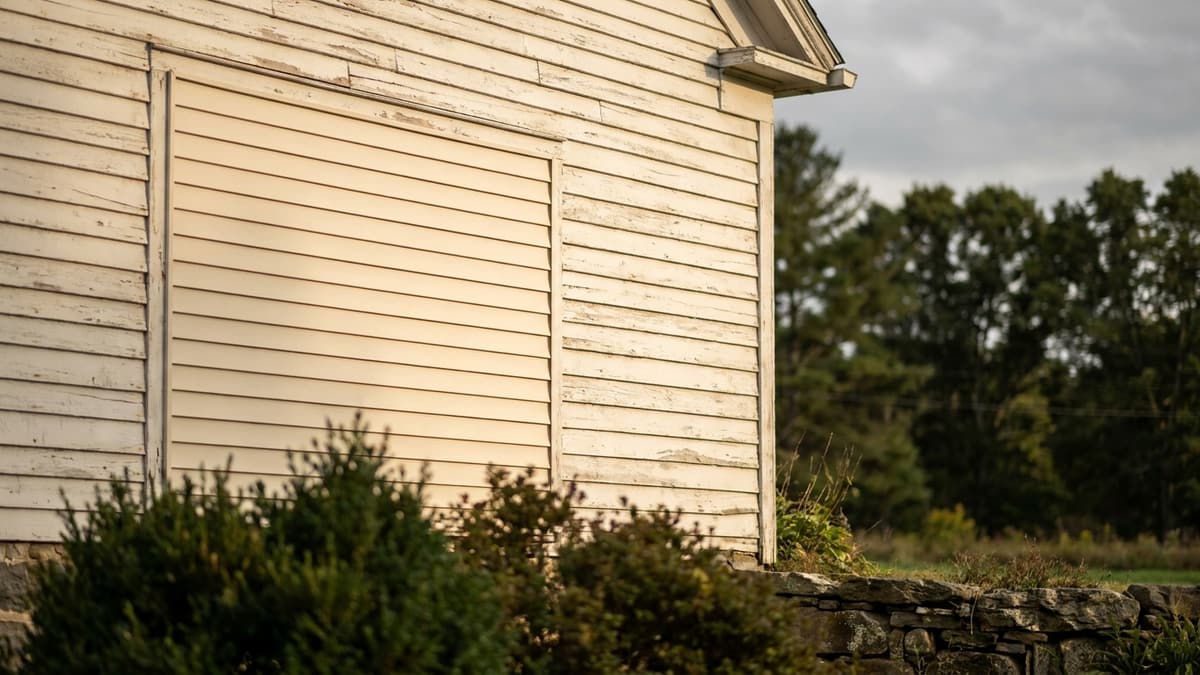
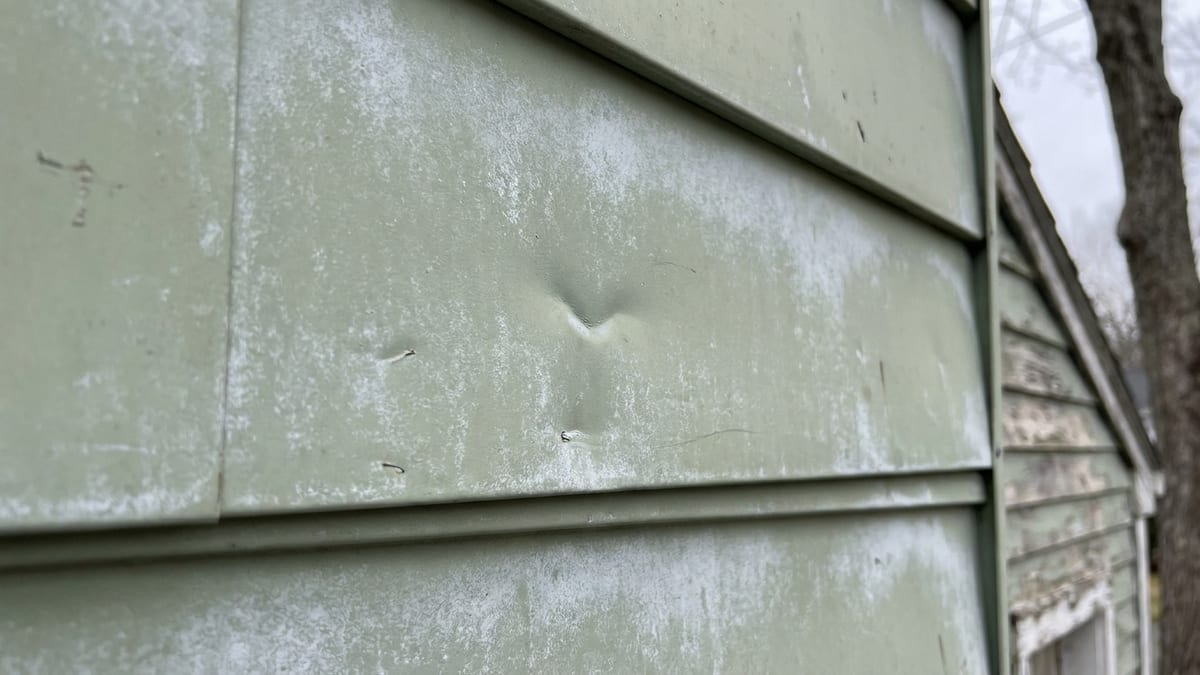
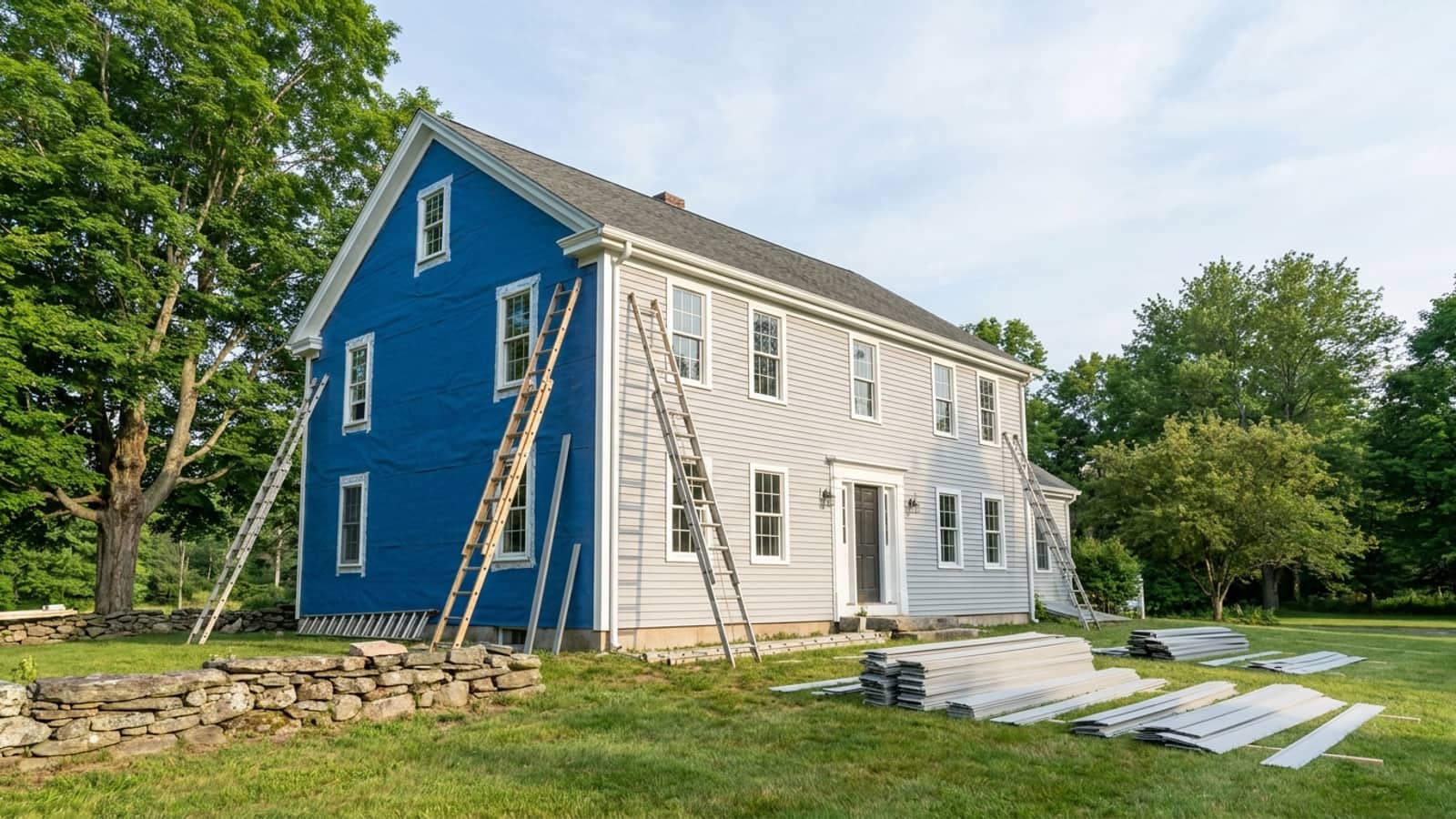
The crew protects plantings and walkways, stages a dumpster or trailer, and starts stripping. Old siding comes off one elevation at a time, not all at once, so the house is never fully open. Vinyl pulls off fast. Wood clapboard, cedar shingle and old aluminum take longer, and anything installed before 1980 brings lead-safe work practices into the picture, which adds containment and cleanup time.
Sheathing inspection and repair
This is the step that moves the schedule most. With the siding off, the crew can see the sheathing for the first time. Soft or rotted boards around windows, at kick-out flashing locations and along the bottom of walls get replaced. On a dry, well-detailed house this is an hour. On a house that has been leaking quietly for a decade it can be a full day or two.
Ask for sheathing repair to be priced per sheet in the original quote. A quote with no unit price for sheathing is a quote that will be renegotiated while your walls are open.
House wrap, flashing and trim
Weather-resistive barrier goes on, then flashing at every window head, door head, deck ledger and roof-to-wall transition. Done properly this is slower than hanging the siding itself, and it is the part that decides whether the wall stays dry for the next thirty years. Trim is installed before or alongside the field siding depending on the system.
Field siding
Long, uninterrupted walls go quickly. Walls broken up by windows, doors, gables, bays and roof intersections do not, because every one of those is a cut, a flashing detail and a piece of trim. Two houses with identical square footage can differ by days on this alone.
Caulking, details and cleanup
Final caulking at trim joints, touch-up on factory-finished product, outlet and light block fitting, magnet sweep for nails, and a walkthrough. Budget most of a day for this. It is the step that gets compressed when a crew is behind, and it is the most visible part of the finished job.
Realistic day counts by house and material
These are general Connecticut ranges for planning, not a quote on your house.
| House and scope | Vinyl | James Hardie fiber cement |
|---|---|---|
| House and scopeSingle-story ranch, simple walls | Vinyl3-4 days | James Hardie fiber cement5-7 days |
| House and scopeTwo-story colonial, moderate trim | Vinyl5-7 days | James Hardie fiber cement8-12 days |
| House and scopeLarger home with dormers, gables, mixed materials | Vinyl7-10 days | James Hardie fiber cement12-20 days |
Fiber cement runs longer for concrete reasons. It is heavier, it is cut with dust-controlled saws and shears, it is fastened to a defined pattern, and it has required clearances at grade, roofs and horizontal surfaces. Vinyl hangs with deliberate slack so it can expand, and goes up in long runs. If schedule is your main constraint, that difference is a legitimate argument for vinyl, and it belongs next to the longer comparison of the two materials rather than buried in it.
What actually stretches the schedule
- Rotted sheathing. The most common cause of an extra day or two.
- Rain. Siding goes up in rain only reluctantly, and tear-off does not happen at all in steady rain. A week with three wet days is a week with two productive days.
- Trim and detail count. Bays, porches, dormers, decorative brackets, and anything that has to be fabricated on site.
- Access. Tight lot lines, steep grade, a second story over a deck or a sunroom roof. Staging time is real time.
- Scope changes. Adding exterior insulation, replacing sheathing wholesale, or altering an opening moves the job from no-permit territory into permit territory in most Connecticut towns, which adds review and inspection.
- Historic districts. Replacing siding with similar material does not require a Certificate of Appropriateness under state statute. Changing the material type does, and that means waiting for a commission meeting.
- Combining trades. Siding plus windows plus trim on one mobilization saves money and adds days.
Season matters in Connecticut
Late spring through fall is the easiest window, and September and October book up. Winter work is possible, but vinyl gets brittle in the cold and caulk and factory touch-up have temperature limits, which is covered in more detail in our post on vinyl siding in cold weather. Plan for a winter job to take somewhat longer than the same job in the fall, not for it to be impossible.
Living in the house while it happens
You can stay. The work is outside. Expect noise from 7 a.m., compressors and saws, limited use of the driveway, and interior walls that knock loudly when fasteners go in. Take pictures off exterior-facing walls. Plan for one elevation at a time to be blocked. Pets should not be let out near open trenches of debris or the staging area. The job site gets swept at the end of each day, and the house gets wrapped and flashed before the crew leaves, so nothing is left open overnight.
Getting a schedule you can hold someone to
Ask three questions before signing. How many working days, as a range. What is the per-sheet price for sheathing replacement. What happens on rain days. The answers tell you more about how a company runs a job than any brochure does.
If you want a real number for your house, the next step is a measurement. Someone comes out, measures the walls and openings, looks at the condition of the trim and the existing siding, and gives you a written, itemized price with a day count attached. You can request that estimate here or read more about the siding systems and installation process first.