Short answer
Keep it when the panels are still tight to the wall and the only complaints are chalking, fading and a few dents, because clean aluminum takes exterior paint well and a repaint costs a fraction of a re-side. Replace it when water is getting behind the panels, when large areas are loose or crushed, or when you are opening the walls anyway for sheathing repair or exterior insulation. A full replacement in Connecticut generally runs $8,000 to $35,000 in vinyl and $18,000 to $80,000 or more in James Hardie fiber cement.
On this page
Aluminum siding is one of the few exterior materials where keeping what you have is often the better financial decision. It does not rot, it does not burn, it does not get brittle in a Connecticut February, and unlike vinyl it accepts ordinary exterior paint. A house wearing chalky 1965 aluminum is frequently a painting project, not a siding project.
The case for replacing it is narrower but real, and it has almost nothing to do with how the panels look. It has to do with water, with what is behind the panels, and with whether you were going to open the wall anyway.
Sort the complaint before you price anything
The word "old" covers four different conditions on an aluminum-sided house, and only two of them argue for replacement.
Chalking and fade
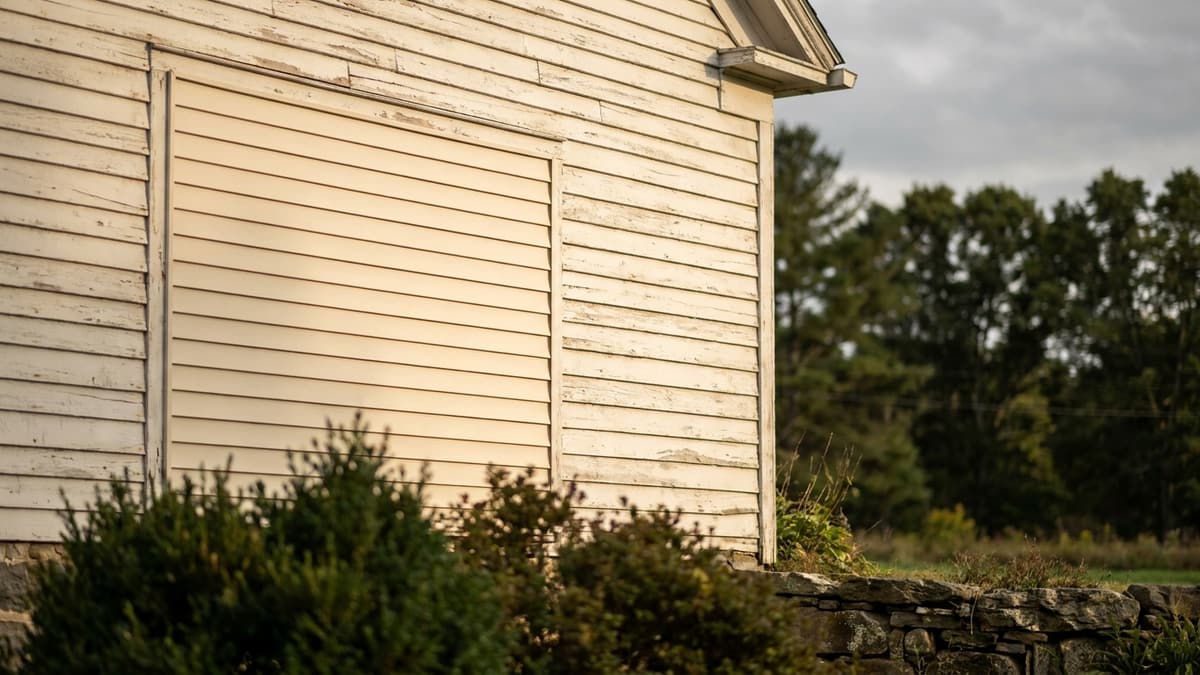
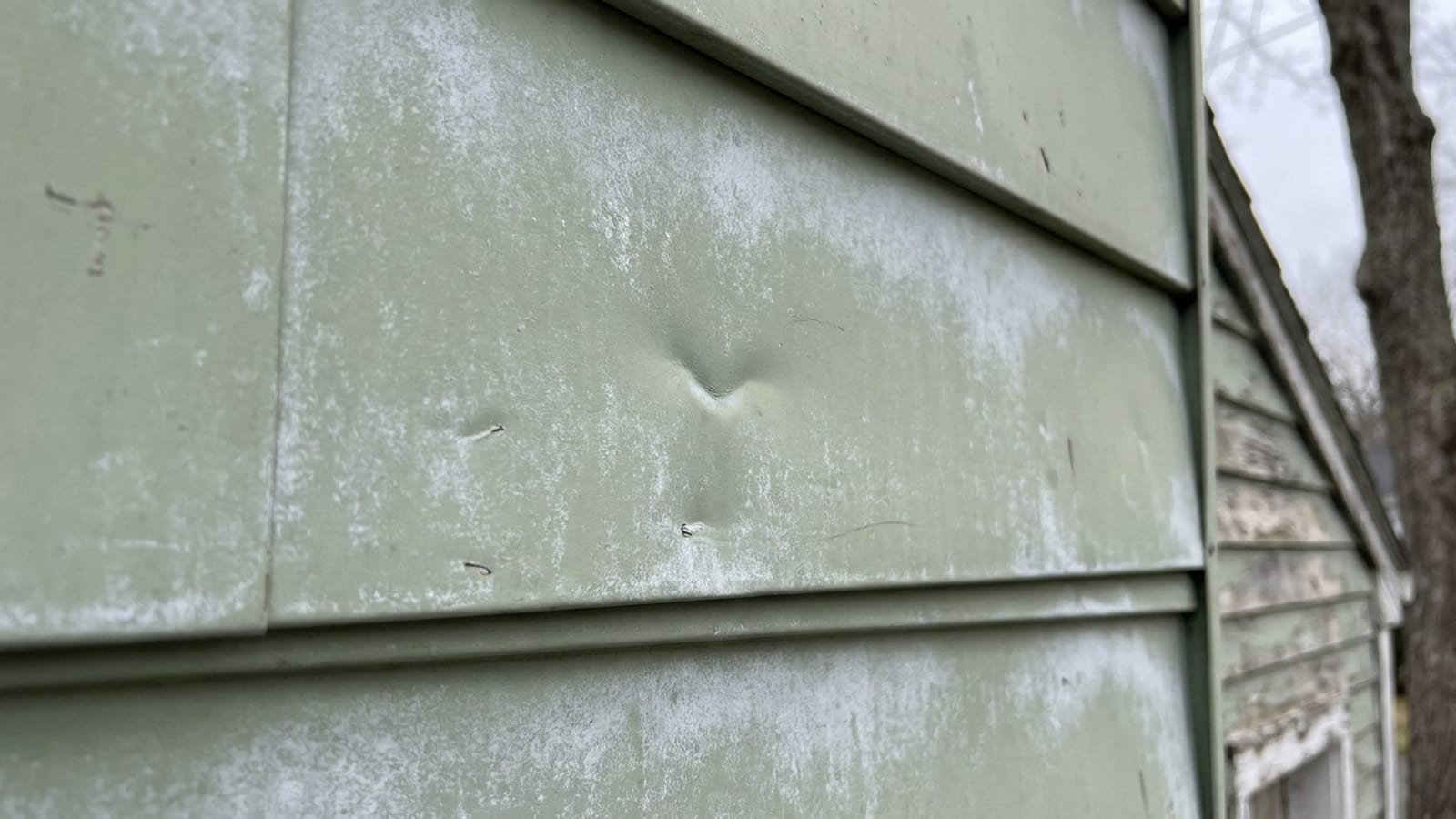
The baked enamel finish oxidizes over decades. Run a hand down the wall and it comes away white. This is a coating failure, not a panel failure. The metal behind it is intact and will outlive most of the people reading this. Chalk washes off, and a cleaned, primed aluminum wall is a good paint substrate.
Dents
Aluminum is soft. A ladder, a hailstone, a lawn mower stone, a kid's baseball — each leaves a permanent mark, because unlike a bruised vinyl panel it does not spring back. Dents are cosmetic until they crease the panel open at the bottom lock, at which point they are a water path.
Loose, rattling or backed-out panels
This one matters. Aluminum siding hangs on nails through a slotted hem, and after fifty years of thermal movement and wind the hems tear, the nails back out, and panels start to drum in a gust. Every town we serve sits in a designated hurricane-prone region, with ultimate design wind speeds of 120 mph in most of our towns and 125 mph in Guilford, Madison and New Haven. Loose panels are the point where the wall stops being weather-resistant.
Water showing up inside
Stains at the top of interior walls, soft trim at window corners, or paint that will not hold on the inside face of an exterior wall are not siding cosmetics. They say the water management layer behind the siding has failed, and no amount of paint on the outside fixes that.
The honest case for keeping it
- A repaint costs a small fraction of a re-side. On a house where the panels are tight, painting buys you a decade or more of a different-looking house for a fraction of a five-figure project. We compared the two paths in detail in our post on painting versus replacing siding.
- Aluminum does not rot, warp or burn. It holds dimension through freeze-thaw better than wood and does not get brittle in cold the way vinyl can.
- Paint gives you color freedom. Vinyl can only be painted within a narrow range of colors without risking heat distortion. Aluminum has no such limit.
- You stay out of the paperwork. Painting triggers no permit, and in a local historic district, maintenance in matching materials does not require a Certificate of Appropriateness.
When replacement is the honest answer
Replace when one of these is true, not because the house looks dated.
- Panels are loose, crushed or open across whole elevations. Scattered repairs on an unmatchable profile stop being economical quickly.
- There is confirmed water intrusion. New siding is the opportunity to install a proper weather-resistive barrier and flash the openings, which many 1960s installs never had.
- The sheathing or framing needs work. If the wall has to be opened, the siding is coming off regardless, and reinstalling fifty-year-old aluminum is not practical.
- You are adding exterior insulation. Foam over the sheathing changes wall thickness and window extension jambs, so it is a full re-side.
- You want to stop painting. This is a legitimate reason. A paint cycle is a recurring cost and a recurring disruption, and vinyl or fiber cement moves you off it.
What replacement generally costs in Connecticut
These are general Connecticut ranges that depend heavily on wall area, trim complexity and what is found behind the old siding. They are not a quote for your house.
| Material | General CT range | Lifespan | Maintenance |
|---|---|---|---|
| MaterialVinyl | General CT range$8,000 - $35,000 | Lifespan20-30 years | MaintenanceRinse with a hose |
| MaterialJames Hardie fiber cement | General CT range$18,000 - $80,000+ | Lifespan40-50+ years | MaintenanceRepaint every 15+ years |
| MaterialCedar | General CT range$25,000 - $60,000+ | Lifespan20-40 years | MaintenanceRe-stain every 3-5 years |
The spread inside each range is wide because a 1,100 square foot Cape in Manchester and a rambling Colonial with three dormers and wrapped trim are not the same job even in the same material. Fairfield County pricing generally runs higher because the houses are larger. Our siding service page breaks down what each material involves.
What the crew finds behind aluminum siding
This is the part of the decision homeowners underestimate, because it is invisible until demolition day.
Original wood siding
A great deal of Connecticut aluminum was installed directly over wood clapboard or cedar shingles in the 1950s through the 1970s, often over furring strips. Sometimes that wood is in restorable condition and the right answer on an antique house is to go back to it. More often it is weathered, partly removed around openings, and full of nail holes.
No weather-resistive barrier
Plenty of installs from that era have no building wrap, no flashing at window heads, and rely on the old wood layer to shed water. Replacing the siding is the one practical chance to correct that for the life of the wall.
Board sheathing, or none
Diagonal or horizontal 1x boards with gaps between them were normal. They hold fasteners differently than plywood and may need a sheathing layer before new siding goes on, which is also one of the triggers that turns a no-permit job into a permitted one.
Lead paint
On a pre-1978 house, assume lead is present on the wood underneath and possibly in the aluminum's coating. That puts the work under the EPA Renovation, Repair and Painting rule, with containment, specific work practices and cleanup verification. We covered the practical effects in our post on lead-safe work on siding and windows. It affects schedule and price, and a quote that ignores it on a 1960s house is incomplete.
Permits, historic districts and two small practical items
Most Connecticut towns do not require a permit for a like-for-like siding replacement. A permit is generally required once the scope includes exterior insulation, sheathing replacement, altered openings, or structural repair found after demolition — all of which are common on aluminum-sided houses.
In a local historic district, Connecticut General Statutes Sec. 7-147f(a) draws the line at material type. Aluminum to aluminum is maintenance in similar materials. Aluminum to vinyl or fiber cement is a change of material type and requires a Certificate of Appropriateness, which means a commission meeting on the commission's calendar, not yours.
Two more items worth raising with whoever prices the job. First, aluminum siding is conductive, so any exterior wiring, service entrance or light fixture in contact with it should be looked at by an electrician before panels start coming off. Second, the tear-off is scrap aluminum and has some recycling value. It is light material and it will not pay for your project, but it is fair to ask whether it is being recycled and whether any credit appears on the estimate.
How to decide
Walk the house and press on the siding at the bottom of each elevation. Panels that feel solid and quiet argue for paint. Panels that move, rattle or show open creases argue for replacement. Then go inside and look at the top of exterior walls and the inside corners at windows. Dry walls buy you time. Stains do not.
If you want a number to weigh against the cost of painting, someone comes out, measures the wall area, looks at the trim and the condition of the openings, and gives you a written, itemized price. You can request that estimate here or call. The useful version of that conversation includes what happens if the sheathing underneath turns out to be wet, priced per sheet in advance, so the figure on the page is the figure you can plan around.