Short answer
Any renovation that disturbs painted surfaces on a home built before 1978 falls under the EPA's Renovation, Repair and Painting Rule, and the firm doing the work has to be EPA-certified and use lead-safe work practices. Replacing even one window in a pre-1978 house triggers the rule outright, and removing painted siding almost always crosses the 20-square-foot exterior threshold. The only way out is to have a certified renovator or inspector test the surfaces and document that no lead-based paint is present.
On this page
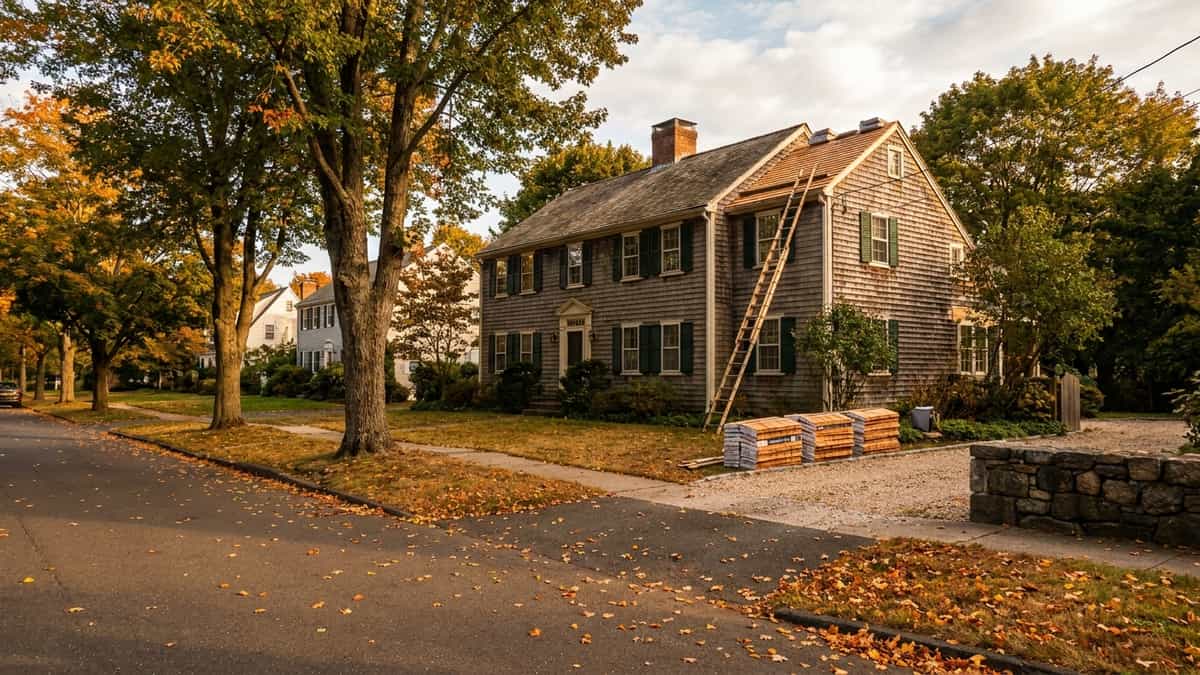
If your house was built before 1978, the federal Renovation, Repair and Painting Rule applies to almost any siding or window work a contractor performs on it. That is not a judgment about your house. It is a date. Lead was banned from residential paint effective 1978, so every structure older than that is presumed to contain lead-based paint until someone tests and proves otherwise.
This matters to you for two practical reasons. It changes who is legally allowed to do the work, and it changes what the job looks like in your yard and on your invoice.
What actually triggers the rule
The rule, administered by the EPA under 40 CFR Part 745 Subpart E, covers compensated renovation work in housing built before 1978. It is not triggered by every nail. There are thresholds.
| Work | Threshold that triggers the rule |
|---|---|
| WorkExterior painted surfaces disturbed | Threshold that triggers the ruleMore than 20 square feet |
| WorkInterior painted surfaces disturbed, per room | Threshold that triggers the ruleMore than 6 square feet |
| WorkWindow replacement | Threshold that triggers the ruleAny amount, no minimum |
| WorkDemolition of painted surfaces | Threshold that triggers the ruleAny amount, no minimum |
Twenty square feet sounds like a lot until you measure it. A four-by-five-foot patch of clapboard hits it. A single course of siding across the back of a Cape blows past it.
Windows have no minimum
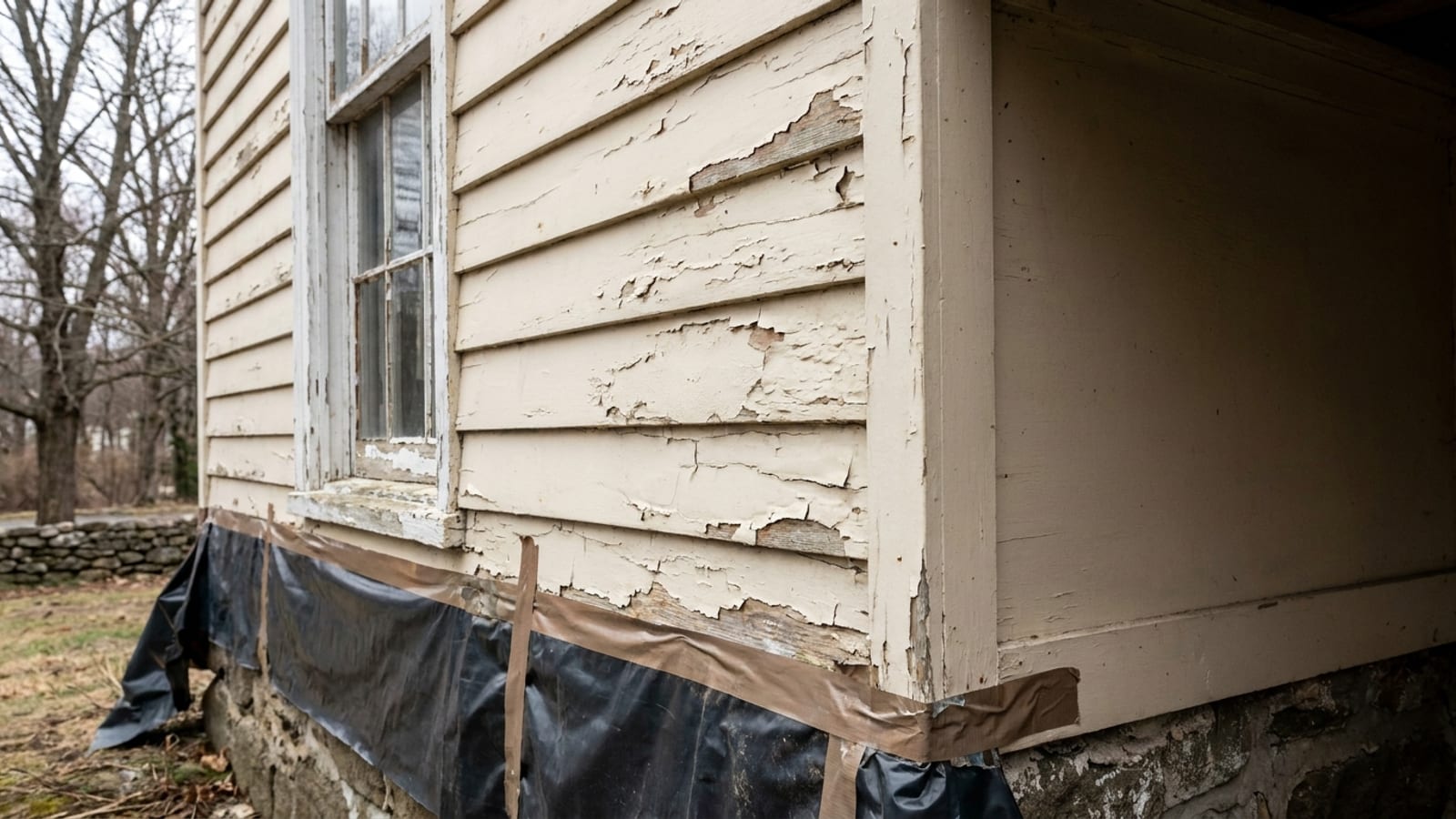
This is the part homeowners miss most often. Window replacement is specifically excluded from the minor repair and maintenance exemption. One window, in one bedroom, in a 1955 Ranch, is a regulated renovation. The reason is that the friction surfaces of old double-hung windows, the sash edges and the parting beads, are where lead paint has been grinding itself into dust for decades. That dust is already in the sill wells.
Siding essentially always crosses the line
A full siding replacement on a painted wood-clapboard house is demolition of painted surfaces by any reading. So is removing painted trim, soffit and fascia. Even installing new siding over old painted siding usually crosses 20 square feet once you count the cut-back at corners, the bottom course and the fastener penetrations. If you are weighing a siding replacement on an older home, assume the rule is in play and ask about it in the first conversation rather than the last.
Who has to be certified
Two separate certifications exist, and both should be present on your job.
- The firm must hold EPA firm certification. This is an application and a fee, renewed every five years, and it produces a certificate with a number on it.
- At least one certified renovator must be assigned to the job. That person takes an accredited eight-hour training course, holds a card, and is responsible for setting up containment, directing uncertified workers, and performing the cleaning verification at the end.
The certified renovator does not have to stand on the site every minute, but they have to be on the project, available, and the one who personally performs the setup and the verification. Other crew members can be trained on the job by that renovator.
What lead-safe work looks like in your yard
On an exterior job you will see things that do not appear on a post-1978 house.
- Plastic sheeting laid on the ground and extended out from the wall, weighted or taped at the edges, with a buffer sized to the work. Vertical containment goes up when the property line is close.
- Windows and doors in the work area closed. On exteriors, openings within roughly 20 feet of the work get closed too, including the neighbor's if they are that close.
- Warning signs posted at the perimeter.
- Debris collected onto the sheeting, wrapped, and taken away rather than raked into the lawn.
- A daily cleanup, and a final visual inspection of the ground and surrounding surfaces for visible dust and debris. Exterior work uses visual verification rather than the wipe-based cleaning verification required indoors.
You will also be handed the EPA's Renovate Right pamphlet before work begins, and asked to sign that you received it. That signature is a record the firm has to keep for three years, along with documentation of the work practices used.
Practices that are flatly prohibited
- Open-flame burning or torching of painted surfaces.
- Heat guns operating above 1100 degrees Fahrenheit.
- Machine sanding, grinding, planing, needle gunning or abrasive blasting without HEPA exhaust control.
- Dry scraping or sanding, outside of narrow exceptions for very small areas.
If someone proposes to burn old paint off your trim, that is not an aggressive timeline. It is a prohibited practice.
The honest case for testing first
Lead-safe work practices add setup time, containment materials, disposal and cleanup labor. On a large exterior that is real money, and it shows up as a line item.
The rule presumes lead is present, but presumption is not proof. A certified renovator can use EPA-recognized test kits on the specific components being disturbed, or a licensed lead inspector can run XRF testing across the exterior. Plenty of houses from the 1960s and early 1970s come back negative on the components that matter, particularly if they were resided at some point. A negative, documented result lifts the work practice requirement for that work.
Testing costs something and takes a step. On a small scope it rarely pays. On a whole-house exterior with painted wood siding and twenty windows to replace, it can be the cheapest hour anyone spends on the project. Ask for the test results in writing either way.
Renovation is not abatement
These get confused constantly. Renovation under the RRP Rule means replacing or repairing something while controlling the dust. Abatement means deliberately and permanently eliminating an identified lead hazard, and in Connecticut that is separately licensed work, typically following a hazard determination from a local health department or a risk assessor.
A siding or window contractor performing a lead-safe replacement is doing renovation. If your house has an open lead order from a municipal health department, that is a different process with different paperwork, and the exterior project needs to be coordinated with it rather than substituted for it.
How it interacts with permits and historic review
The lead rule is federal and runs on its own track. It does not care whether your town requires a permit, and a town permit does not satisfy it. A like-for-like siding or window replacement that needs no permit at all can still be a fully regulated lead job. We covered the permit side separately in when siding and window work needs a permit.
The same independence applies to historic districts. Replacing wood windows with matching wood windows in a historic district may need no Certificate of Appropriateness, and still requires lead-safe work practices, because the two rules are asking completely different questions.
Where this comes up most in the towns we serve
Pre-1978 housing stock is not evenly distributed. Hartford's Victorians and triple-deckers, New Haven's multi-family buildings near Yale, the 1920s to 1960s Colonials and Tudors across West Hartford, Farmington's eighteenth and nineteenth century farmhouses, and Guilford's antique Colonials and saltboxes are all in scope by default. So is most of Manchester's post-war Cape and Ranch inventory. If you are looking at siding work in New Haven, assume the rule applies and price it that way from the start.
Newer subdivisions in Avon, Simsbury and Glastonbury built from the 1980s on are outside the rule entirely, and a contractor quoting containment on a 1996 Colonial is quoting something you do not need.
Getting a price that includes it
A quote on a pre-1978 house should say, in writing, whether lead-safe work practices are included and what the firm's EPA certification number is. If the quote is silent, either the work is being priced without them or the containment is going to arrive later as a change order.
When you are ready, request an estimate. Someone comes out, measures the house, confirms its age, and gives you a written price with the lead-safe line items shown rather than buried.