Short answer
A siding repair matches when the original profile is still manufactured or can be salvaged from a hidden wall on the same house, and when the surrounding siding has not faded far from its factory color. When the profile is discontinued or the wall has twenty years of sun on it, the honest options are to re-side one elevation or to accept a visible patch. Matching is a question about the specific house, not about the brand name on the panel.
On this page
A siding repair works when three things line up: the profile is still available or salvageable, the surrounding siding has not faded far from its original color, and the damage is limited to panels rather than what sits behind them. When all three hold, replacing a few boards is the right call and costs a fraction of re-siding. When one of them fails, the choice is not between a good repair and a bad one. It is between a visible patch and re-siding a wall.
This post is about how to tell which situation you are in before the work starts, because that judgment is much cheaper to make from the ground with a sample in your hand than it is after a crew has already opened the wall.
Matching is three separate problems
Homeowners usually say "match the siding" and mean color. Color is the one that gets noticed, but it is the last of three things that have to agree.
Profile and exposure
The profile is the shape of the panel in cross section and the exposure is how much of it you see once it is installed. Vinyl is commonly sold as double 4, double 5 or single 8 inch exposures, in clapboard and Dutch lap shapes, with variations in the pocket depth and the lock geometry between manufacturers. A double 5 clapboard from one brand will not lock into a double 5 clapboard from another, and even a correct lock can leave a shadow line that reads differently along the wall.
This is why a physical sample matters. Cut a full panel out of an inconspicuous spot, take it to a siding supply house, and let them identify it. A photograph is not enough.
Color
Manufacturers revise color lines every few years. A name that still exists may not be the same formulation it was when your house was sided, and the color that was on the chart in 2006 may simply be gone. Even a perfect factory match to the original color will not match the wall, because the wall has been weathering since the day it went up.
Texture and gloss
The embossed wood grain pattern and the surface sheen both change between product generations. A new panel often reads glossier than the surrounding siding even when the color is close, because years of weather have dulled the original. On a shaded north wall nobody will see it. In raking late-day sun on a west elevation, that difference in sheen is the first thing a person notices.
Where a true match actually comes from
Attic stock
If the original installer left leftover panels in the garage rafters or the crawl space, that is the best material available. It is the same production run, the same color batch and the same profile. It has also sat in the dark, so it will still be lighter than the wall, but it is the closest starting point you will get.
Donor panels from the house itself
This is the technique that saves most repairs. Pull sound panels from a hidden elevation, the wall behind a deck, a garage return, an area screened by a fence, and move them to the visible damage. Then install the new, slightly off-color panels in the hidden spot. The mismatch still exists, but it lives where nobody looks at it. On a house with any discontinued siding, this is usually the difference between an invisible repair and an obvious one.
Discontinued profiles
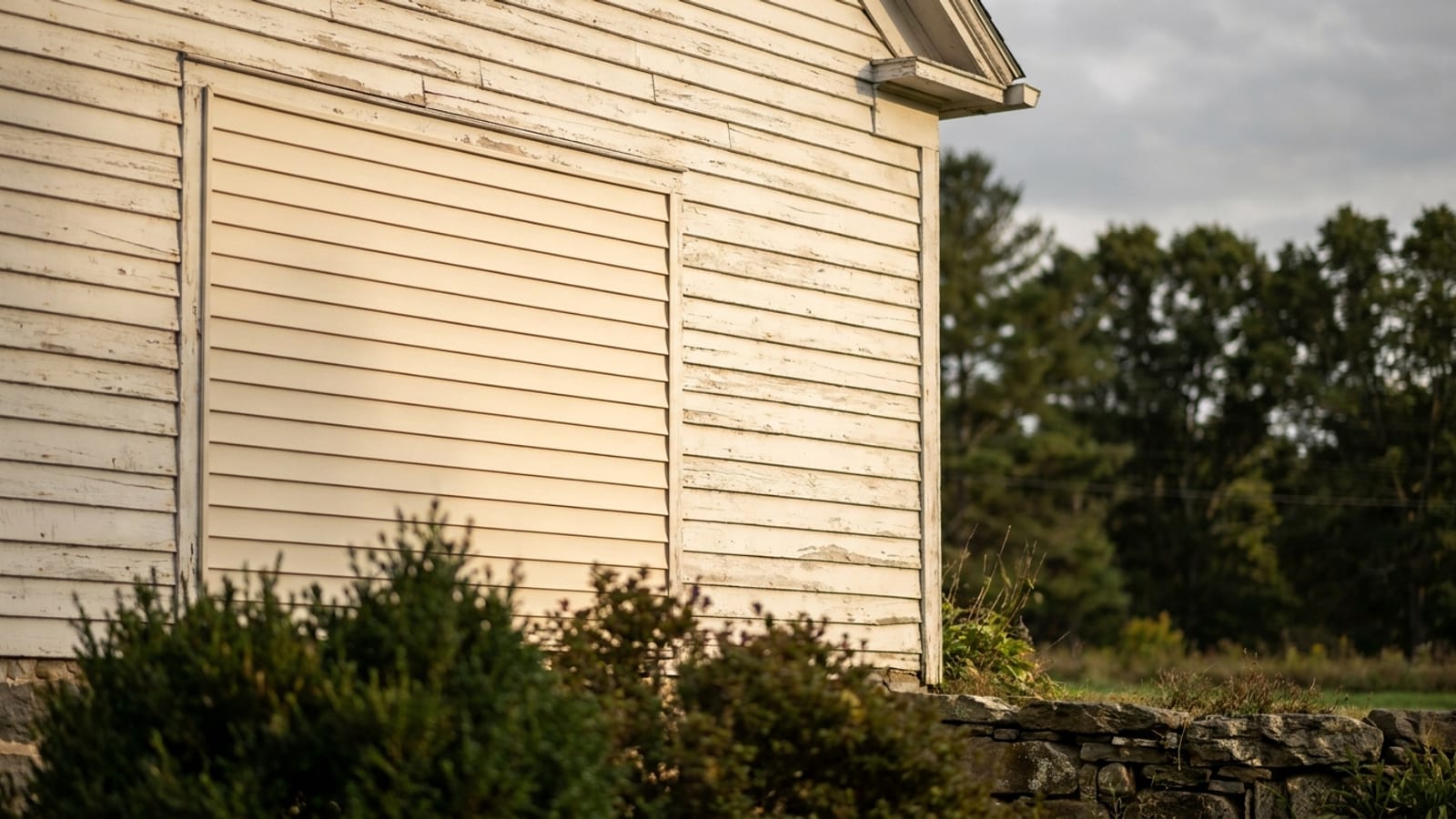
When the profile is gone, a supply house can sometimes identify a current panel with a compatible lock. Sometimes it cannot. At that point the question changes from matching panels to deciding on a boundary. Re-siding one full elevation, with a corner post or a trim line as the natural stopping point, hides the transition far better than a patch in the middle of a field of siding. It costs more than a repair and much less than the whole house.
How this plays out by material
Vinyl
Vinyl is the easiest material to repair mechanically and the hardest to match visually. A zip tool unlocks the course above, the nails come out, the damaged panel slides free and a replacement locks back in. The craft is in the nailing: fasteners centered in the slot, left loose enough that the panel can move, with the correct expansion clearance at the ends. Vinyl installed tight will buckle on a hot August wall or pull apart in January. Panel thickness and rigidity also vary between grades, which we cover in the post on vinyl siding thickness grades, and a heavier replacement panel in a run of thin siding will sit differently against the wall.
Fiber cement
Fiber cement repairs are more invasive because the planks are blind-nailed and overlapped, so removing one in the middle of a wall means releasing the one above it. The advantage is on the finish side. A factory-finished board can be touched up or the affected area can be repainted, and a repainted elevation matches itself perfectly. Color matching is a paint problem rather than a product availability problem, which is a much easier problem.
Cedar
Individual clapboards and shingles can be cut out and replaced one at a time, which is why cedar has been repaired this way for three hundred years. New wood will not match weathered wood, so the finish work is the whole job: re-stain the repaired section and feather it, or re-stain the full elevation. On shoreline houses in towns like Guilford and Madison, salt air accelerates the wear on wood siding and fasteners, which pushes more of these repairs toward full-elevation refinishing sooner than inland homes.
What a repair does not fix
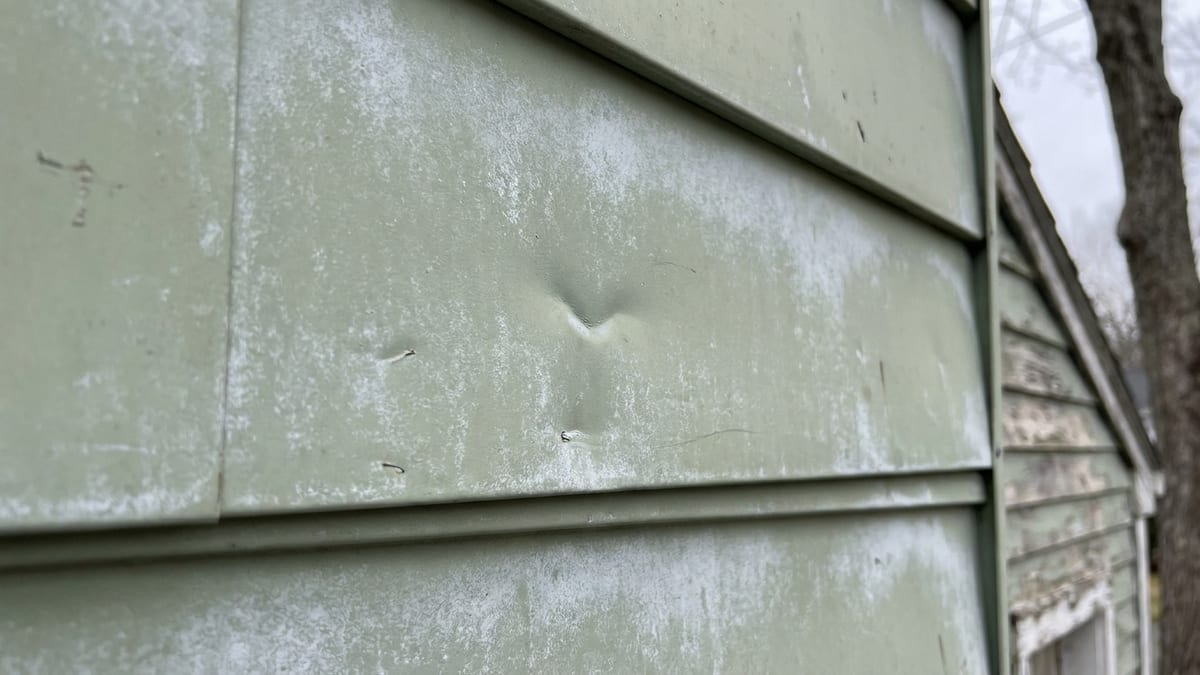
Siding is a drainage layer, not a waterproof skin. If panels are damaged because water got behind them, replacing the panels addresses the symptom. Before any repair, the sheathing behind the damage should be checked for softness and the house wrap and flashing at windows, doors and transitions should be looked at. Damage from a specific event is a different diagnosis again, and our guide to storm damaged siding covers how that assessment differs.
If the sheathing is wet or soft, the scope has already grown past a repair, and that is also the point at which most Connecticut towns begin requiring a permit.
Historic districts and like-for-like
Under Connecticut General Statutes Sec. 7-147f(a), repairing or replacing siding with similar materials inside a local historic district does not require a Certificate of Appropriateness. Changing the material type does. That makes matching more than a cosmetic preference on a house in a district: a wood-to-wood repair proceeds on your schedule, while a wood-to-vinyl conversion waits for a commission meeting.
The honest comparison
For context, full siding replacement in Connecticut generally runs $8,000 to $35,000 for vinyl, $18,000 to $80,000 or more for James Hardie fiber cement and $25,000 to $60,000 or more for cedar, with the spread driven by wall area, trim complexity and what is found behind the old siding. A panel repair is nowhere near those numbers, which is exactly why it deserves a fair hearing before anyone quotes a whole house.
The case against repair is narrower than contractors sometimes suggest. It comes down to this: if the siding is at the end of its service life across the whole house, if the damage keeps recurring in new places, or if the mismatch would sit on the elevation you look at every day, the repair is money spent twice. If the problem is one storm-struck area on a wall with twelve good years left, a repair is the better decision and the more expensive option is the wrong one.
If you are weighing a patch against a wall or a wall against the house, the specifics of your siding decide it. You can see how we handle both ends of that on our siding repair and vinyl siding pages, and when you want a number, request an estimate and someone will come out, identify the profile, measure the affected area and give you a written price for the repair and for the larger scope, so you can compare them side by side.