Short answer
Paint is the cheaper and correct answer when the siding boards themselves are still sound, because a repaint costs a fraction of replacement and buys several years. Replacement becomes the better value once you are paying for heavy prep, scraping and rot repair every few years, since that labor is the expensive part and it repeats. Run the comparison across ten years rather than one, and the two options usually land closer together than the first quotes suggest.
On this page
Paint is the right call when the siding boards are still sound and the problem is color, chalking or a finish that has given up. Replacement is the right call when the wall itself is failing, or when you are buying heavy prep labor over and over. The number that decides it is not the price of one repaint against the price of one siding job. It is what each path costs over ten years, and what you own at the end of them.
This post is about how to run that comparison on your own house before anyone gives you a price.
What a repaint actually buys
A repaint changes the surface. It does not change the wall behind it, the flashing at the windows, the house wrap that may or may not be there, or the fastening of the boards. If those things are fine, paint is an efficient purchase. If they are not, paint is a cover over a problem that keeps growing.
Prep is the cost, not the paint
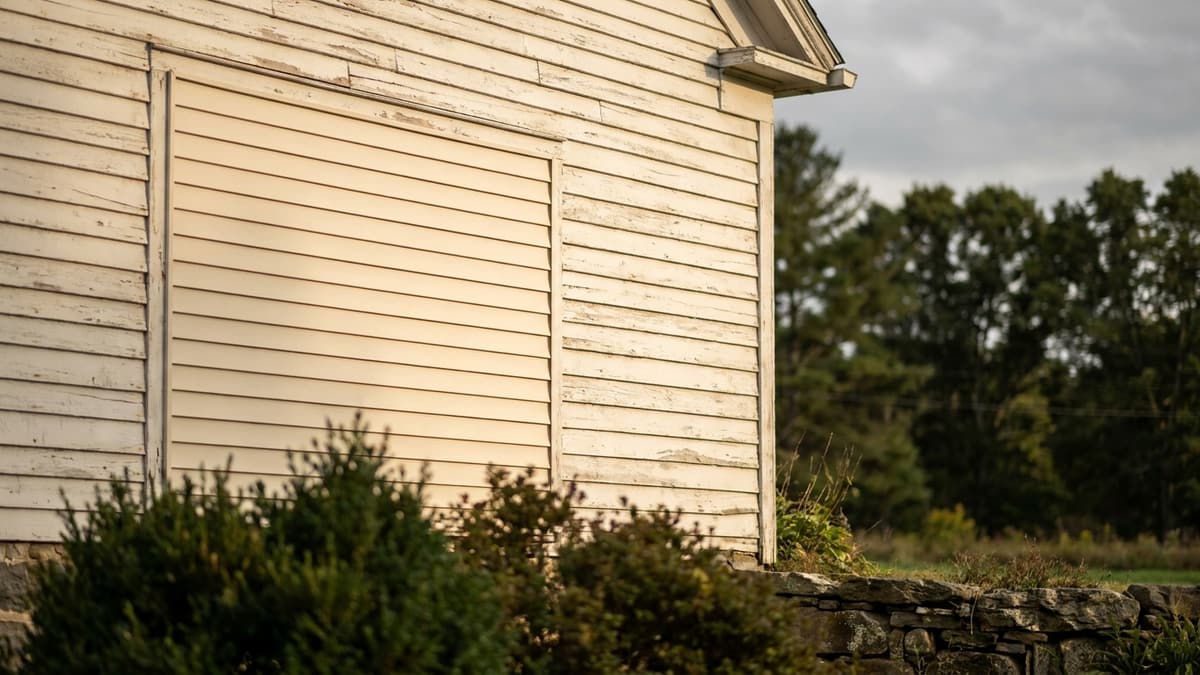
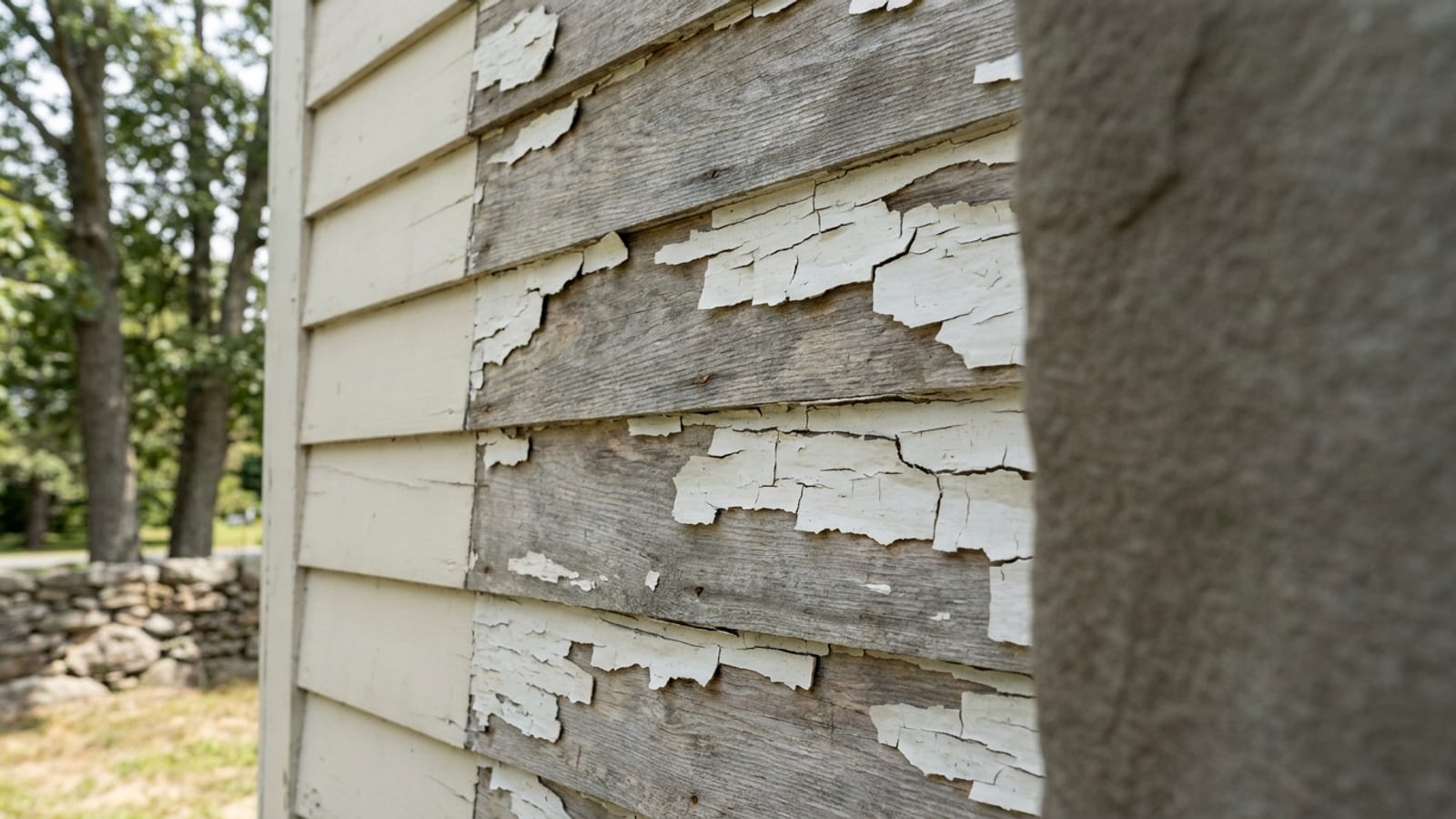
On an exterior repaint, the material is a small share of the total. The money goes into setup, scraping, sanding, spot-priming bare wood, caulking joints, replacing damaged boards and protecting the site. A wall that only needs a wash and two coats is a very different job from a wall with widespread peeling down to gray wood, and the second one can cost several times the first even though the paint is identical.
This is also why a cheap paint quote and an expensive one are often not quoting the same work. Ask each painter, in writing, how much scraping is included, whether bare wood gets primed, and how rotten boards are handled if they turn up mid-job.
When paint is clearly the better decision
- The boards are solid, with no soft spots at the bottom courses or under windows.
- Peeling is limited to one or two exposures, usually the south and west walls that take the most sun.
- You are inside a few years of selling and want the house to present well without a five-figure exterior project.
- The siding is original wood on an older home you intend to keep as wood, where replacement raises questions about matching profile and detail.
- Your only real complaint is the color.
On a house in that condition, painting is not a compromise. It is the correct amount of money for the actual problem.
When paint is money spent twice
- Paint will not hold on the interior face of an exterior wall, or blisters back within a season or two. That usually means moisture is moving through the wall, and no coating fixes it from outside.
- Boards are cupped, split, or soft enough that a screwdriver sinks into them.
- The prep quote includes replacing a significant number of boards, because at that point you are paying carpentry prices to preserve siding that is already going.
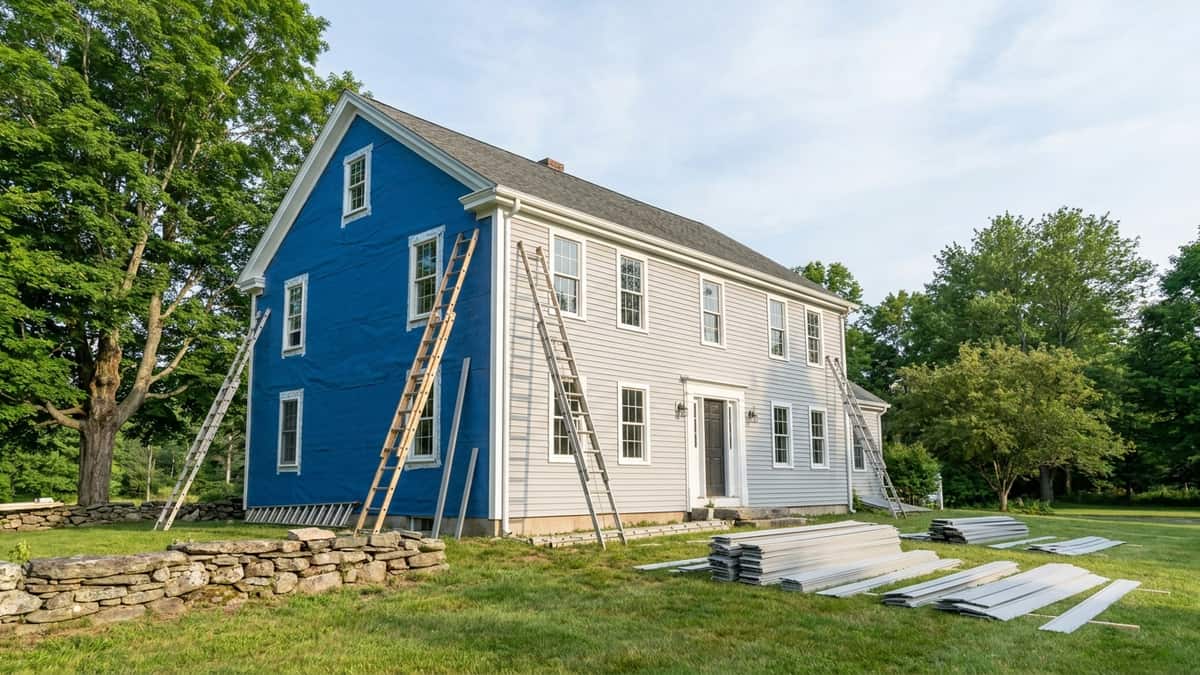
- The wall has no functioning water-resistive barrier behind it, which only gets addressed when the siding comes off.
We wrote separately about how to tell cosmetic aging from real failure, and that distinction is the whole decision here. If the siding has failed, painting it is a delay with a receipt attached.
The ten-year math
Here is the structure of the comparison. Use your own quoted numbers rather than any figure you read online, including ours.
| Path | What you pay over ten years | What you own at year ten |
|---|---|---|
| PathRepaint only | What you pay over ten yearsOne or two paint cycles, plus board repairs found during prep | What you own at year tenOriginal siding, ten years older, another cycle due |
| PathRepaint now, replace later | What you pay over ten yearsOne paint cycle, then the full siding job at future prices | What you own at year tenNew siding, and the paint money is gone |
| PathReplace now | What you pay over ten yearsThe siding job, no paint cycles on vinyl or during Hardie's finish period | What you own at year tenNew siding with 20 to 50 years of service ahead of it |
As a general Connecticut range that depends heavily on the specific house, vinyl siding runs roughly $8,000 to $35,000, James Hardie fiber cement $18,000 to $80,000 or more, and cedar $25,000 to $60,000 or more. Those spreads are driven by wall area, trim complexity and what is found behind the old siding far more than by the material name, which we break down in our post on what new siding costs in Connecticut.
The arithmetic, with your numbers
Take your painter's quote and call it P. Take your siding quote and call it S. Ask two questions.
First: how many times will you pay P before you pay S anyway? If the answer is once, painting almost always wins. If it is two or three, you are approaching S in cash while still owning the same wall.
Second: does the paint cycle get more expensive each time? On weathered wood it usually does, because each cycle starts from a worse surface and includes more board replacement. A repaint that costs P today may cost meaningfully more than P in year seven.
That second question is the one homeowners leave out, and it is the one that flips the answer on a house with peeling down to bare wood.
Materials change the math
Cedar
Cedar is the material where painting stays in the picture longest, because a well-maintained cedar wall can run 20 to 40 years. The trade-off is that it wants attention every three to five years, so maintenance is not an event, it is a schedule. If you are comfortable with that schedule, cedar siding rewards it. If you resent it, you will eventually pay to leave it.
Fiber cement
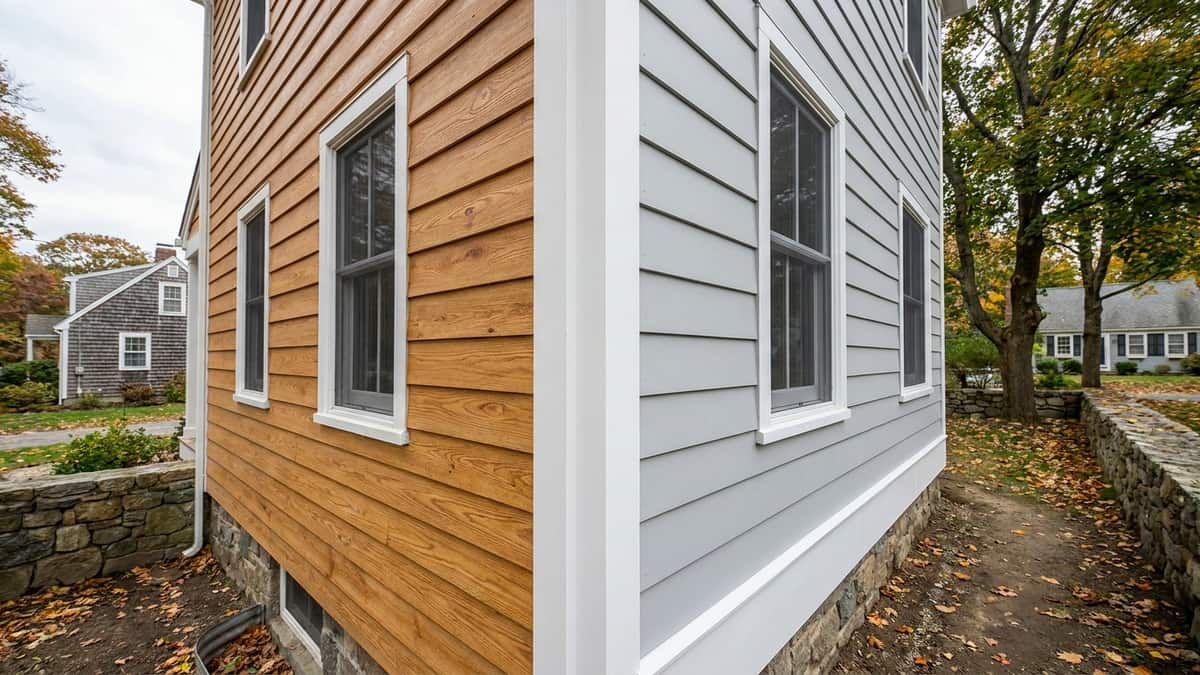
James Hardie's factory ColorPlus finish carries a 15-year color warranty, which is the practical argument against comparing it to paint on wood. You are not buying a coating that resets every several years, you are buying one that pushes the next repaint out past a decade. That is a real part of the value in fiber cement siding and it belongs in the ten-year column, not just the material price.
Vinyl
Vinyl was never meant to be painted. It can be, with the right products and light colors, but darker paint absorbs heat that the panel was not engineered to handle, and painting can change how the manufacturer treats the warranty. On aged, chalky vinyl, replacement is usually the more sensible spend than a coating that has to be redone.
Rules that apply on either path
Painting needs no permit anywhere in Connecticut. A like-for-like siding replacement usually does not either, though a permit is generally required once the job grows to include exterior insulation, sheathing replacement, altered openings, or structural repair discovered after demolition.
In a local historic district, Connecticut General Statutes Sec. 7-147f(a) does not require a Certificate of Appropriateness for maintenance or replacement in similar materials. It does require one when the material type changes, such as wood to vinyl. That single distinction often decides whether a project starts on schedule or waits on a commission meeting, and it is worth checking before you commit to a material.
Getting comparable numbers
Get a painting quote and a siding quote in the same month, and ask both to be specific. From the painter, you want the prep scope and the handling of rot in writing. From the siding contractor, you want the material line, the treatment of the water-resistive barrier, trim details, and what happens if bad sheathing shows up. Then compare the ten-year columns, not the two front numbers.
If you want the second half of that comparison, we measure, look behind a section where we can, and give you a written price for siding replacement. Someone comes out to the house to do it. Start at get an estimate or call the office, and if paint is the better answer for your wall, we will tell you that.