Short answer
Vinyl costs less to install, never needs painting and does not rot, which makes it the sensible default on many Connecticut homes. James Hardie fiber cement costs more, holds paint and dimension better, and carries a 30-year non-prorated warranty. The right answer depends on the house and how long you intend to own it.
On this page
This comparison usually gets written by someone selling one of the two. Here is the version that includes the case against each.
The short version
Vinyl is the value choice, and on a lot of Connecticut houses it is the correct one. It does not rot, never needs painting, and costs the least to install.
James Hardie fiber cement costs more, looks different, holds paint for longer, and does not move as much with temperature. It carries a 30-year non-prorated warranty.
Neither is a mistake. What matters is matching the choice to the house and to how long you intend to own it.
Cost
| Material | Typical Connecticut range |
|---|---|
| MaterialVinyl siding | Typical Connecticut range$8,000 – $35,000 |
| MaterialJames Hardie fiber cement | Typical Connecticut range$18,000 – $80,000+ |
Fiber cement is more expensive twice over: the product costs more, and it costs more to install. It is heavy, it requires different cutting and fastening, and it needs painting or comes pre-finished at a premium. On a large or detailed house the gap widens rather than narrows.
If the budget is the constraint, this is a short conversation. Well-installed heavy-gauge vinyl on a properly detailed wall beats badly installed fiber cement every time.
How each one actually fails
This is more useful than a feature list.
Vinyl
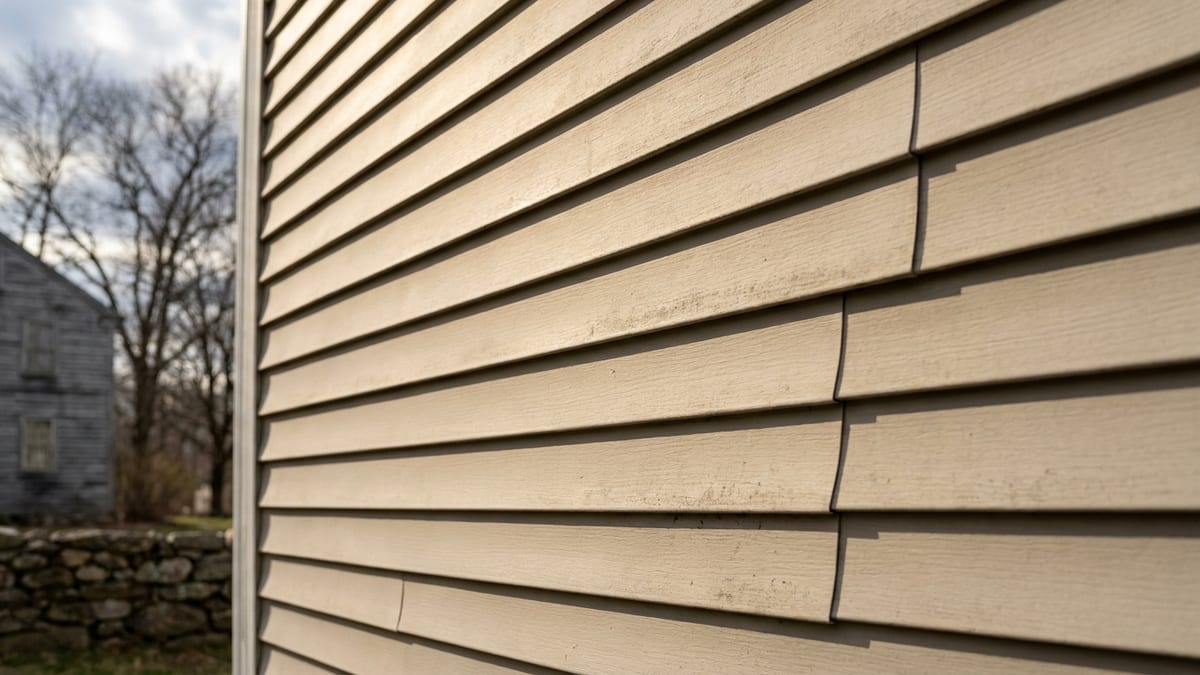
Vinyl does not rot and does not need paint. What goes wrong with it:
- Thermal movement. Vinyl expands and contracts noticeably with temperature. It is designed to float on its fasteners. Nailed tight, it buckles in July. This is an installation failure that looks like a product failure.
- Impact in cold. Vinyl gets more brittle as it gets colder. A ladder or a stone in February can crack a panel that would have flexed in August.
- Fade. Darker colors fade more than lighter ones over a long enough period.
Fiber cement
- Water at cut edges. Fiber cement is a cement product. Field-cut edges need to be sealed and kept off the ground and out of standing water. Installation detail governs this entirely.
- Paint cycles. It holds paint much better than wood, but a job-site-painted product will eventually want repainting. Factory finish extends that considerably.
- Weight. Not a failure mode so much as a cost driver, but it is why the labor line is higher.
What Connecticut adds
The climate here runs wet springs, humid summers and a real freeze-thaw winter. Along the shoreline, add wind off Long Island Sound.
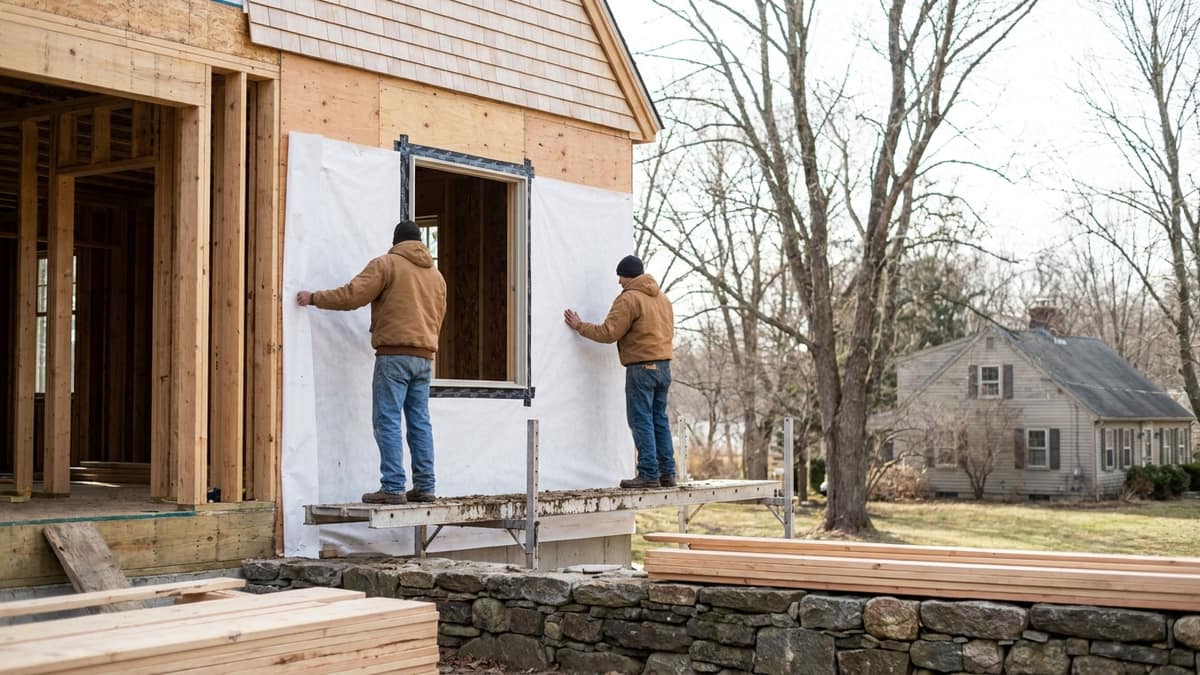
Neither material rots, so the classic failure — water sitting in a wall — is not about the cladding. It is about the layer behind it. The weather-resistive barrier, the way it laps, and the way openings are flashed are what keep a wall dry, and they are identical questions whichever siding goes over them.
That is the real answer to "which is better in Connecticut": the one installed by whoever detailed the wall behind it properly.
Appearance
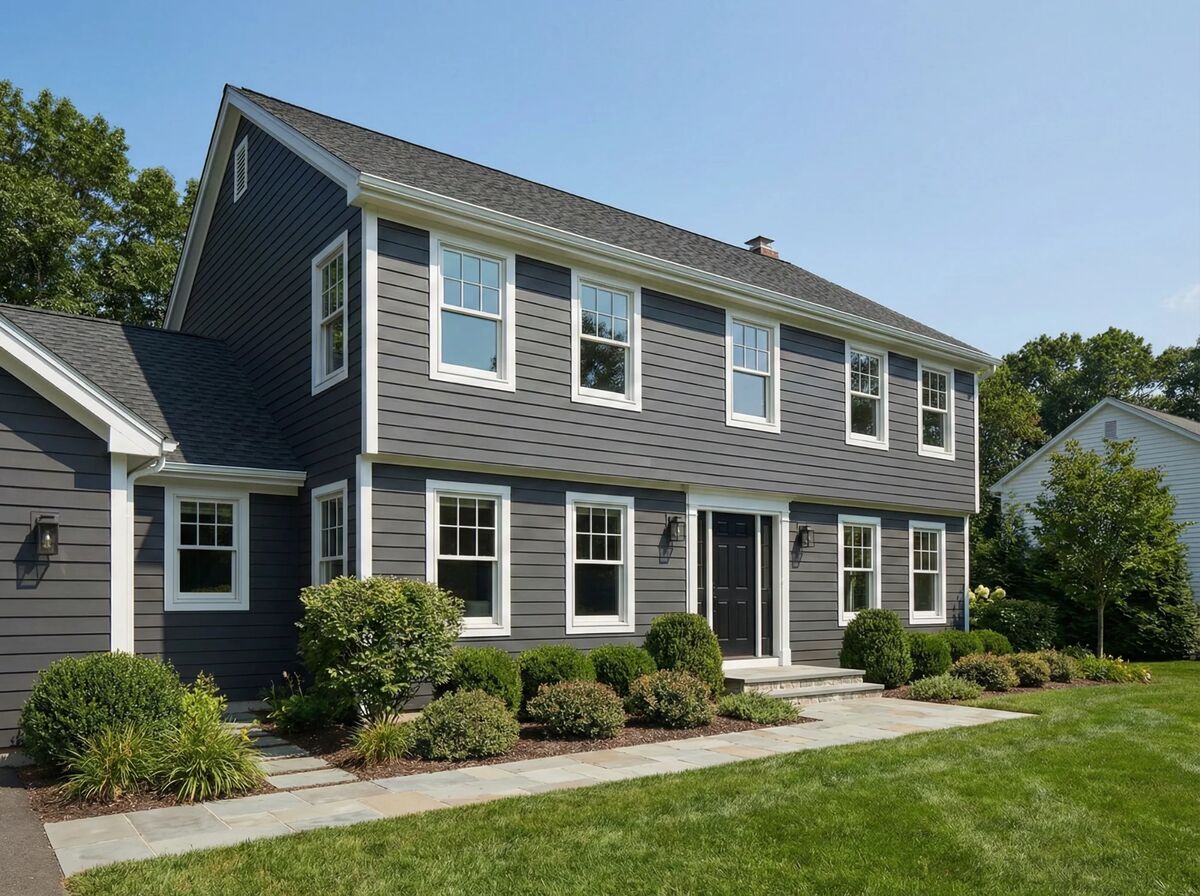
Fiber cement has crisper shadow lines and a heavier profile. Wide plank fiber cement on a colonial reads differently from vinyl, and on some houses the difference is worth the money.
But most of what people register as "good siding" is the trim package — corner treatment, window surrounds, frieze boards, the water table. A generous trim package in vinyl looks better than a minimal one in fiber cement, and it costs a fraction of the material upgrade. If appearance is the goal and the budget is fixed, spend it on trim before you spend it on material.
Which to choose
Choose vinyl if: budget is the binding constraint, you want zero painting, or the house has straightforward detailing where the profile difference will not read from the street.
Choose fiber cement if: you want the heavier look, you are staying in the house long term, or you are matching an architectural style where the profile matters.
Either way: spend on the trim package and insist on knowing what goes behind the panels.
Historic districts
If the house sits in a local historic district, this decision can require approval. Under Connecticut General Statutes Sec. 7-147f(a), changing the material type — wood to vinyl, for example — requires a Certificate of Appropriateness. Replacing like with like does not. Settle that before you order anything; details are in our historic district post.
Getting a real comparison
We install both, along with cedar. We are a James Hardie Elite Preferred Contractor, which means we can quote the fiber cement properly — but we will also tell you when vinyl is the better spend on your house.
Ask for both prices on the same wall area with the same trim package. That is the only comparison that means anything. Request an estimate, see our siding work, or read what siding costs in Connecticut first.