Short answer
An exterior estimate is a measuring visit and a sales appointment at the same time: an estimator walks the house, gets on the roof or into the attic where it is safe to do so, measures the roof planes or wall elevations or window openings, and asks what you want done. You get a written, itemized price, generally within 24 to 48 hours of the inspection. Nothing is ordered and no crew is scheduled until a contract is signed.
On this page
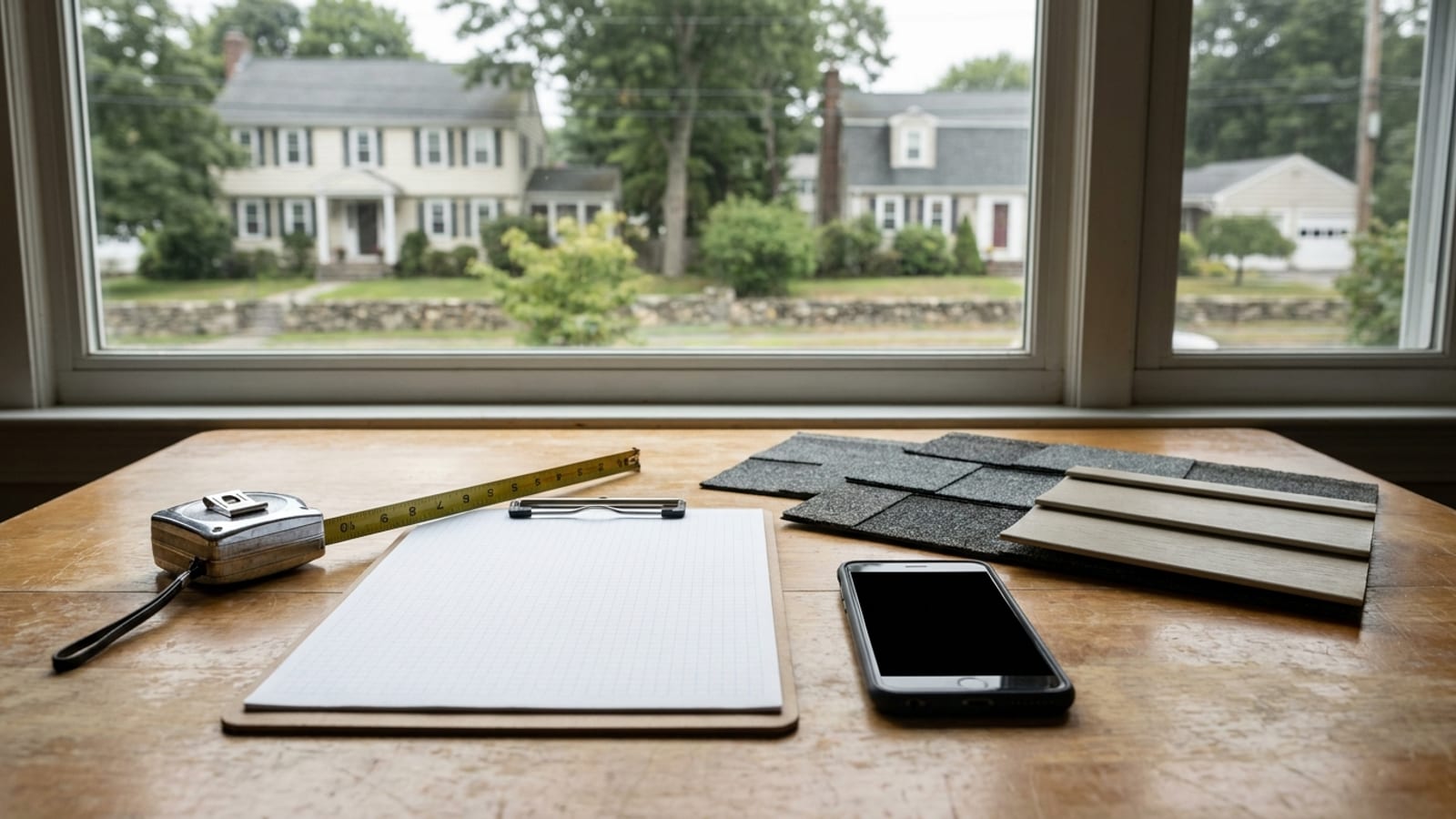
An exterior estimate appointment is a measuring visit and a sales call happening at the same time. Someone comes to your house, climbs the roof or walks the elevations, writes down dimensions and conditions, asks what you want, and then sends you a written price. Knowing the sequence in advance makes it easier to steer the visit toward the information you actually need.
What the appointment is for, stated plainly
Three things have to happen before anyone can price exterior work honestly.
- Quantity. Roof squares, wall square footage, linear feet of trim and gutter, number and size of window openings. Nothing can be priced from a photo or a satellite image alone with any precision.
- Condition. What is behind, under and around the material being replaced. Soft decking, failed flashing, rotted sheathing and inadequate ventilation all change the scope.
- Your intent. Whether you are selling in eighteen months or staying thirty years changes the sensible material recommendation more than anything the estimator finds on the roof.
The estimator is there to gather the first two and ask about the third. They are also there because they would like the job. That is normal, and you should read the written document on that basis.
Before the visit
A short amount of preparation makes the appointment shorter and the number more accurate.
- Find the age of what is being replaced if you can. A closing packet, a home inspection report or an old invoice will usually say.
- Collect photos of any leak, stain or storm event, including dated ones. If an insurance claim is open, have the adjuster's scope available.
- Clear access to the attic hatch. Attic ventilation and the underside of the deck tell more about a roof than the shingles do.
- Unlock gates, and move cars out of the driveway where the ladder will go.
- Write down your questions. You will forget half of them once the conversation starts.
What actually gets measured and looked at
Roofing
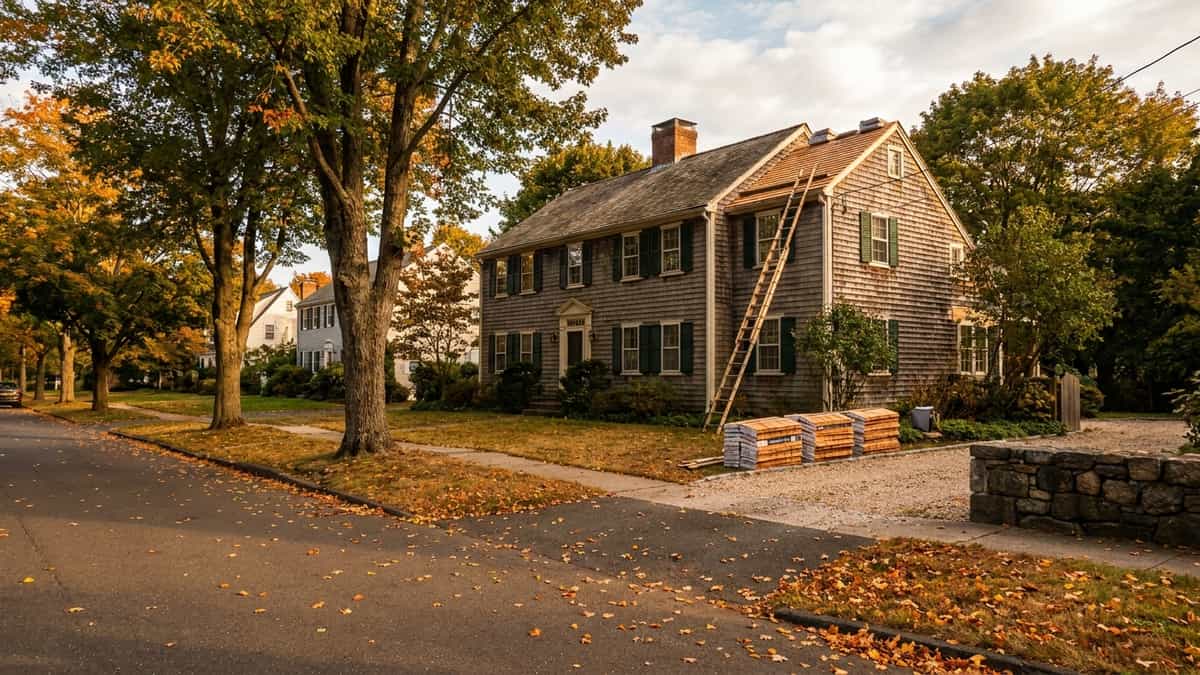
Expect roof planes to be measured by hand or with a measuring wheel on the ground where the pitch is too steep to walk safely. The estimator should be noting pitch, number of existing layers, penetration count, valley type, chimney and sidewall flashing condition, and the state of the ridge and soffit ventilation. Decking condition can only be partly judged from above, which is why the attic matters and why a good estimate prices deck replacement per sheet rather than guessing at a lump sum.
There are two code figures behind every Connecticut roof proposal, and an estimator who knows them is worth listening to. Appendix AY of the 2022 Connecticut State Building Code assigns each town an ultimate design wind speed and a ground snow load. Guilford, Madison and New Haven are 125 mph, higher than Greenwich, Stamford, Westport and Fairfield at 120 mph. Avon, Farmington and Simsbury carry a 35 psf ground snow load while every other town we serve carries 30 psf. Separately, a shingle only earns its published wind rating if it is fastened the way the manufacturer requires, which for high wind coverage is usually six nails per shingle in a defined nail zone instead of four. Ask which it is, and ask for it to appear in writing. Our roofing inspections page covers what the on-roof portion of the visit includes.
Siding
Siding estimates are driven by wall area, number of corners, window and door openings to be trimmed, and the condition of what is behind the existing cladding. Expect the estimator to look for soft spots, to check around windows and at the base of walls, and to ask whether you have ever had interior staining on an exterior wall. The honest line to listen for is this: nobody knows the condition of the sheathing until the old siding comes off, so the estimate should state how sheathing replacement will be priced if it is found.
Windows
Window appointments involve measuring every opening, inside and out, and deciding between an insert that sits in the existing frame and a full frame replacement that takes the unit back to the rough opening. Bedrooms deserve a separate measurement, because an insert reduces clear opening and a window already close to the egress minimum can lose compliance. On performance, all of Connecticut sits in the ENERGY STAR Northern climate zone, where version 7.0 requires a U-factor of 0.22 or lower and a solar heat gain coefficient of at least 0.17. The SHGC number is a minimum, not a maximum, because in a heating climate a window that blocks too much sun throws away free winter heat. Both figures are on the NFRC label, and a quote should name the exact unit so you can check them.
Permits, historic districts and other things worth raising at the table
| Trade | Permit for a like-for-like replacement | Who pulls it |
|---|---|---|
| TradeRoof replacement | Permit for a like-for-like replacementRequired in every town we serve | Who pulls itA registered Home Improvement Contractor, on your behalf |
| TradeSiding replacement | Permit for a like-for-like replacementUsually not required, until the scope grows to exterior insulation, sheathing replacement or altered openings | Who pulls itContractor |
| TradeWindow replacement | Permit for a like-for-like replacementUsually not required where the opening size does not change | Who pulls itContractor |
If your house sits in a local historic district, the distinction that matters is material type. Under Connecticut General Statutes Sec. 7-147f(a), replacing roofing, siding or windows with similar materials does not require a Certificate of Appropriateness. Changing the material type, slate to asphalt or wood to vinyl, does, and that can mean waiting for a commission meeting. Raise it at the estimate rather than after the contract.
What you should receive afterward
A detailed, itemized written estimate, generally within 24 to 48 hours of the inspection. It should name materials by brand and product line, state tear-off scope, list underlayment and ice and water shield coverage, state flashing replacement rather than reuse, and separate the allowances for conditions that cannot be seen yet. Our guide to reading a roofing quote walks through the line items in detail, and the Connecticut rules on contracts and deposits explain what the paperwork has to contain before you sign anything.
Questions that produce useful answers
- What is your town's design wind speed, and how are you fastening to meet it?
- Is the flashing being replaced or reused?
- How is deck or sheathing replacement priced if it is found?
- What is the workmanship warranty, and what is the manufacturer warranty on the specific product you are quoting?
- Who is actually on the roof, and is that crew covered by your liability and workers compensation insurance?
Comparing more than one estimate
Two prices on the same house can differ by thousands for defensible reasons: six nails versus four, full flashing replacement versus reuse, a wider ice and water shield run, a better shingle. They can also differ because one of them left something out. The only way to tell is to line the documents up and compare scope, not totals. If one estimate is shorter, that is usually the answer.
We serve fifteen Connecticut towns across Hartford, Middlesex, New Haven and Fairfield counties, listed on our service areas page, and appointments run Monday through Friday from 7:00 AM to 6:00 PM and Saturday from 8:00 AM to 2:00 PM. If you want someone to measure your house and put a written, itemized price in front of you, request an estimate. Someone will come out, inspect, measure and give you a number in writing, and then it is yours to compare.