Short answer
Sometimes. Replacing siding on the second story only, or on one elevation, makes sense when the damage is confined to that area, when the house already has a horizontal trim line to stop at, or when a budget forces the work into phases. It almost never saves money per square foot, because staging, mobilization and disposal barely shrink when the scope does.
On this page
Sometimes, and the deciding factors are rarely the ones homeowners ask about first. Partial siding replacement is a legitimate scope. It is also the scope where the price per square foot is highest and where a decision made for budget reasons shows up on the front of the house permanently. This post is about when the trade is worth it and when it is a false economy.
Why partial work costs more per square foot
A siding job has fixed costs that do not care how much wall you are covering. Cutting the scope in half does not cut them in half.
| Cost item | Behaves how when scope shrinks |
|---|---|
| Cost itemCrew mobilization and travel | Behaves how when scope shrinksUnchanged |
| Cost itemStaging, ladders, lift rental | Behaves how when scope shrinksLargely unchanged on a two-story wall |
| Cost itemDumpster and disposal | Behaves how when scope shrinksPartially reduced |
| Cost itemHouse wrap, flashing, trim details | Behaves how when scope shrinksReduced roughly with area |
| Cost itemSiding material | Behaves how when scope shrinksReduced with area |
| Cost itemLabor on openings, corners, transitions | Behaves how when scope shrinksBarely reduced, since openings cluster on specific walls |
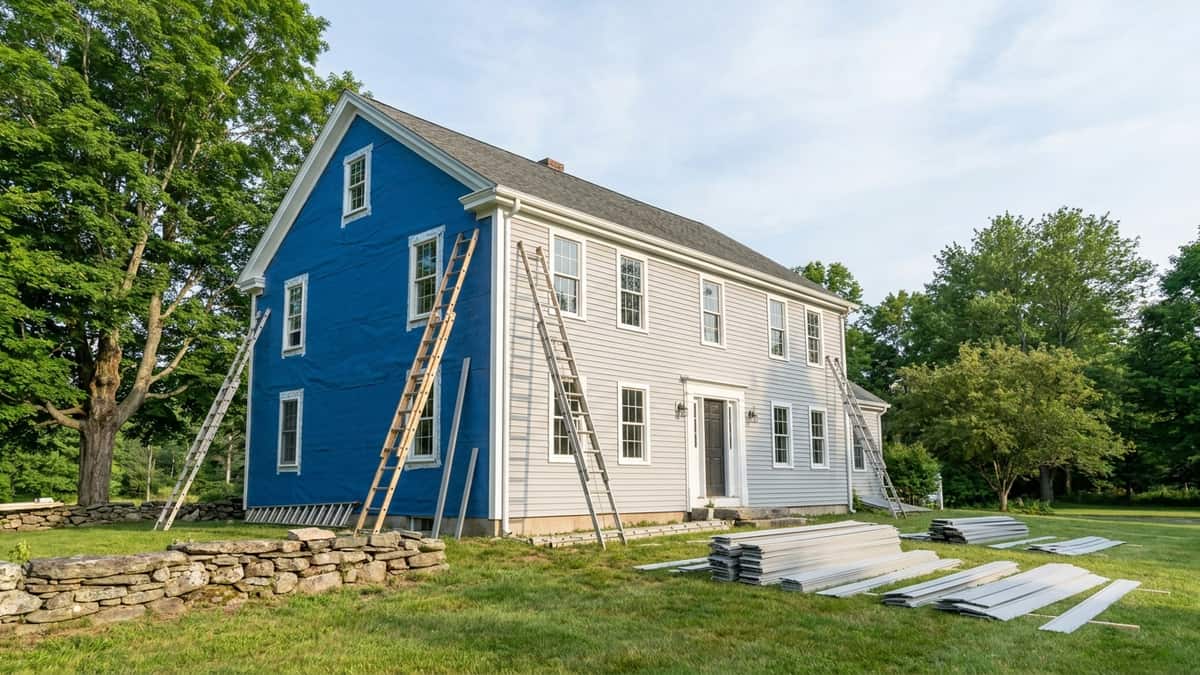
The second story is the half of the house that requires the equipment. The first story is the half a crew can largely reach from the ground. So "second story only" removes the cheapest half of the work and keeps the most expensive half. One elevation of a house is a similar problem in miniature: you still set up, still protect the landscaping, still order a dumpster, still detail every window on that wall.
Full-house ranges in Connecticut generally run $8,000 to $35,000 for vinyl, $18,000 to $80,000 or more for James Hardie fiber cement, and $25,000 to $60,000 or more for cedar, depending far more on wall area and complexity than on the material name. Our full breakdown of siding costs walks through what moves a house within those ranges. For a partial scope, a useful mental model is this, with illustrative numbers only: if the second story is about half the wall area, expect the price to land well above half the full-house figure, often closer to two-thirds, because the fixed line items came along for the ride.
When second-story-only genuinely makes sense
There are honest cases for it.
The damage is confined to one area
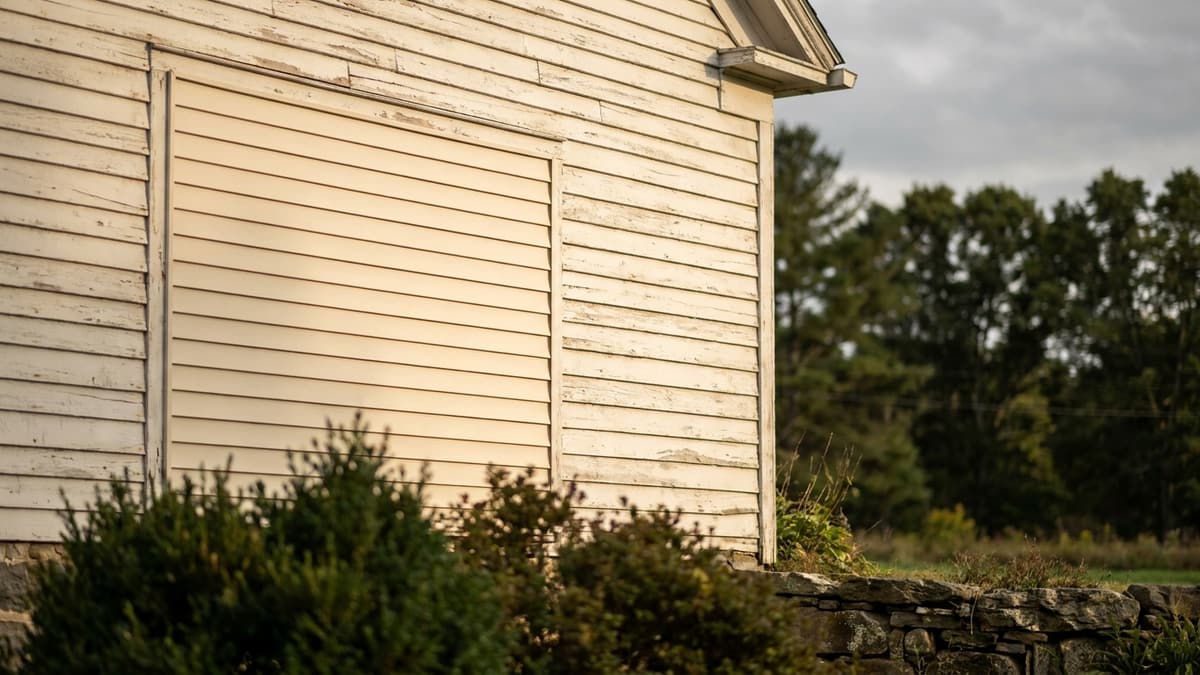
Wind-driven rain and storm impact do not distribute evenly. A gable end that takes the weather, or an upper wall that sat under a failed gutter for years, can be gone while three other elevations are fine. Replacing sound siding to satisfy a sense of symmetry is money spent on nothing. If the problem is localized and the rest of the house is intact, targeted work through siding repair and replacement is the correct answer.
The house already has a break line
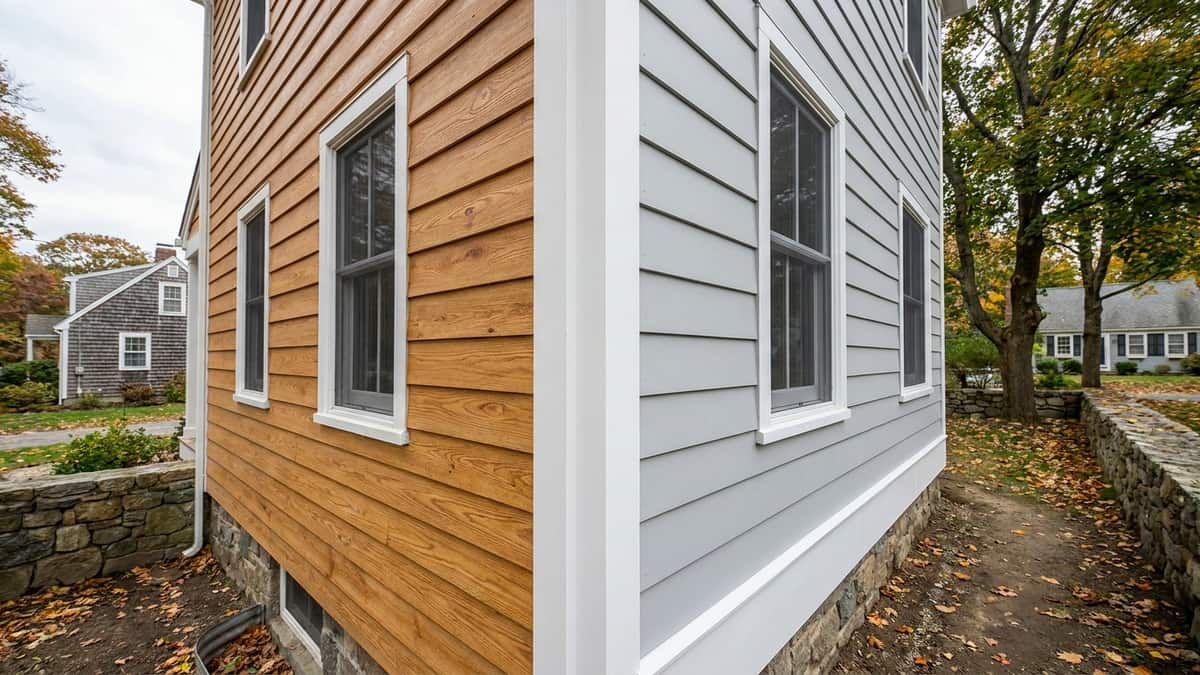
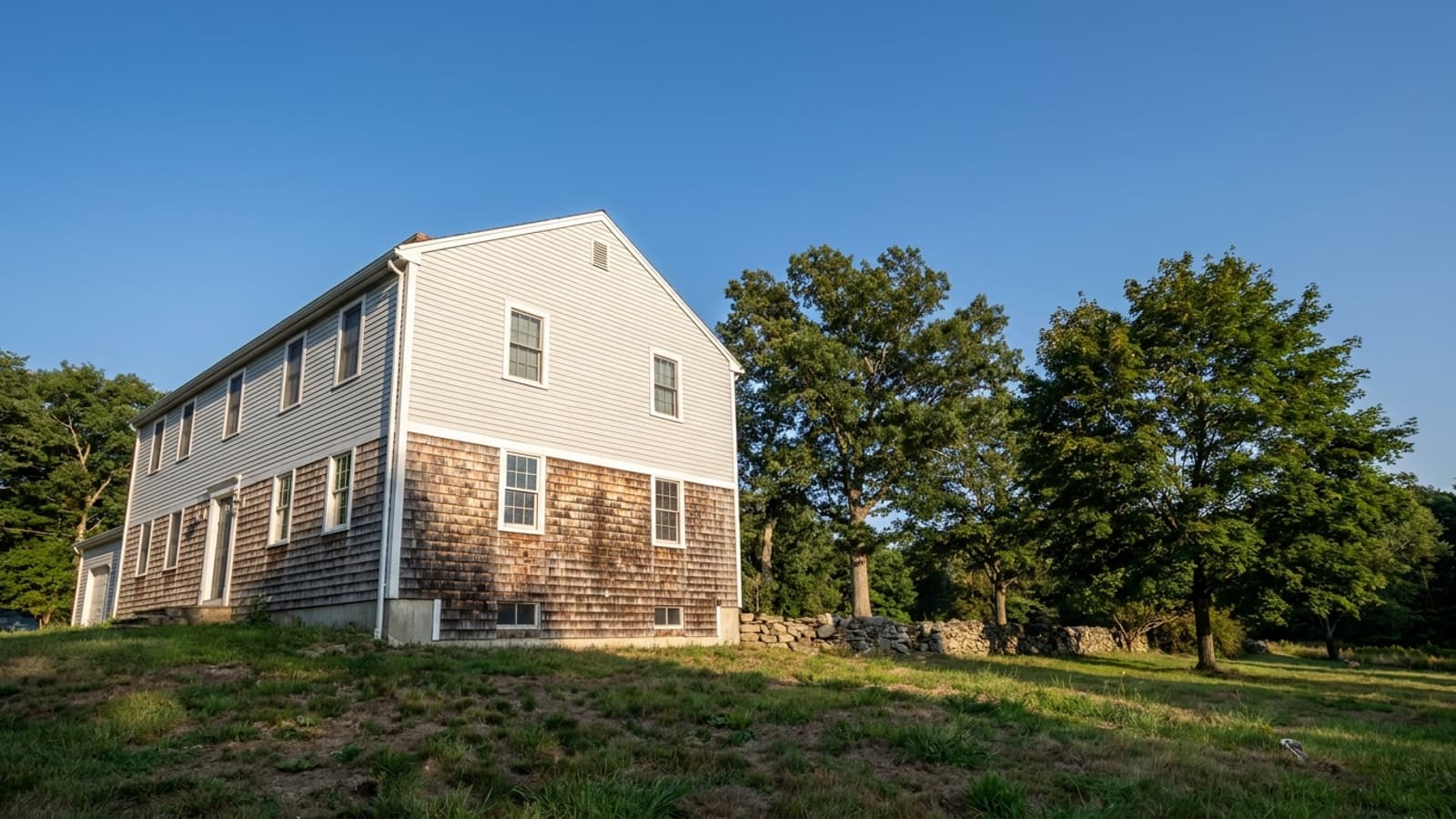
Many Connecticut Colonials, Capes and raised Ranches already separate the stories visually. A band board, a water table, a porch roof, a change of plane where the second story overhangs, or an existing material change between levels all give you a clean place to stop. Shingles above and clapboard below is a traditional New England pattern, not a compromise. If that line exists, a two-material house looks intentional.
A real budget constraint and a real plan
Phasing a $30,000 project into two $18,000 projects is sometimes the only way it happens. That is a defensible choice if you decide the break line in advance, keep a record of the exact product and color, and understand that the second phase will cost more than the first phase did, because material prices and labor rates move.
An insurance claim covering one elevation
When a carrier approves one damaged wall, that is the scope that is funded. Whether to extend it at your own expense is a separate decision from whether the claim is correct.
The three problems that sink partial jobs
Color match is harder than it sounds
Vinyl is manufactured in color lots, and the siding on your house has been weathering in the sun since the day it went up. A panel of the identical named color, ordered today, will usually look lighter and crisper next to it. On darker colors the gap is wider. Fiber cement with a factory finish is matched by product and color name, but the old wall has still faded. A near match on the same plane looks like a repair. A deliberate contrast at a trim line looks like a design.
There is also product availability. Profiles and colors are discontinued regularly, and a thicker or thinner panel will not lock into an existing course. Panel thickness and profile are worth confirming before anyone orders, and the differences between vinyl grades matter more on a patch than on a whole house because the old and new sit side by side.
The transition has to shed water
Siding is a drainage plane, not a seal. Water that gets behind it runs down and out. Where new siding meets old, the layers have to lap in the right order so that water leaving the upper wall lands on the face of the lower one. That means a flashed transition with a drip, tied into the house wrap behind both sections. Butting new panels to old on a flat wall and caulking the joint is how a partial job turns into a wall repair in five years.
The old siding keeps aging
The wall you did not touch is the same age it was, and it will reach the end of its life on its own schedule. Doing it later means paying to stage the house a second time. If the untouched siding is already twenty years old, you are not avoiding the cost, you are scheduling it.
What to ask for in the estimate
- A price for the partial scope and a price for the whole house, both with the square footage shown, so you can compare the per-square-foot rate.
- The specific transition detail at the break line, described in writing, including the flashing.
- Confirmation of the exact product, profile and color being ordered, kept on file for the next phase.
- A unit price for sheathing replacement, since nobody knows what is behind a failed wall until it is open. That discovery is also what can push a job from no permit required into permit territory.
- Who handles trim, soffit and fascia on the section being replaced, which is frequently where a partial quote is quietly short.
The honest recommendation
If one elevation has failed and the rest of the house has years left, do that elevation and do it properly. If the whole house is tired and you are replacing the top half because it is what you can afford this year, the better value is usually to wait, price the whole house, and make the decision once. Our siding service page covers vinyl, fiber cement and cedar, and we are James Hardie Elite Preferred installers if fiber cement is the direction you are going.
When you are ready for real numbers, request an estimate. Someone comes out, measures the house, looks at what is behind the siding where that is possible, and gives you a written, itemized price — including, if you ask, both the partial and the full scope side by side so the comparison is yours to make.