Short answer
Under Connecticut General Statutes Sec. 7-147f(a), replacing siding with similar materials inside a local historic district does not require a Certificate of Appropriateness, so a wood-for-wood clapboard job can start as soon as the material is ordered. Changing the material type, such as wood to vinyl or wood to fiber cement, does require review, and that review has to be finished before anything is ordered. The delay homeowners run into is almost never the commission itself, it is finding out about the commission after the contract is signed.
On this page
If your house sits inside a local historic district and you are replacing the siding with the same material it already has, there is no approval step. You are doing ordinary maintenance and repair, and Connecticut General Statutes Sec. 7-147f(a) says that is not subject to review. If you are changing the material type, the order of operations changes completely, and getting that order wrong is the single most common reason a siding job in a district town stalls.
We have already covered the statute across all three trades in an earlier post on historic district exterior work. This one is narrower on purpose: siding specifically, and how to sequence the job so nothing sits on a truck waiting for a meeting.
What the statute actually separates
The line is material type and configuration, not age and not appearance in general.
| Scope of work | Certificate of Appropriateness |
|---|---|
| Scope of workWood clapboard replaced with wood clapboard | Certificate of AppropriatenessNot required |
| Scope of workCedar shingle sidewall replaced with cedar shingle | Certificate of AppropriatenessNot required |
| Scope of workRotted boards, corner boards, water table replaced in kind | Certificate of AppropriatenessNot required |
| Scope of workWood replaced with vinyl | Certificate of AppropriatenessRequired |
| Scope of workWood replaced with fiber cement | Certificate of AppropriatenessRequired |
| Scope of workClapboard exposure changed, or shingle changed to clapboard | Certificate of AppropriatenessRequired |
| Scope of workWindows or doors relocated, added or filled in as part of the siding job | Certificate of AppropriatenessRequired |
The second column is the whole decision. A homeowner who wants the house to look the way it looks now, in the material it already has, is not asking the commission for anything. A homeowner who wants a lower-maintenance wall is asking to change the character of a regulated exterior, and that is precisely what the commission exists to weigh.
Two things that are frequently confused
A local historic district is not the National Register. National Register listing is an honorific and a tax-credit pathway. It does not, on its own, put your siding decision in front of a commission. The regulated boundary is the local district your town adopted, and the town clerk or building department can tell you in one phone call whether your parcel is inside it.
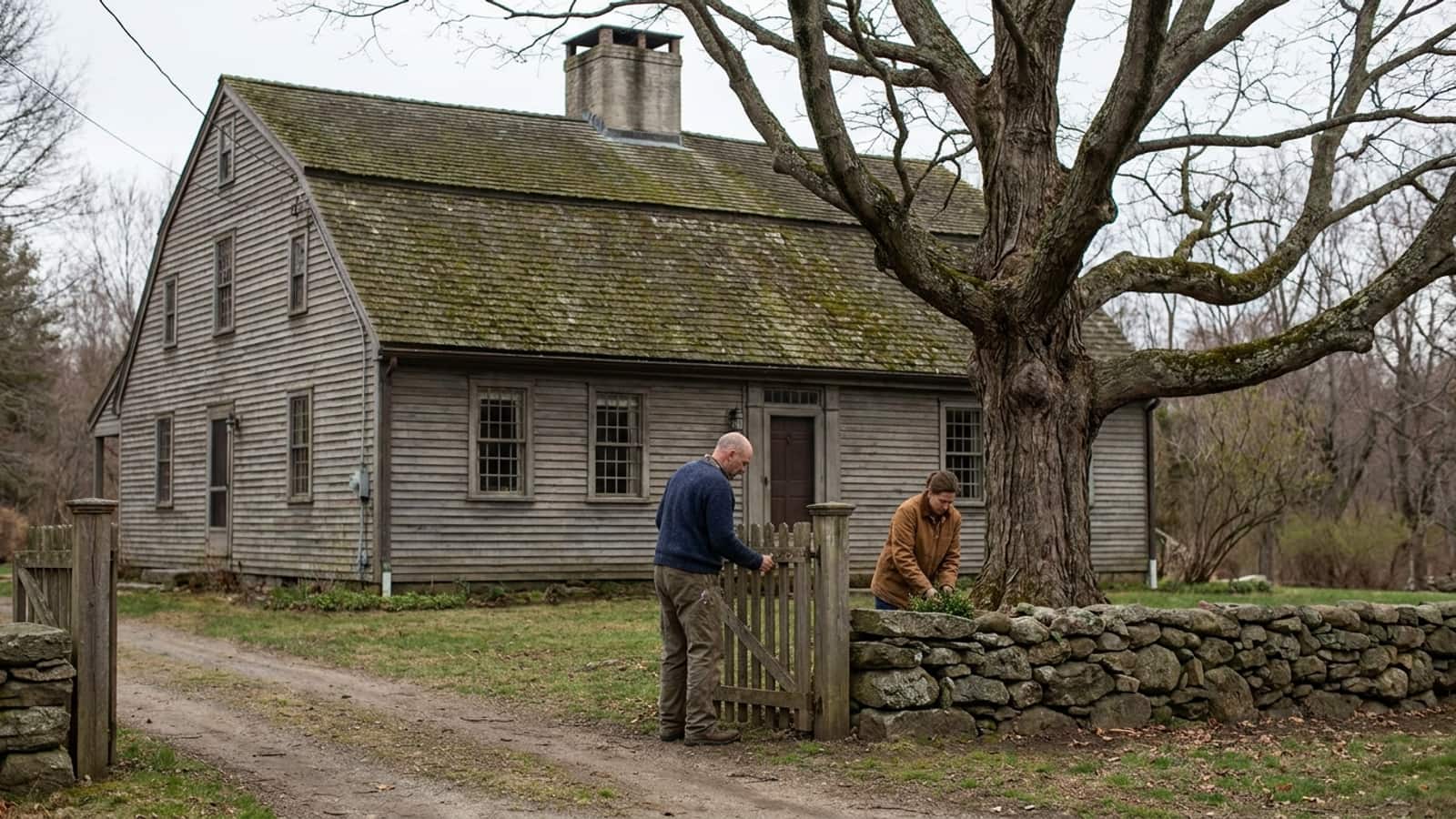
Not every old neighborhood is a district. Farmington Village, the Guilford Green area, the Glastonbury town green, and parts of Hartford and New Haven have long-standing historic areas, but the mapped lines are narrower than most people assume. A house two streets from a green is often outside. Check the map rather than the vibe.
Sequencing a like-for-like job
This is the simple path, and it is the one most historic-district siding projects are on.
- Confirm with the town that the work is in-kind. Put the question in writing if you can, and keep the reply.
- Confirm whether a building permit applies. Most towns do not require one for like-for-like siding, but that changes the moment the scope includes exterior insulation, sheathing replacement, or any change to an opening.
- Order material. Cedar in particular has lead time, and clear grades more so.
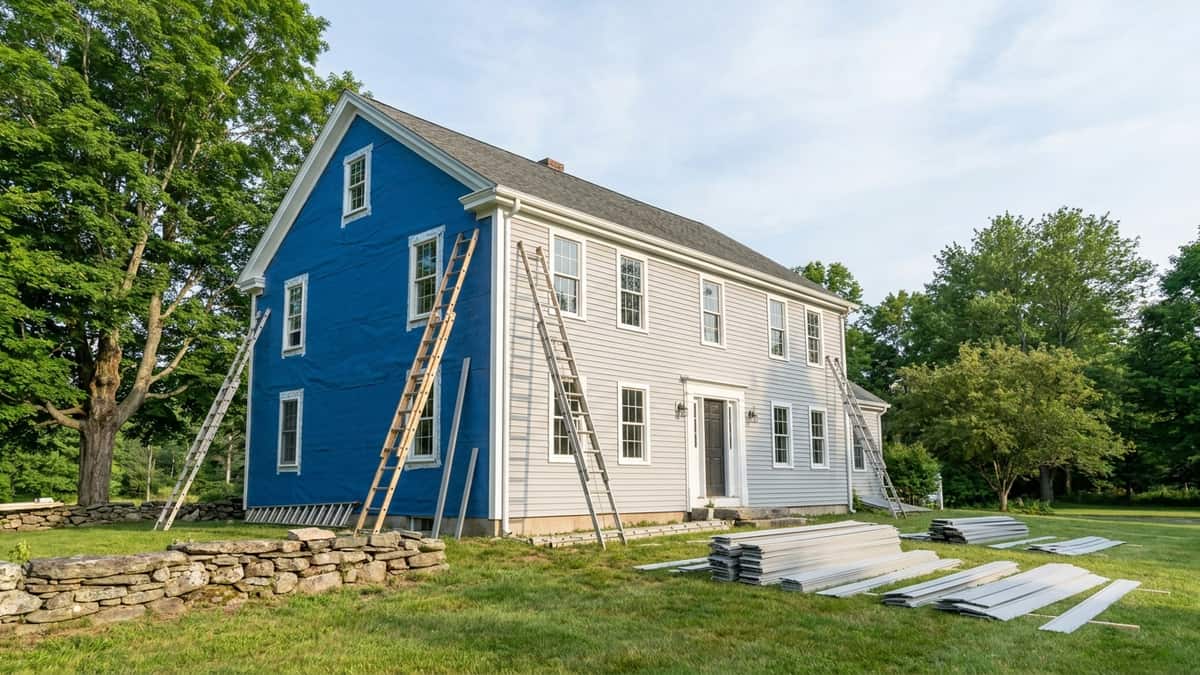
- Schedule demolition with a plan for what happens if the sheathing underneath is wet. On an eighteenth or nineteenth century house, the wall behind the siding may be board sheathing, or there may be no sheathing at all behind the siding.
- Do the water management work while the wall is open, since that is the part nobody sees and the part that decides whether the new siding lasts.
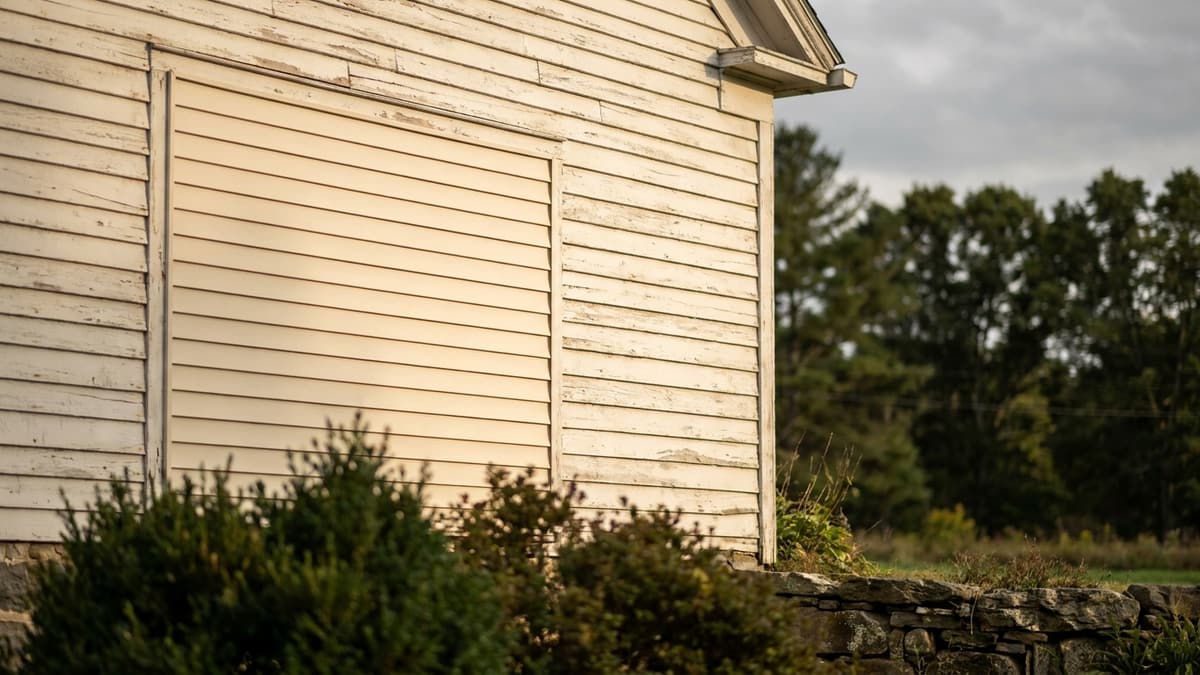
The risk on an in-kind job is not paperwork. It is discovery. Older houses hide rot at the water table, at the base of corner boards, under sills, and behind gutters that have overflowed for a decade. Any honest estimate for a house of this age should say in writing what the unit price is for replacing sheathing or framing found bad, so the change order is arithmetic rather than a negotiation.
Sequencing a material change
If you want to move off wood, the work is real but it is manageable when it is done in the right order.
Apply before you choose a color
Get the commission's application form and, more importantly, its meeting calendar and submission deadline. Both are published by the town. Applications typically have to be in well before the meeting date to make the agenda. Missing a deadline by two days can cost a full cycle.
Bring physical samples and real dimensions
Commissions respond to specifics. A useful submission usually includes a sample board of the proposed material, the exposure in inches, the profile, the trim detail at corners and around windows, and photographs of the existing conditions. Saying "fiber cement" tells them very little. Saying "7 inch exposure smooth lap with 5/4 wood corner boards, matching the existing 7 inch exposure" tells them everything they need.
Expect the detail to matter more than the material
The objections that come back are rarely about the product itself. They are about a wider exposure that changes the shadow lines, trim that is thinner than the original, a window casing that gets buried, or a finish that reads plastic in raking light. Those are fixable in the design before the meeting, which is why the conversation is worth having with an installer before you file.
Be realistic about what gets approved
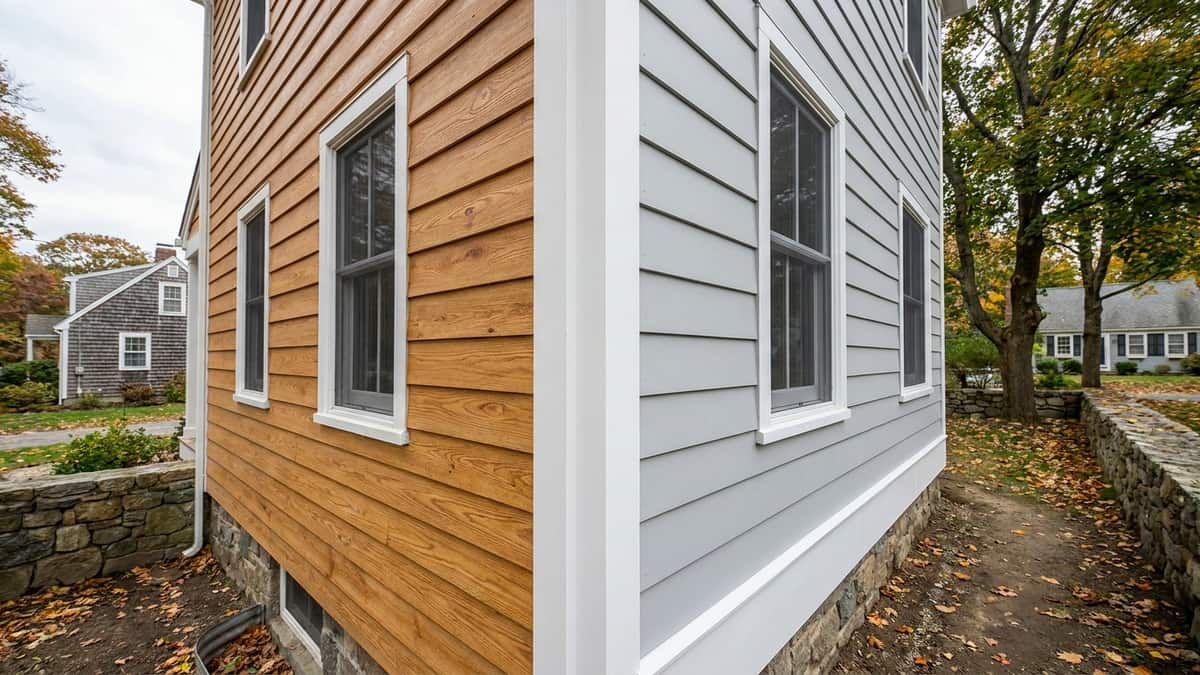
Some commissions accept fiber cement readily on secondary elevations and resist it on the street face. Some accept nothing but wood. There is no statewide answer, and a contractor who promises approval is promising something that is not theirs to give. What is fair to say is that our fiber cement work and our cedar work are both done to whatever profile and exposure a commission asks for, because that is usually where the negotiation lands.
The honest cost comparison for a district house
General Connecticut ranges, which depend heavily on wall area, trim complexity and what is found behind the old siding:
| Material | General range | Lifespan | Maintenance |
|---|---|---|---|
| MaterialVinyl | General range$8,000 - $35,000 | Lifespan20 - 30 years | MaintenanceRinse |
| MaterialFiber cement | General range$18,000 - $80,000+ | Lifespan40 - 50+ years | MaintenanceRepaint at long intervals |
| MaterialCedar | General range$25,000 - $60,000+ | Lifespan20 - 40 years | MaintenanceRe-stain every 3 to 5 years |
The case against the material change is worth stating plainly. On a period house with fine trim, a well-installed cedar or clapboard wall that is painted on a sensible cycle can outlive the argument, it needs no approval, and it will never look like a substitute. The case for changing is equally plain: repainting a large house every seven or eight years is a real recurring cost, and a homeowner who does not want that cost is making a rational choice, not a lazy one. The commission decides whether the district can absorb it. You decide whether the maintenance is worth carrying.
What to ask before you sign anything
- Is my parcel inside the local historic district, per the town map?
- Is this scope in-kind under Sec. 7-147f(a), or a material change?
- If it is a material change, what is the application deadline and the next meeting date?
- Does the scope trigger a building permit, and who pulls it?
- What is the written unit price for sheathing and framing repair found after demolition?
- What house wrap, flashing and trim details are specified at windows, doors and the water table?
A quote that answers all six is a quote you can compare. Our full approach to materials, preparation and installation is laid out on the siding page, and we work throughout the district towns listed on our Farmington siding page and the rest of our service area.
When you are ready for a number, request an estimate. Someone comes out, measures the walls and trim, looks at the existing conditions, and gives you a written price along with a straight answer about whether your scope needs a Certificate of Appropriateness first.