Short answer
Restain when the boards are still flat, sound and firmly fastened, even if the finish is chalky and the color has gone flat. Replace when boards are cupped, split through, soft at the butt ends, or when the sheathing behind them has been wet. The decision is driven by the condition of the wood and the wall behind it, not by how tired the color looks from the driveway.
On this page
Restain the cedar if the boards are still flat, sound and firmly fastened. Replace them once they are cupping, splitting through their thickness, soft at the butt ends, or once water has been getting past them into the sheathing. Faded, chalky, uneven color is a finish problem. Cupped and split wood is a wall problem, and no amount of stain fixes it.
This post is about how to tell those two conditions apart on your own house before anyone gives you a number, because the gap between the two decisions on a cedar home is enormous.
The test is the wood, not the color
Cedar is a durable siding that depends entirely on being maintained. Quality cedar lasts 20 to 40 years in Connecticut, and the low end of that range is what happens when the finish is allowed to lapse for a decade. The high end is what happens when it never is.
What a sound cedar wall looks like
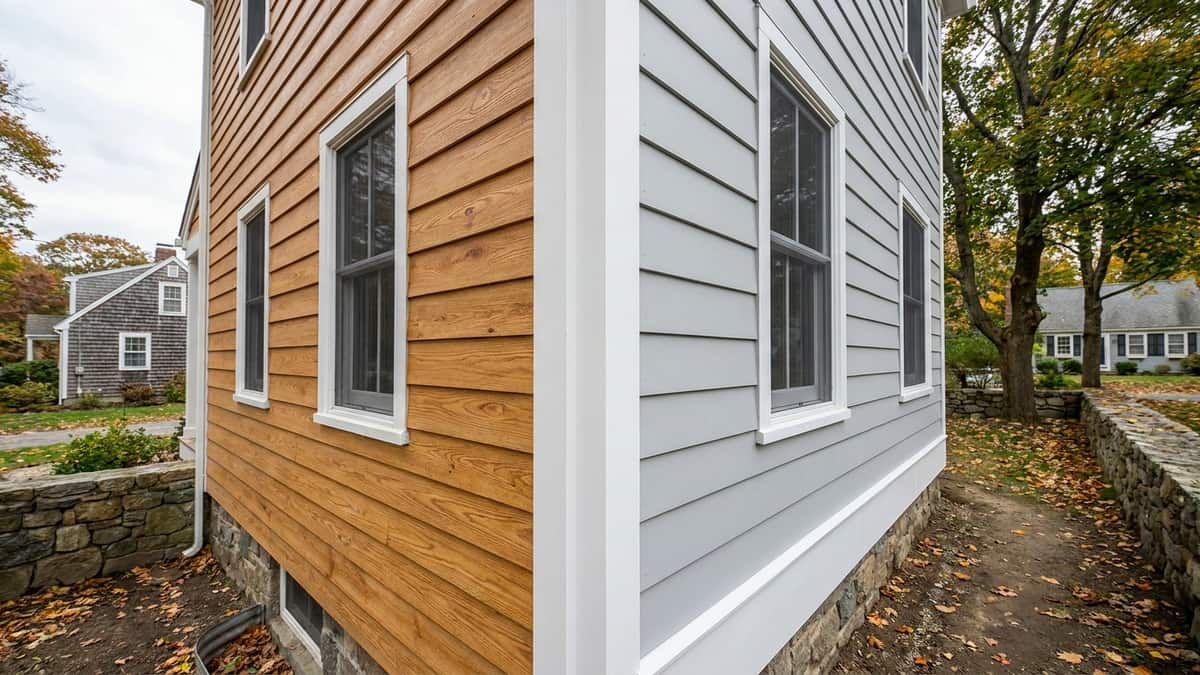
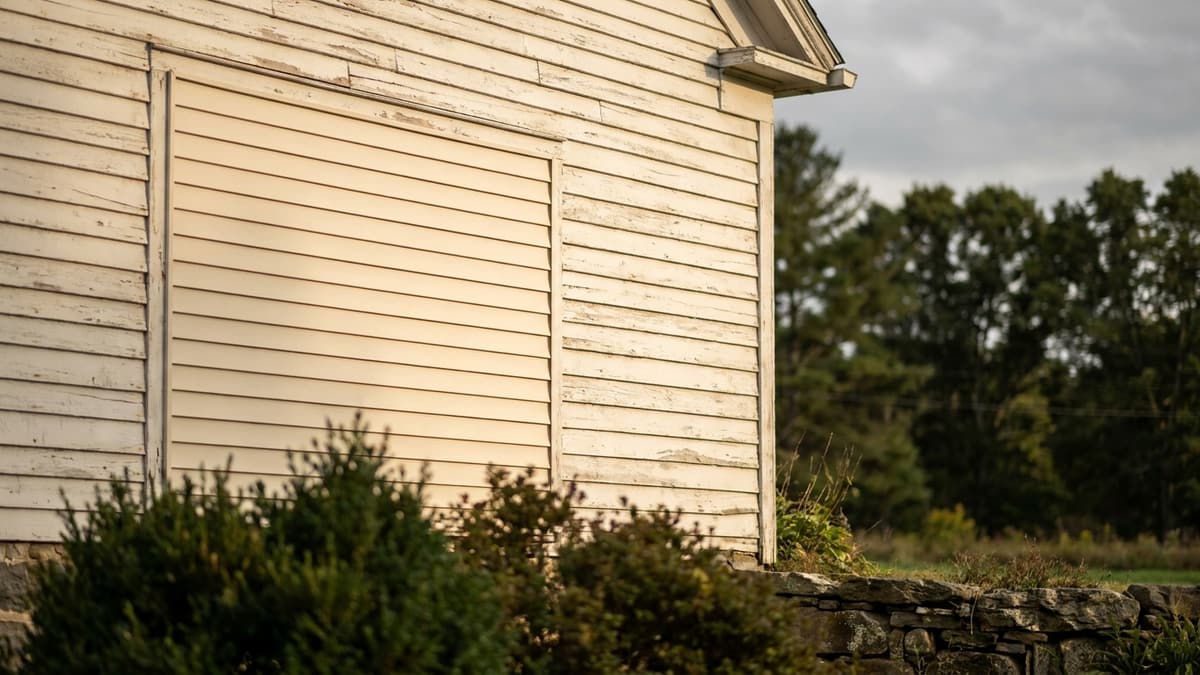
Walk the wall and look at the boards edge-on, not head-on. A sound clapboard is still straight across its width. The butt edge is crisp. Nail heads are flush or slightly set, not popped. You can press a thumbnail into the face and it feels firm rather than fibrous. The finish may be washed out, chalky, blotchy, streaked with tannin, or carrying black mildew on the north side. All of that is surface condition. Cleaning and a fresh coat resets it.
What a failed cedar wall looks like
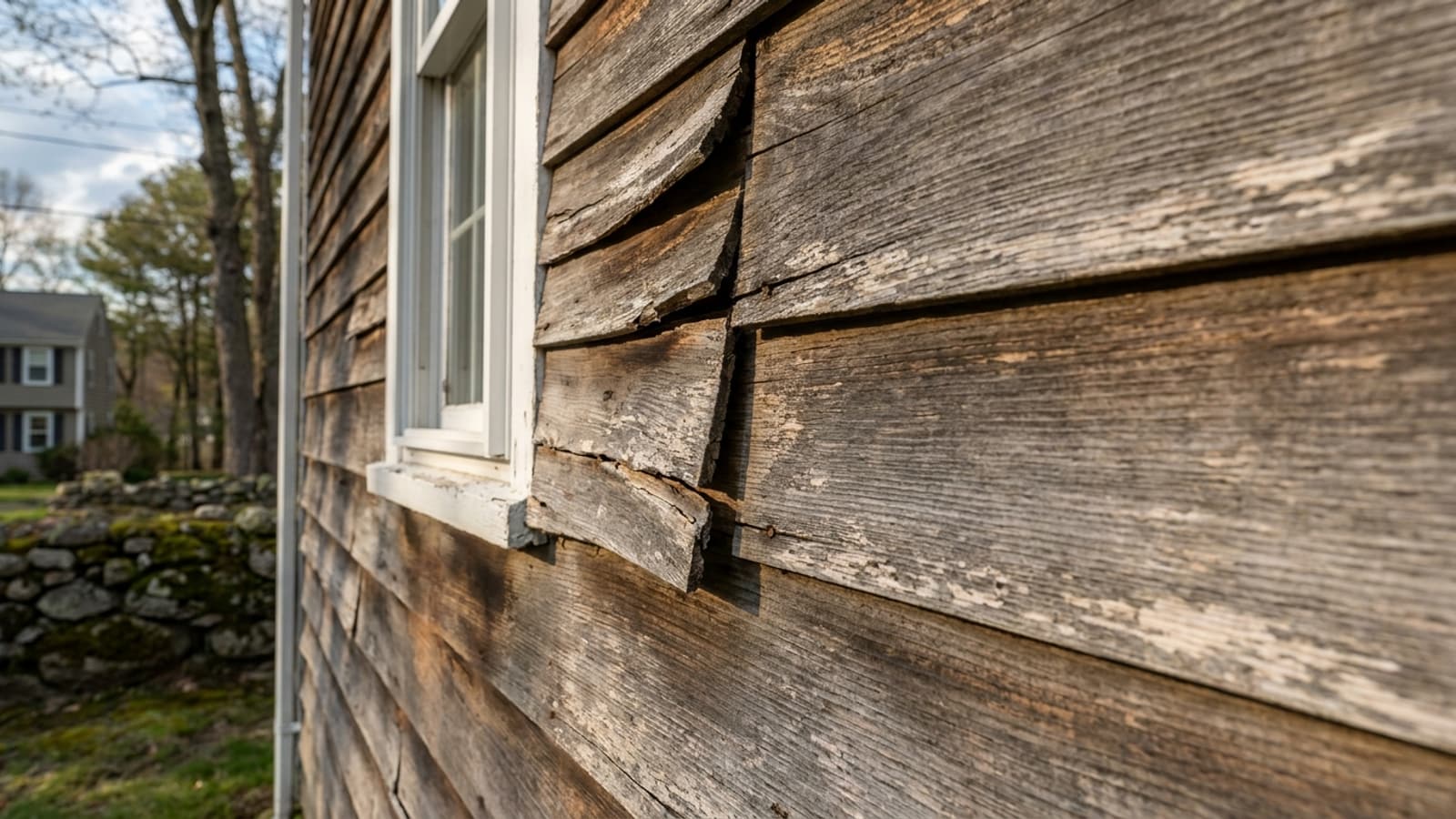
Failure shows in shape, not color. Look for boards that have cupped so the lower edge stands proud of the course below, splits that run the full thickness rather than a surface check, butt ends that have gone dark and spongy where they sit over trim, and courses that have loosened because the nails have nothing left to hold. Look under window sills and at the bottom two courses near grade. Those are where cedar dies first, because that is where water sits.
How to check without guessing
Three checks tell you most of what you need to know.
- Probe the suspect boards. A small screwdriver pressed firmly into a dark butt end should stop. If it sinks, that board is gone. Do this at ten or fifteen spots around the house, not one.
- Pull one board in the worst area. This is the only honest way to see the sheathing and building paper behind the siding. Sound, dry sheathing with intact felt or house wrap means the cedar did its job and the problem is only the cedar. Dark, soft sheathing means water has been getting in, and that changes the project.
- Check inside. Stains at the top of a first-floor interior wall, paint that will not hold on the inside face of an exterior wall, or a musty smell in a closet on an exterior corner all point at a wall that has been wet. We covered the interior signals in more detail in our post on how to tell when siding has failed.
If all three checks come back clean, you have a finish job, and you should not be shopping for siding.
What the replacement path costs
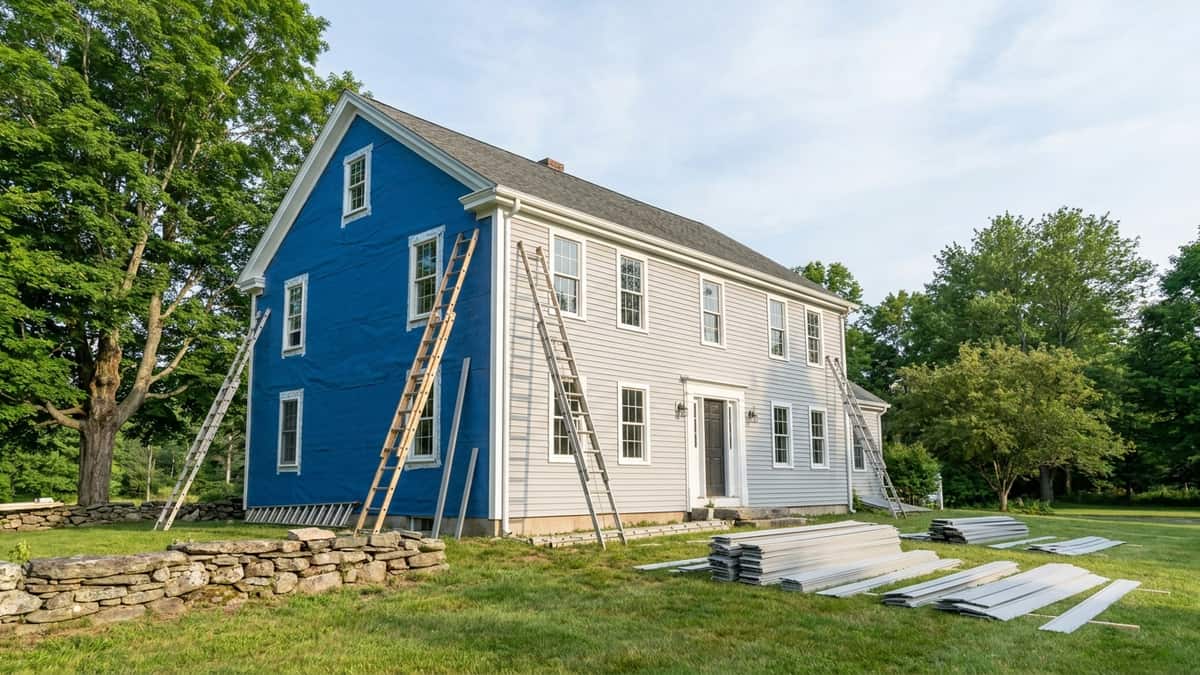
If the wood is gone, the next question is what goes back on. These are general Connecticut ranges that depend heavily on wall area, trim complexity and what is found behind the old siding, not quotes.
| Material | General Connecticut range | Lifespan | Maintenance |
|---|---|---|---|
| MaterialVinyl | General Connecticut range$8,000 to $35,000 | Lifespan20 to 30 years | MaintenanceRinse with a hose |
| MaterialJames Hardie fiber cement | General Connecticut range$18,000 to $80,000 or more | Lifespan40 to 50 years or more | MaintenanceRepaint at 15 years or beyond |
| MaterialCedar | General Connecticut range$25,000 to $60,000 or more | Lifespan20 to 40 years | MaintenanceRe-stain every 3 to 5 years |
The number that surprises people is not the material cost. It is the maintenance column. Choosing cedar again means committing to a stain cycle every three to five years for as long as you own the house. That is a real recurring expense that belongs in the comparison, and it is the honest argument against putting cedar back on a house where the first cedar wall failed from neglect. You can see how we handle each of those materials on the cedar section of our siding page.
The case for restaining
Restaining wins more often than homeowners expect, for four reasons.
- It is a fraction of the cost. Even a full strip, clean and two-coat job on a large house does not approach the replacement figures above.
- You keep the real thing. No fiber cement or vinyl profile reproduces the way light falls across a genuine sawn cedar clapboard, which matters on antique Colonials and saltboxes.
- It resets the clock without touching the wall. Nothing gets opened, nothing gets discovered, and there is no sheathing surprise.
- It is reversible. A wall you stain this year can still be resided in five years. A wall you tear off cannot be un-torn.
The prep is what determines whether the coat lasts. Cedar that has gone thirsty needs washing, mildew treatment, spot sanding of the burned areas, and end-grain sealing at the butt cuts. A stain applied over a dirty, chalked surface will fail in two seasons and you will be having this conversation again.
The case for replacing
Replace when any of these are true:
- The sheathing behind the cedar is wet or soft in more than one spot.
- The count of unsalvageable boards is past about a quarter of a wall.
- The house has been repainted rather than stained, the paint is failing in sheets, and stripping it back to bare wood costs more than residing.
- You are tired of the three-to-five-year cycle and want to be done with it.
That last reason is legitimate. A homeowner who does not want to schedule a stain job every few years is not making a mistake by moving to fiber cement or vinyl. If the decision is really between painting again and starting over, our post on painting versus replacing siding works through that math.
Partial replacement is a real option
The middle path gets skipped too often. Individual clapboards can be cut out, the felt or wrap repaired, and new cedar woven into the existing courses. The whole wall is then cleaned and stained, which pulls the new stock and the old stock to a common tone. On a house with fifteen bad boards clustered under two windows and around a deck ledger, this is usually the correct answer and it costs a small fraction of residing.
New cedar going in should be back-primed or sealed on all six sides before it goes up. Unsealed end grain is the single fastest way for a replacement board to fail early.
Shoreline cedar and historic districts
Salt air is harder on cedar than inland weather, and it is harder still on the fasteners holding it. On the shoreline we use corrosion-resistant fasteners and flashing, because a stainless or hot-dipped nail is what keeps a sound board from streaking and loosening. Homeowners in Guilford and Madison see this pattern constantly: the wood is fine and the nails are the problem.
If your house sits in a local historic district, the material choice carries a procedural consequence. Under Connecticut General Statutes Sec. 7-147f(a), replacing cedar with cedar is like-for-like and does not require a Certificate of Appropriateness. Switching cedar to vinyl or fiber cement is a change of material type and does require one, which means a commission meeting and a schedule that is no longer yours to set.
On permits: most Connecticut towns do not require one for a straightforward like-for-like siding replacement. That changes once the scope grows to sheathing replacement, exterior insulation, altered openings or structural repair found after demolition, which is exactly the scope you end up in when the cedar failed because the wall was wet.
What to do next
Start with the probe test and one pulled board. If the wall behind the cedar is dry and the boards are flat, spend your money on prep and stain and revisit this in five years. If the sheathing is wet or the bad-board count is high, get the wall priced properly.
We will come out, measure, look behind the siding where it matters, and give you a written price. You can see the full range of materials on our siding page or request a visit through our estimate form.