Short answer
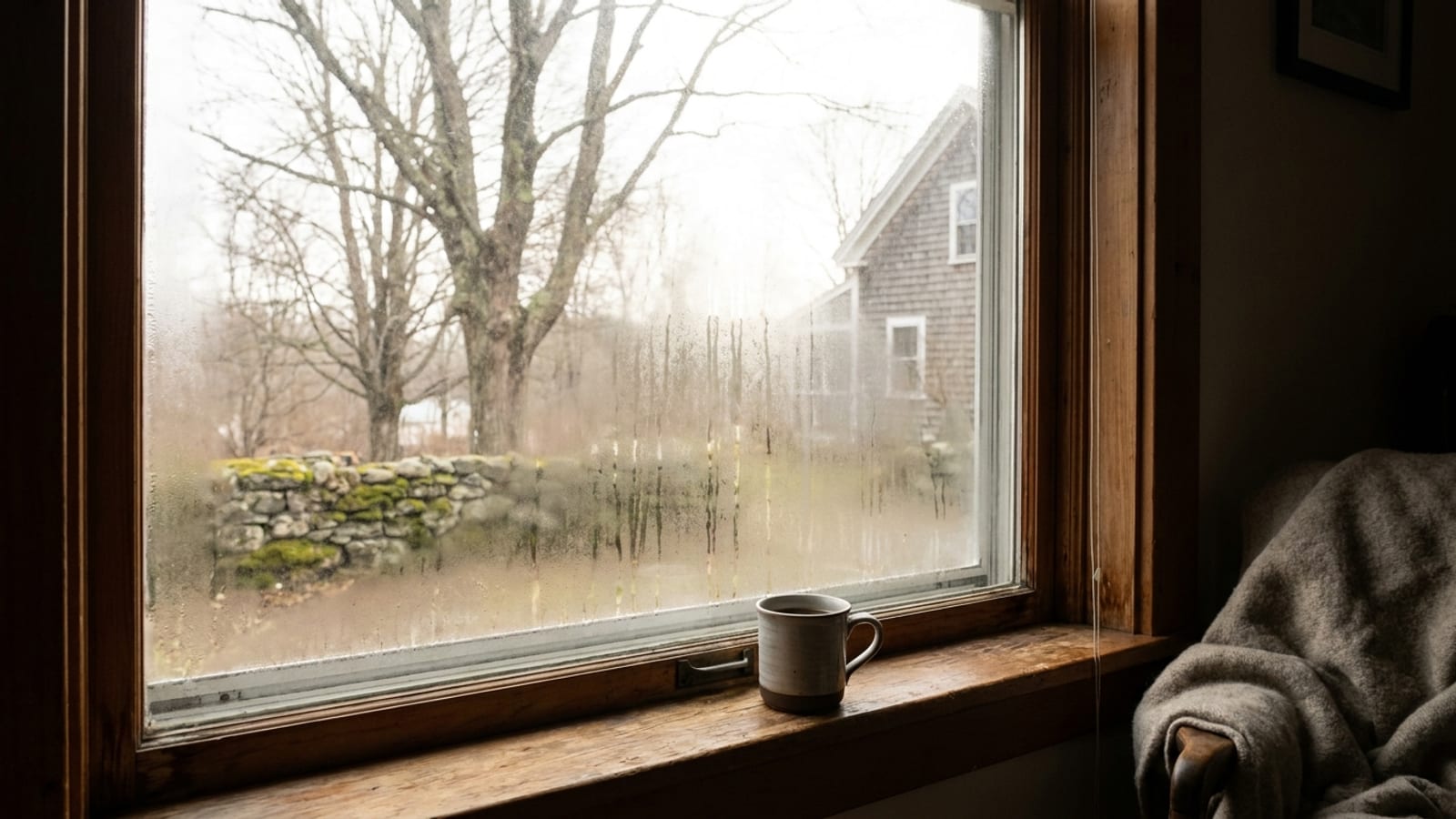
Moisture you can wipe off with your hand is condensation on a glass surface, and that is a humidity and surface-temperature issue rather than a broken window. Fog, haze or mineral streaking sealed between the two panes means the insulated glass unit has lost its seal, and no amount of wiping will reach it. A failed unit is usually corrected by replacing the glass or the sash, not the whole window.
On this page
There are three places water can appear on a window, and only one of them means the window has failed. Sorting out which one you are looking at takes about thirty seconds and no tools.
Where the moisture is decides everything
A modern double-pane window has four glass surfaces: the room side of the inner pane, the sealed cavity side of the inner pane, the sealed cavity side of the outer pane, and the weather side of the outer pane. Condensation on surface one or surface four is condensation on an exposed piece of glass. Condensation on surfaces two or three is inside a sealed unit that was assembled in a factory and is not supposed to contain any moisture at all.
That distinction is the whole diagnosis. A homeowner who does not make it either spends money on windows to solve a humidifier problem, or keeps wiping a pane that will never come clean.
The thirty-second test
- Wipe the inside of the glass with your hand or a dry cloth. If the moisture disappears, it was on the room-side surface.
- If it is still there, go outside and wipe the same pane. If it clears from that side, it was exterior surface condensation.
- If it is there from both sides and you cannot touch it, it is between the panes. That is a failed insulated glass seal.
A second confirmation for the third case: sealed-unit fog moves. It often burns off in direct afternoon sun and returns overnight, and it usually leaves a permanent pattern of mineral streaking or a light haze near the bottom edge of the glass even when the visible fog is gone. Streaks that stay when the glass looks dry are the strongest indicator that the unit is finished.
What actually fails inside a sealed glass unit
An insulated glass unit is two panes bonded to a spacer around the perimeter. The spacer holds a desiccant that absorbs the small amount of moisture sealed in during manufacturing, and the cavity is often filled with argon, which conducts heat more slowly than air. The seal at the perimeter has to survive every daily and seasonal cycle of the glass expanding and contracting, plus water sitting in the glazing pocket, plus ultraviolet exposure at the edges.
When that seal opens, two things happen at once. Argon leaves, which quietly raises the U-factor of the unit, and humid outdoor air enters. The desiccant absorbs it until it is saturated. After that, every cool night puts water on the inner faces of the glass, and every warm day drives it back into the cavity along with whatever minerals it picked up. The visible fog is the last stage of a failure that started earlier.
Things that shorten the life of a seal: standing water at the sill because the glazing pocket does not drain, dark interior blinds closed tight against south-facing glass in summer, and on the shoreline, corrosion working at metal components. Salt air accelerates deterioration of exterior materials and fasteners generally, which is part of why coastal houses in Madison and along that stretch of the Sound tend to show hardware and glazing wear sooner than inland houses of the same age.
Can a failed unit be fixed
Defogging services
There are companies that drill small holes in the outer pane, flush the cavity, and install one-way vents. It does clear the visible fog. What it does not do is restore the perimeter seal, the desiccant or the argon fill. You end up with a vented double-pane assembly that looks better and performs somewhere below where it started. On a large picture window that is otherwise sound it can be a reasonable cosmetic decision. It is not a repair in the sense of returning the window to specification.
Glass or sash replacement
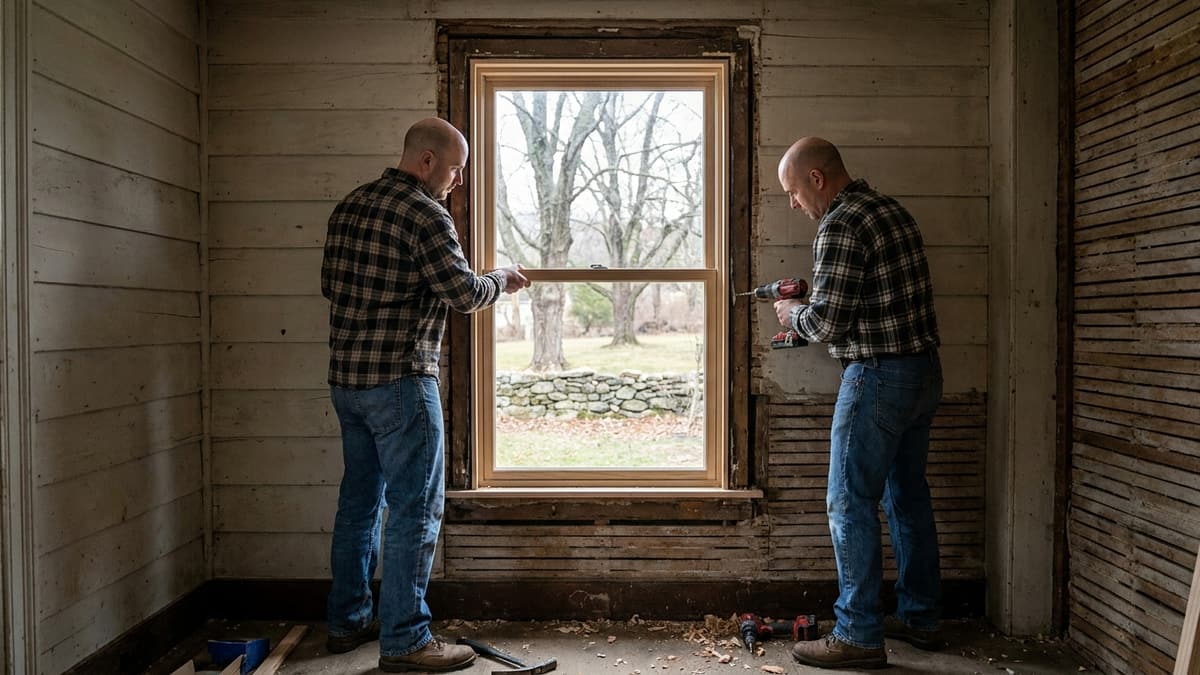
The normal correction is to replace the insulated glass unit itself, or on many double-hung windows, the entire sash. Sash replacement is often the cleaner route because the glass is factory-glazed into the frame and the balance hardware comes matched. On double-hung units this is frequently a same-day job that leaves the existing frame, trim and interior finish untouched.
The practical limit is availability. If the manufacturer no longer exists or the sash profile has been discontinued, a custom-made glass unit is possible but the cost starts to approach a full window.
Check the warranty first
Most brands carry a glass warranty in the range of 20 years to lifetime, and the terms differ by manufacturer and are usually tied to the original purchaser. Before assuming you are paying out of pocket, look at the metal spacer between the panes near a corner. Manufacturers commonly etch or stamp a code there identifying the fabricator and the date the unit was made. That code tells you the age of the glass, which is the first thing anyone processing a claim will ask for.
When interior condensation is the real problem
Room-side condensation is a relationship between indoor humidity and the temperature of the coldest surface in the room. In a Connecticut winter, that surface is almost always glass. When indoor air holding a given amount of moisture touches glass below its dew point, the water comes out of the air. The window is the messenger.
| Outdoor temperature | Indoor relative humidity where condensation typically starts on double-pane glass |
|---|---|
| Outdoor temperature40 F | Indoor relative humidity where condensation typically starts on double-pane glassAbove roughly 55 percent |
| Outdoor temperature20 F | Indoor relative humidity where condensation typically starts on double-pane glassAbove roughly 40 percent |
| Outdoor temperature0 F | Indoor relative humidity where condensation typically starts on double-pane glassAbove roughly 30 percent |
These are approximations that shift with the specific glass and how well the room is heated, but the pattern holds: the colder it gets outside, the less indoor humidity your windows will tolerate. Things that usually matter more than the windows do:
- A whole-house or portable humidifier running at a setting chosen in October and never revisited.
- Bath fans that run for two minutes, or vent into the attic instead of outdoors.
- Range hoods that recirculate rather than exhaust.
- Heavy curtains or tight blinds that stop warm room air from washing the glass.
- Firewood, a damp basement, or a crawl space with no ground cover feeding moisture into the house.
There is a real irony here. Replacing leaky old windows makes a house tighter, which raises indoor humidity, which can produce more condensation on the new glass than the old glass ever showed. The windows are performing better and the symptom looks worse. Managing humidity is the answer, not going backward on the glass.
Exterior condensation is a good sign
Dew on the outside of the glass on a cool morning means the outer pane is not being warmed by heat escaping from inside. That is exactly what a low-emissivity coating and a gas fill are supposed to accomplish. It is the same physics that fogs a windshield overnight, and it clears with sun and air movement.
When not to replace the whole house
Seal failure is a unit-by-unit event. Two fogged windows out of fourteen do not condemn the other twelve. Replacing the pair, or their sashes, is the honest scope.
A whole-house replacement starts to make sense when the failures are widespread rather than isolated, when the frames are rotted or racked so the sash no longer seals, when the windows are single-pane with storms, or when you are already opening the exterior for other work. If you are weighing that decision, the two numbers to hold a quote against are the ENERGY STAR Northern zone requirements: a U-factor of 0.22 or lower and a solar heat gain coefficient of at least 0.17 under version 7.0. That SHGC figure is a minimum, and we explain why in the post on reading an NFRC label.
What this costs in Connecticut
These are general Connecticut ranges that move with the house, the opening and the brand, not quotes.
| Scope | General range |
|---|---|
| ScopeStandard vinyl replacement window, installed | General range$300 to $700 per window |
| ScopePremium wood or fiberglass window, installed | General range$800 to $1,500 and up per window |
| ScopeFull house, 10 to 15 windows | General range$5,000 to $20,000 and up |
| ScopeLarge or custom units | General range$1,000 to $2,500 and up per window |
A single glass or sash replacement on an existing frame generally sits well below the cost of a full window, which is why it is worth identifying correctly before anyone quotes a project. Our window services page lays out the styles and brands we install.
Most like-for-like window replacements in Connecticut towns need no building permit, since the opening size does not change. That changes if an opening is resized or a header altered, and bedroom egress dimensions are a separate matter worth checking regardless of permits.
Getting a straight answer on your own windows
If you have done the wipe test and the fog is trapped in the glass, the useful next step is having someone look at the spacer code, the frame condition and whether the sash is still available. That is an on-site visit: we come out, measure, and give you a written price for the work that is actually needed, whether that is two sashes or a house of windows. You can request one through our estimate form or by phone at (860) 703-7663.