Short answer
Sometimes, but not by default. Triple-pane glass reliably improves U-factor and cuts low-frequency noise, yet a good double-pane unit already meets Connecticut's ENERGY STAR Northern zone requirement of 0.22 or lower, so the upgrade is buying performance beyond the threshold rather than getting you to it. It earns its money on a house you intend to keep for decades, on a wall facing a busy road, or where cold glass makes a room unusable in January.
On this page
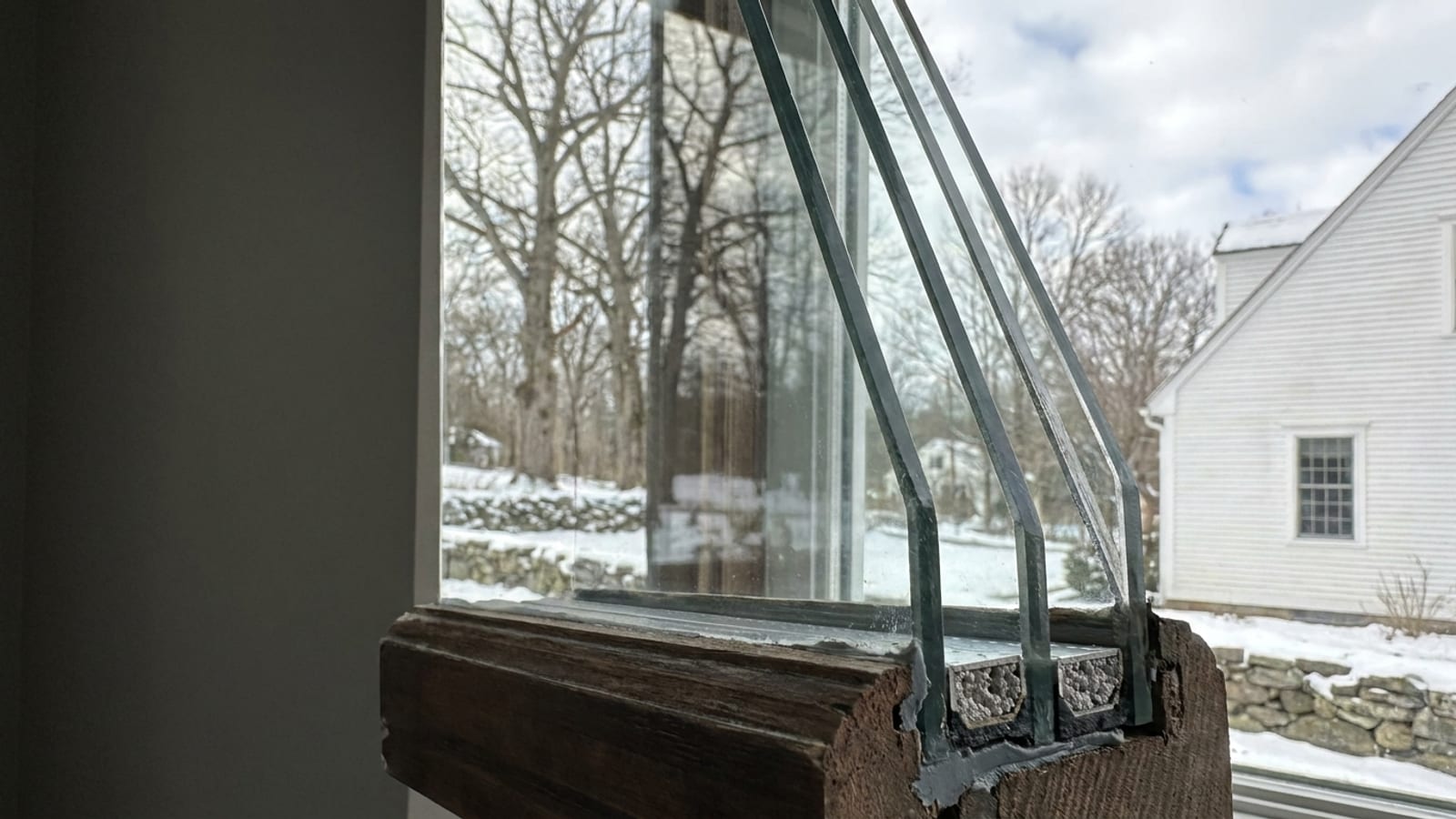
Triple-pane windows do what the brochure says. A third lite of glass and a second sealed air space lower the U-factor, warm up the interior glass surface, and quiet the room. The question is not whether they work. It is whether the improvement is worth the upcharge on your particular house, in a state where a well-built double-pane window already clears the efficiency bar.
Here is what the third pane changes, what it does not change, and how to price the two options against each other honestly.
What Connecticut's window standard actually asks for
All of Connecticut sits in the ENERGY STAR Northern climate zone. Under version 7.0, effective October 2023, a qualifying window needs a U-factor of 0.22 or lower and a solar heat gain coefficient of at least 0.17. Both numbers are printed on the NFRC label, and we walk through how to read that label in our post on the only two window numbers that matter here.
The important part for this decision: plenty of double-pane units with a good low-E coating and argon fill hit 0.22 or better. You do not need three panes to comply, to qualify, or to be considered an efficient window in this climate. Triple-pane is a performance upgrade beyond the threshold, and it should be evaluated like any other upgrade.
What the third pane actually changes
U-factor
This is the honest strength of triple glazing. A third pane plus a second gas-filled cavity and a second low-E surface can take a window from roughly 0.22 down into the mid-teens. On paper that is a large percentage improvement in the glass.
In a whole-house energy bill it is a smaller line than the percentage suggests. Windows are one part of the envelope, and the biggest single savings in most Connecticut homes comes from replacing single-pane or old, failed double-pane units with any modern insulated glass. ENERGY STAR certified windows are generally credited with reducing heating and cooling costs by 12 to 33 percent, with the largest share of that arriving on the first step up. The double-to-triple step is real, but it is the second increment, not the first.
Interior glass temperature and condensation
This is where homeowners actually feel the difference. The inner pane of a triple-glazed unit runs warmer on a cold night because it is separated from the outdoors by two cavities instead of one. Warmer glass means less of the cold-radiation effect that makes a seat near a window uncomfortable, and less interior condensation in a house with high humidity.
If you have a room nobody uses in winter because of the window wall, that is a comfort problem, and triple glazing addresses it directly. An efficiency spreadsheet will undervalue this. A person sitting in the room will not.
Noise
Triple-pane is often sold on quiet, and this is where the marketing gets loose. Sound reduction depends far more on laminated glass, on panes of unequal thickness, and on the width of the air gaps than on the number of panes. A symmetrical triple-pane unit with three identical lites can perform worse against traffic noise than a double-pane unit with one laminated lite, because identical panes resonate together.
If noise is the reason you are considering the upgrade, ask for the STC or OITC rating rather than the pane count, and price a laminated double-pane option next to it.
The SHGC trap in a heating climate
Solar heat gain coefficient in the Northern zone is a minimum of 0.17, not a maximum. Free winter sunlight through a south-facing window is heat you did not pay for.
The practical risk with triple glazing is that a third pane and additional coatings cut solar transmission along with heat loss. Some triple-pane configurations land below 0.17 and do not meet the Northern zone criteria despite an outstanding U-factor. That is not a hypothetical, it is a common configuration error when a product line is specified for a colder or more cooling-driven market and then sold here without adjustment.
Check the SHGC on the specific unit you are being quoted, not the brand's best-case sheet.
Weight, thickness and whether it fits
A triple-pane insulated glass unit is thicker and heavier than a double. Three consequences follow.
- Sash depth. The frame and sash have to be deeper to hold the unit. On an insert replacement, which sits inside the existing frame, that deeper sash eats a little more of the daylight opening. We cover the trade-off between the two installation methods in insert versus full-frame replacement.
- Hardware. Heavier sash needs balances and hinges rated for it. Manufacturers publish maximum sizes for triple-pane options, and staying inside them is what keeps a double-hung window operating smoothly in year fifteen.
- Egress clearance. Any reduction in clear opening matters in a bedroom. A window already close to the minimum egress dimensions has no room to give.
Cost, and how to make the comparison fair
General Connecticut ranges, dependent on the specific house rather than a quote:
| Window tier | Typical installed cost per window |
|---|---|
| Window tierStandard vinyl | Typical installed cost per window$300 to $700 |
| Window tierPremium wood or fiberglass | Typical installed cost per window$800 to $1,500 and up |
| Window tierLarge or custom units | Typical installed cost per window$1,000 to $2,500 and up |
| Window tierFull house, 10 to 15 windows | Typical installed cost per window$5,000 to $20,000 and up |
Triple glazing is a per-unit option inside those tiers, and the upcharge varies enough by product line that quoting a single figure would mislead you. The way to find out what it costs on your house is to have both configurations priced on the same quote, with the same frame material, the same installation method and the same trim work. Everything except the glass package should be identical, because tear-out, flashing, insulation and interior finish cost the same either way. Our breakdown of what drives cost per replacement window explains which line items should move and which should not.
When the upgrade makes sense
- You are staying put. A payback measured in decades is only a payback if you own the house for decades.
- A specific room is cold at the glass. Comfort is a legitimate reason to spend money, and this is the improvement triple glazing delivers most reliably.
- Large glass areas. The more square feet of glass in a wall, the more the U-factor difference compounds.
- A road, a rail line or an airport approach, paired with the right acoustic glass rather than pane count alone.
- A deep energy retrofit where the walls and attic have already been addressed and the windows are the remaining weak point.
When double-pane is the better buy
- You are selling within a few years. A buyer's appraisal will not distinguish between a 0.22 and a 0.16 window.
- The attic is underinsulated. Air sealing and insulation return more per dollar than the third pane, every time.
- The openings are small or historically narrow. The thicker sash costs you sightline for a benefit you will barely register on a small unit.
- The budget is fixed and some windows are still failing. Replacing every bad window with a good double-pane unit beats replacing half of them with triple-pane and leaving the rest.
- The triple-pane option quoted has an SHGC below 0.17. That configuration is working against you in a heating climate.
Deciding on your house
The useful comparison is not triple versus double in the abstract. It is what each one costs on your openings, with your frame material, installed the same way. Bring both configurations to the same conversation, look at the U-factor and SHGC on the actual units, and decide with the numbers in front of you. Our window services page lists the brands and styles we install and the performance criteria we hold them to.
When you are ready for real figures, request an estimate. Someone comes out, measures every opening, and gives you a written price. Ask for the double-pane and triple-pane versions side by side on that document so the upgrade is a decision you make rather than one that arrives already made.