Short answer
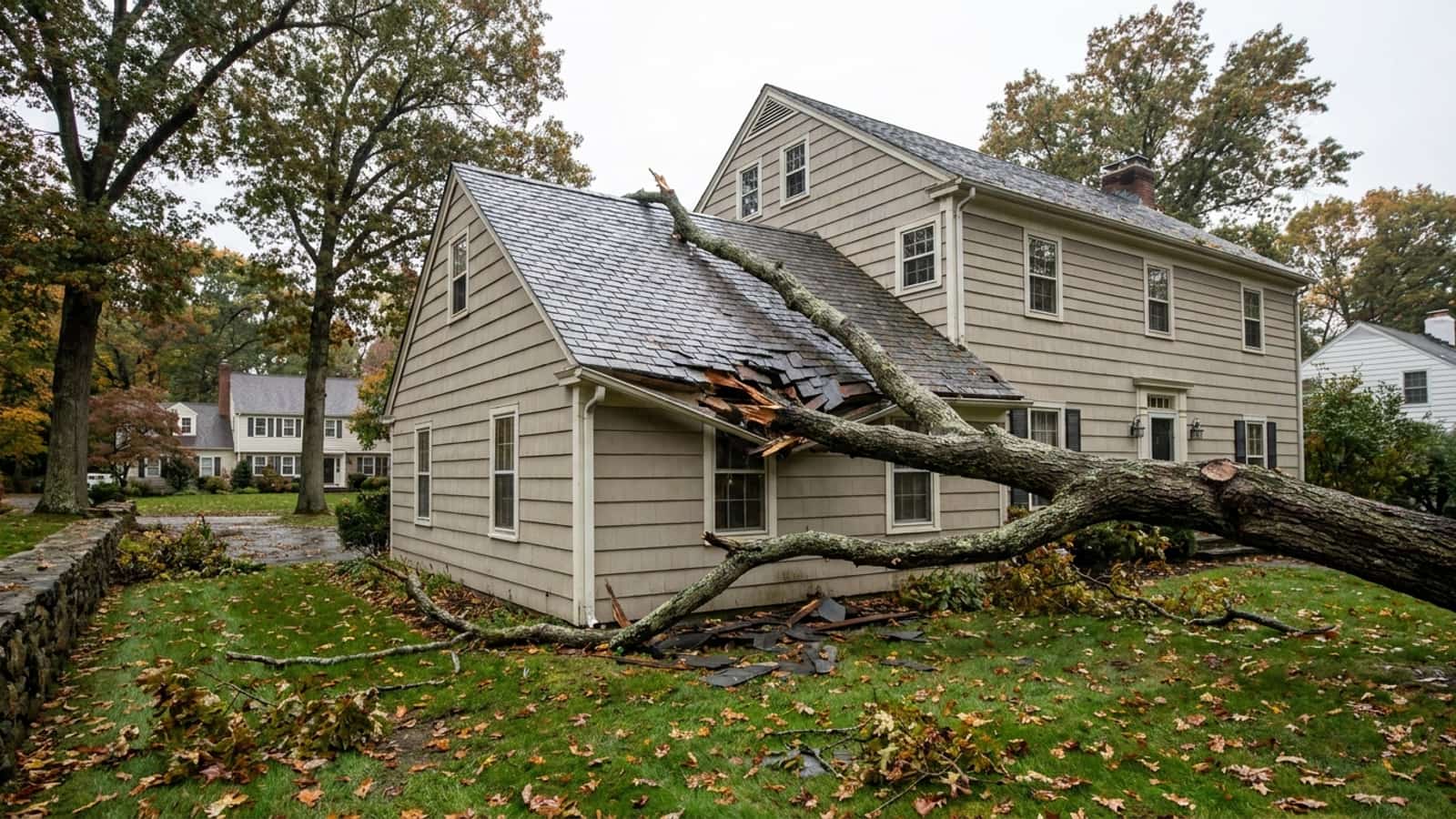
Move everyone out from under the damaged area first, and call the utility rather than the roofer if any wires are involved. A tree on a roof is two separate jobs: a tree service to cut and rig the wood off safely, and a roofer to dry the house in and repair the covering, deck and any broken framing. Photograph everything before a single branch is moved, because the tree removal and the building repair are usually handled under different parts of your policy.
On this page
- The first hour
- Tree removal and roof repair are two different trades
- What the roofer is actually looking for
- Why the code numbers come back into it
- Repair one slope or replace the whole roof
- The insurance side, honestly
- Costs, in general Connecticut terms
- Mature trees are a Connecticut condition, not an accident
- What to ask before you sign anything
- Getting a price
A tree on the roof feels like one emergency. It is actually two jobs with two different trades, and the order they happen in decides how much more damage the house takes.
This post is about the sequence: what to do in the first hour, who cuts the wood off, what the roofer is looking for underneath, how the repair scope gets decided, and where the money comes from. If you want the broader storm checklist that covers wind and hail as well, that lives in our post on first steps after storm damage. This one is specific to impact.
The first hour
Nothing about the roof matters yet. Three things do.
Wires
If the tree is touching a power line, a service drop, or the mast where the wires attach to the house, that is a utility call and nothing else. Do not let a tree service, a roofer or a neighbor with a chainsaw near it until the utility has been out. A limb resting on a service drop can energize the tree and the wet ground around it.
The rooms underneath
Go inside and look at the ceiling below the impact. Sagging drywall, a bulge holding water, or a visible crack running along a line is a sign the load path changed. Stay out of that room and out of the attic directly below the strike. Water pooling above a ceiling is heavy, and it comes down all at once.
Photographs, before anything moves
Photograph the tree where it landed, from several angles, including a wide shot that shows the tree, the roof and the house together. Then photograph every interior stain, every wet spot, and every damaged item. Once a tree service starts cutting, the scene is gone. Those photos are the record that the limb hit the structure rather than just landing in the yard, and that distinction matters to a carrier.
Tree removal and roof repair are two different trades
The tree comes off first, and it comes off in pieces, rigged so the weight is lifted away rather than dragged across the roof. A limb pulled sideways over shingles will strip a course of tabs and tear flashing that the impact itself never touched. This is the single most common way a tree job gets more expensive after the tree is already down.
The roofer follows behind with a temporary dry-in: tarp, or on a larger opening, plywood and self-adhered membrane over the hole. Temporary work is not a repair. It buys the time needed to get a real scope written and materials ordered.
What the roofer is actually looking for
Impact damage sorts into three layers, and each one changes the price.
Covering only
Broken and displaced shingles, torn underlayment, bent drip edge, damaged step or valley flashing. The deck below is sound. This is the cheapest outcome and the most common one for a small or medium limb.
Deck penetration
The sheathing is cracked, punched through, or delaminated. Cracked plywood is the trap here: it can look fine from the attic and still have lost its ability to hold a nail. Any sheathing that flexes underfoot or shows a split across the grain gets replaced. Our post on rotten roof decking covers how deck replacement gets priced and why it should appear on a quote as a unit rate rather than a guess.
Broken framing
A cracked or displaced rafter, a split ridge board, a collar tie pulled loose. This is the one that turns a roofing job into a structural job. It needs to be repaired to carry code load again, not just closed up.
Why the code numbers come back into it
Appendix AY of the 2022 Connecticut State Building Code assigns each town a ground snow load and an ultimate design wind speed. In the towns we serve the snow figure is 30 psf, except in Avon, Farmington and Simsbury, which carry 35 psf. Wind is 120 mph, or 125 mph in Guilford, Madison and New Haven.
Those numbers are why a broken rafter cannot simply be braced and covered. The framing has to carry winter snow load again, and a sistered or replaced member is what does that. It is also why the reroofed slope should be fastened to the manufacturer's high-wind pattern, which on most products means six nails per shingle in a defined nail zone rather than four. If part of the roof is being redone anyway, that is the moment to get the fastening right.
Repair one slope or replace the whole roof
There is a real case on both sides, and the answer depends on the age of the roof more than the size of the tree.
| Situation | Usually the better call |
|---|---|
| SituationRoof under about 10 years old, damage on one slope | Usually the better callSection repair |
| SituationRoof 15 to 20 years old, granule loss already widespread | Usually the better callFull replacement, if the carrier agrees |
| SituationTwo existing layers of shingles | Usually the better callFull tear-off and replacement |
| SituationFraming broken across several bays | Usually the better callStructural repair plus replacement of that slope at minimum |
| SituationShingle line discontinued, no acceptable match | Usually the better callDepends on your policy language |
A section repair on a young roof is not a compromise. It is the cheaper, sensible outcome, and any contractor who tells you a five-year-old roof must be entirely replaced because a limb landed on the back slope should be asked to explain why in writing. We describe how we approach targeted work on the roof repair section of our roofing page, and impact work specifically under storm damage.
The insurance side, honestly
Carriers generally treat the tree and the building as separate items. Repairing the structure falls under the dwelling coverage. Removing the tree itself is often handled under a separate, smaller debris removal provision, and the rules differ depending on whether the tree struck a covered structure or simply fell in the yard. Policies are not uniform, so the only reliable source is your own policy document and your adjuster.
What you control is documentation. Photos taken before removal, a written scope from the contractor that lists quantities rather than lump sums, and receipts for any emergency tarping all make the claim easier to settle. Emergency mitigation is normally reimbursable, but keep the paperwork.
Costs, in general Connecticut terms
If the outcome is a full replacement, these are the general ranges for a Connecticut home. They depend heavily on the specific house, and none of them is a quote.
| Material | General Connecticut range |
|---|---|
| MaterialThree-tab asphalt | General Connecticut range$8,000 to $25,000 |
| MaterialArchitectural asphalt | General Connecticut range$10,000 to $30,000 |
| MaterialCedar shake | General Connecticut range$20,000 to $50,000 or more |
A section repair costs a fraction of those figures. Tree removal is billed separately by the tree service, and we do not quote it.
Mature trees are a Connecticut condition, not an accident
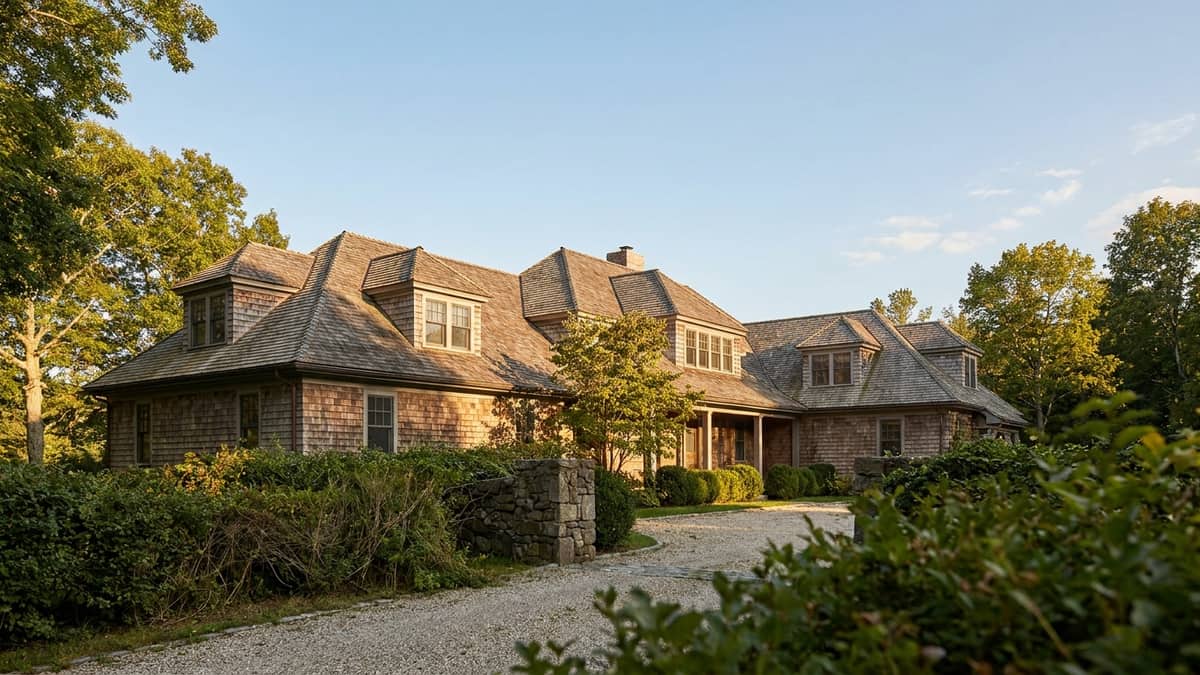
In towns with heavy canopy, this is a recurring event rather than a freak one. Older neighborhoods in places like Glastonbury sit under mature oak and maple, and homeowners there are dealing with limb strikes, constant debris in valleys and shaded slopes that hold moisture. Anyone planning roof work in Glastonbury should be thinking about overhanging limbs at the same time, because trimming back the branches that reach the roof plane is far cheaper than the repair they eventually cause.
What to ask before you sign anything
- A written scope that separates temporary dry-in, deck replacement and roof covering.
- A unit price per sheet for replaced sheathing, so the number does not float.
- The nail count per shingle on any reroofed area.
- Who is pulling the permit, and whether the work includes framing repair that the building official will inspect.
- Whether the tree removal is included or handled by a separate contractor you are hiring.
A quote with none of that on it is a number, not a plan.
Getting a price
If a tree has come down on your house, you can request an estimate and someone will come out, get on the roof and into the attic where it is safe to do so, measure the damage, and give you a written price with the scope itemized. If the honest answer is a repair rather than a replacement, that is what the estimate will say.