Short answer
Greenwich, Stamford and Westport all carry an ultimate design wind speed of 120 mph and a ground snow load of 30 psf under Appendix AY of the 2022 Connecticut State Building Code, and all three require a building permit for a roof replacement. What separates a roof job in these towns from one farther inland is not the code figure but the house, since larger roofs, more hips and dormers, and premium materials push Greenwich and Westport replacements into a $15,000 to $45,000 range. The honest question in Fairfield County is usually whether the roof geometry justifies slate, copper or cedar rather than architectural asphalt.
On this page
Greenwich, Stamford and Westport sit in the same wind and snow category under the 2022 Connecticut State Building Code: an ultimate design wind speed of 120 mph and a ground snow load of 30 psf. That is the same assignment Hartford, West Hartford, Manchester and Glastonbury carry. If you were expecting the shoreline towns in lower Fairfield County to come with a tougher code number than the Hartford suburbs, they do not.
What does change in these three towns is the house. Bigger roofs, more complicated roofs, and a market where slate, copper and cedar come up in conversation far more often. That is where the money goes, and it is what this post is about.
The code figures, stated exactly
Appendix AY of the 2022 Connecticut State Building Code assigns every municipality an ultimate design wind speed (Vult) and a ground snow load (pg). Here is how the Fairfield County towns we serve compare to the central shoreline.
| Town | County | Design wind speed (Vult) | Ground snow load (pg) |
|---|---|---|---|
| TownGreenwich | CountyFairfield | Design wind speed (Vult)120 mph | Ground snow load (pg)30 psf |
| TownStamford | CountyFairfield | Design wind speed (Vult)120 mph | Ground snow load (pg)30 psf |
| TownWestport | CountyFairfield | Design wind speed (Vult)120 mph | Ground snow load (pg)30 psf |
| TownFairfield | CountyFairfield | Design wind speed (Vult)120 mph | Ground snow load (pg)30 psf |
| TownNew Haven | CountyNew Haven | Design wind speed (Vult)125 mph | Ground snow load (pg)30 psf |
| TownGuilford | CountyNew Haven | Design wind speed (Vult)125 mph | Ground snow load (pg)30 psf |
| TownMadison | CountyNew Haven | Design wind speed (Vult)125 mph | Ground snow load (pg)30 psf |
Every town listed is inside a designated hurricane-prone region. The counterintuitive line in that table is the one most contractors get backwards: Guilford, Madison and New Haven are assigned a higher design wind speed than Greenwich, Stamford or Westport. Proximity to New York is not the driver. Exposure to open water along the central shoreline is.
What 120 mph does and does not require
Two things get confused here, so it is worth separating them.
The code's high-wind underlayment provision is keyed to the nominal design wind speed, Vasd, not to Vult. Converting 120 mph Vult gives a Vasd in the 93 to 97 mph range, which sits below the 110 mph trigger. So that specific provision does not apply in these towns, and a quote that cites it as a reason for an upcharge is either confused or padding.
What does apply is the manufacturer's fastening schedule. A shingle's wind rating is only valid if it is nailed the way the manufacturer requires to earn it. For high-wind coverage most manufacturers specify six nails per shingle inside a defined nail zone rather than four. That is a labor and material difference, it should appear as a line on the estimate, and it is the single clearest signal of whether a quote was written against the actual product data sheet.
Why the numbers here run higher
Typical roof replacement in Greenwich and Westport runs roughly $15,000 to $45,000, above the general Connecticut ranges. Three things account for almost all of that gap.
Roof area and complexity
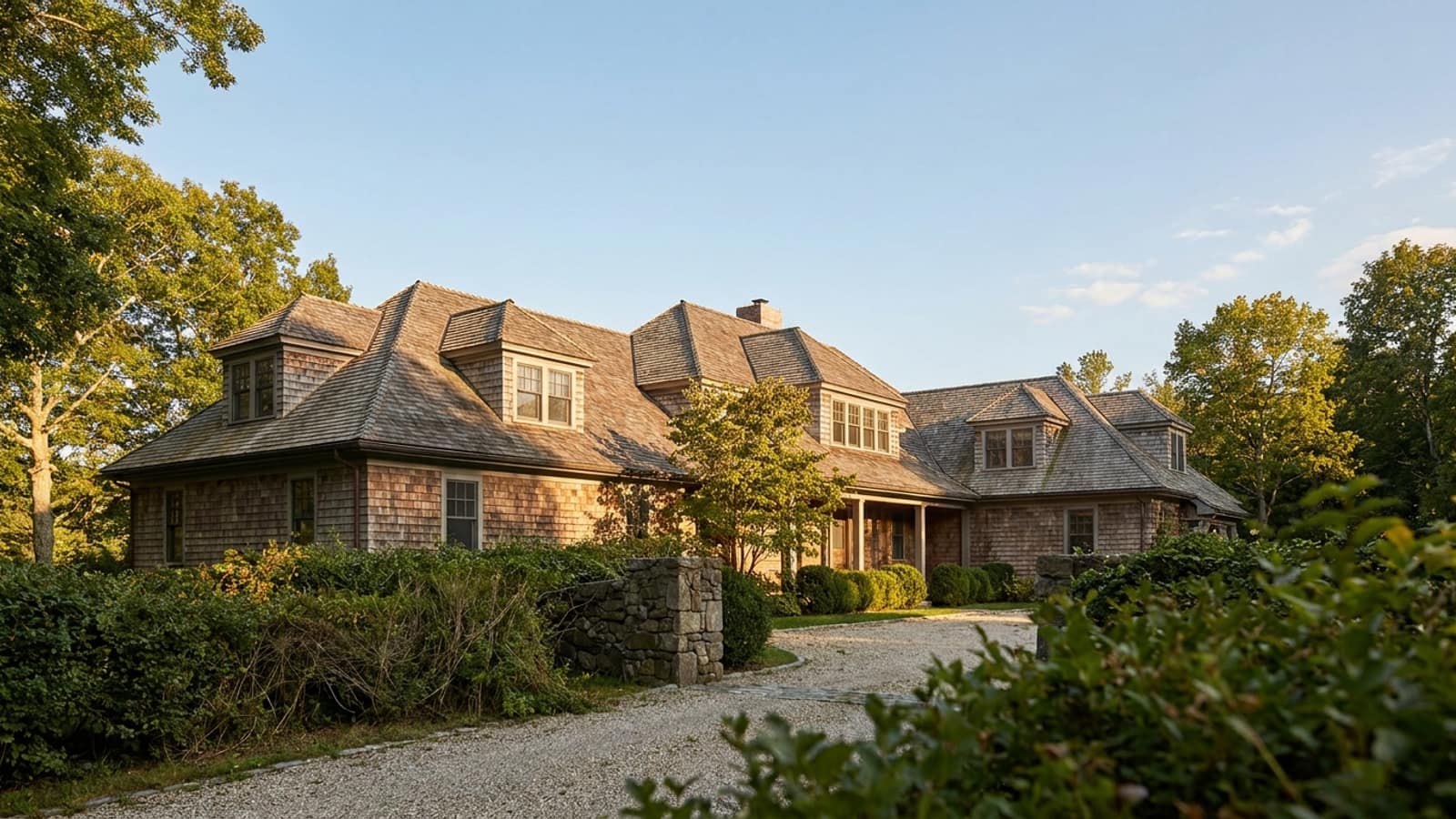
A center-hall Colonial with a straight gable roof and two penetrations is a different job from a shingle-style house with a hip roof, five dormers, three valleys, a turret and a wraparound porch roof. The second has more squares, far more cut waste, dramatically more flashing detail, and more time spent on staging and access. Complexity costs more per square than area does.
Material expectations
Here are the general Connecticut ranges by material. They move with the size and pitch of your specific roof.
| Material | General CT cost range | Expected life |
|---|---|---|
| MaterialArchitectural asphalt | General CT cost range$10,000 - $28,000 | Expected life25-30 years |
| MaterialCedar shake | General CT cost range$20,000 - $50,000 | Expected life30-40 years |
| MaterialSynthetic slate | General CT cost range$25,000 - $45,000 | Expected life40-50 years |
| MaterialNatural slate | General CT cost range$35,000 - $75,000+ | Expected life75-100+ years |
| MaterialCopper | General CT cost range$40,000 - $80,000+ | Expected life100+ years |
The case against the expensive option
Slate and copper are genuinely defensible on the right house. Slate lasts three or four asphalt roof cycles, so the premium spreads across a century rather than a decade. Copper on a bay roof or a porch roof is a detail that will outlive everyone involved.
But the case against them is real and gets said too rarely. Natural slate is heavy enough that the framing has to be verified, not assumed. It requires a roofer who works in slate regularly, and finding one for a future repair is harder than finding an asphalt crew. If you intend to sell within ten years, you will not recover the spread. And on a simple roof plane with no interesting geometry, slate does not look like a heritage roof. It looks like an expensive gray roof.
Architectural asphalt from GAF, Owens Corning, CertainTeed or IKO is the right answer on a large majority of houses in these towns, including some very expensive ones. Choosing it is not settling.
Permits, inspections and historic review
A roof replacement requires a building permit in all three towns, as it does in every Connecticut municipality we serve. Only a contractor registered as a Home Improvement Contractor can pull it on your behalf. The town issues it and inspects the work. In Westport that is the Building Department at 515 Post Road East, on the second floor at Fire Headquarters.
Historic district review is narrower than most homeowners expect. Under Connecticut General Statutes Sec. 7-147f(a), replacing roofing with similar materials does not require a Certificate of Appropriateness. It is required when the material type changes, slate to asphalt being the common example, or when the configuration changes. Most replacements are like-for-like and start on the permit schedule rather than the commission meeting schedule.
Stamford is not one housing market
Stamford spans downtown condos and high-rises, North Stamford Colonials on wooded lots, and waterfront houses in Shippan. Flat roof sections are common across that mix, and a flat section in TPO, EPDM or modified bitumen is priced and built on entirely different terms than the pitched roof beside it. If your house has both, the estimate should break them out separately, with the transition detail described. A single lump sum covering both tells you nothing about either.
Waterfront properties in all three towns carry an additional concern that has nothing to do with the shingle. Salt air corrodes metal flashing and fasteners. Corrosion-resistant flashing and fasteners are the right specification near the water, and the estimate should say which is being used.
What to look for on the estimate
The same list applies whether the number is $15,000 or $45,000.
- Tear-off of all existing layers, with disposal included and the deck inspected once it is open.
- A per-sheet price for replacement decking, agreed before work starts, so a surprise does not become a negotiation on a Tuesday afternoon.
- Ice and water shield at eaves and valleys, in the width the code requires.
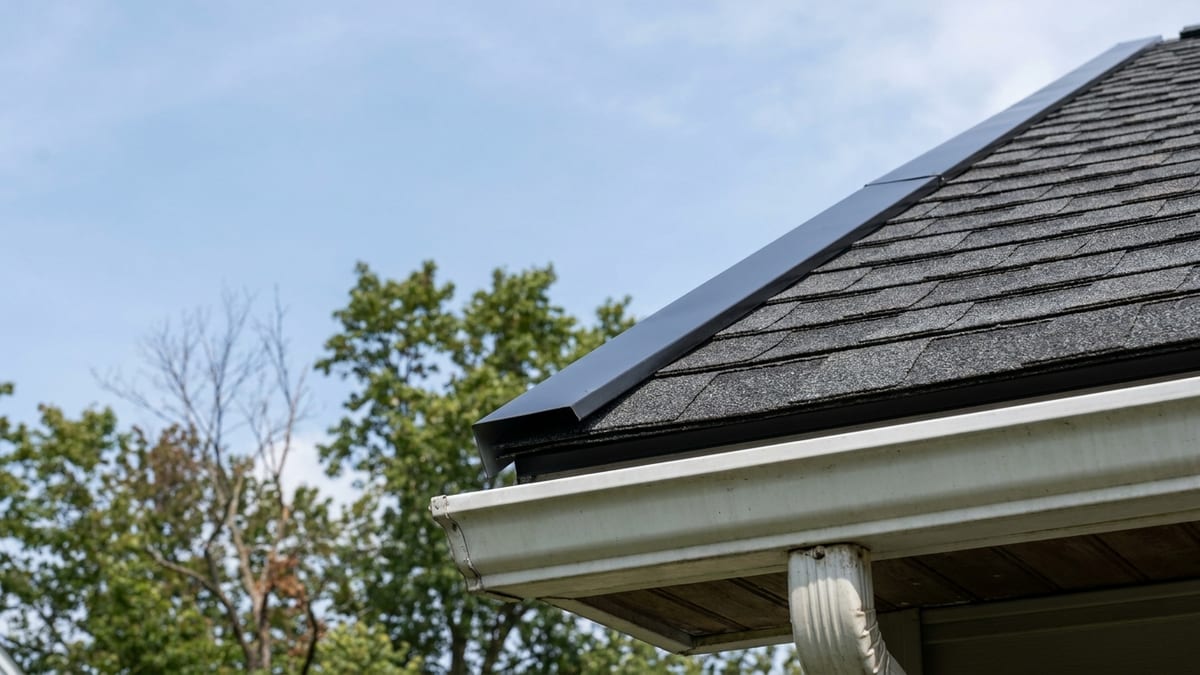
- Drip edge, which is required on a new roof whether or not the old one had it.
- Nail count per shingle, in the manufacturer's defined nail zone.
- Ventilation: intake at the soffit as well as exhaust at the ridge. Exhaust alone does not ventilate an attic.
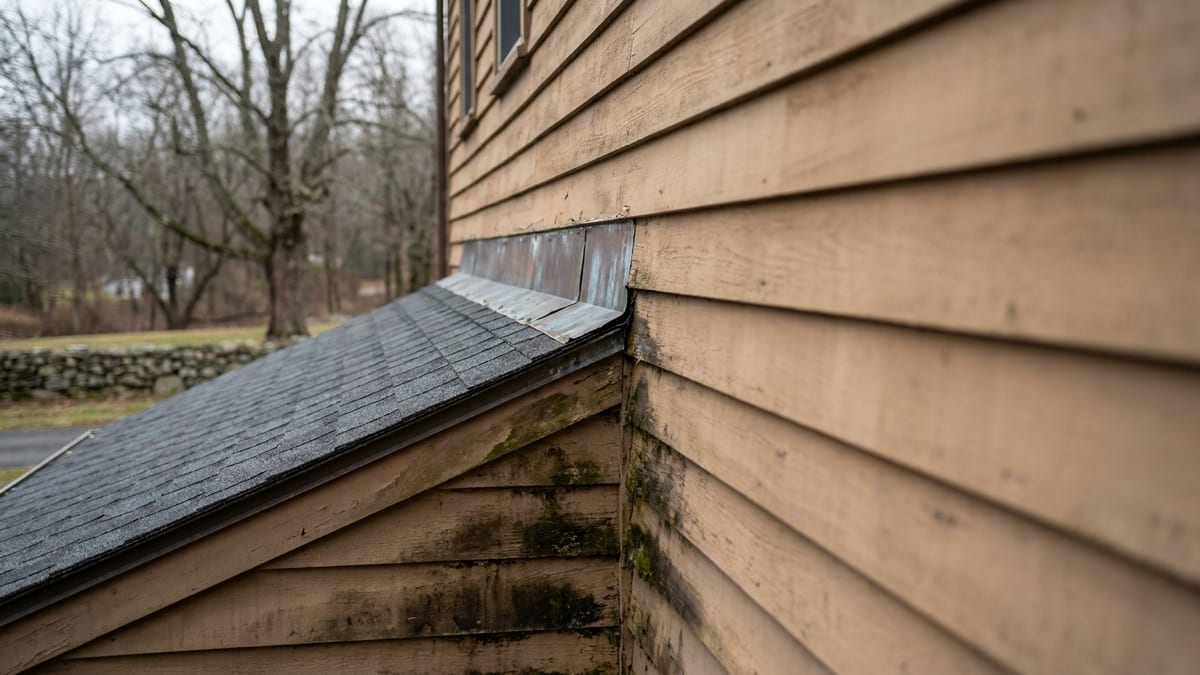
- Flashing treated as new material, not reused, including step flashing at walls and chimneys.
- Permit included, and who is pulling it.
We cover these three towns along with twelve others across Hartford, Fairfield, New Haven and Middlesex counties, listed on our service areas page, and the full scope of a replacement is laid out on the roofing page.
Getting a real number
Ranges are useful for budgeting and useless for deciding. The only figure that means anything is one written against your roof, with the squares counted, the pitch measured, the penetrations listed and the material named.
If you want that, request an estimate. Someone comes out, measures the roof, looks at the attic and the flashing, and gives you a written, itemized price you can compare line by line against anyone else's.