Short answer
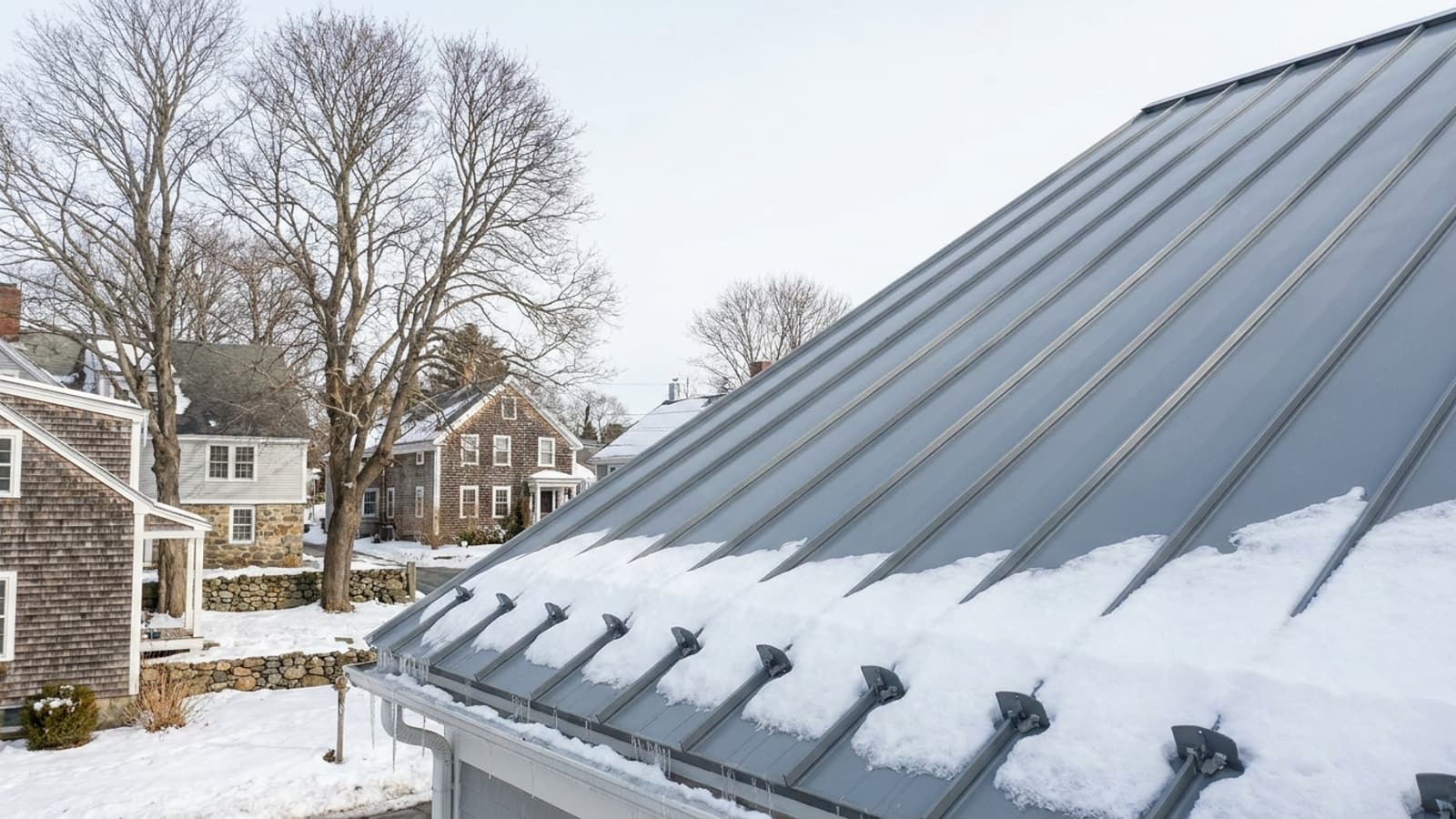
Snow guards hold accumulated snow on a metal roof so it melts and leaves gradually instead of releasing in one slab. You need them when a slope discharges over an entry, walkway, driveway, deck, lower roof or gutter run that people and property actually use. They are priced per guard or per linear foot of eave, and a full layout on a typical Connecticut house is usually a four figure line item rather than a few hundred dollars.
On this page
Snow guards are small metal or polycarbonate devices fixed to a roof slope to keep accumulated snow from sliding off in one piece. On a metal roof in Connecticut, that slide is not a theoretical risk. A warm afternoon after a storm lubricates the underside of the snowpack, and a slope that has been quietly holding several hundred pounds of snow lets go of all of it at once.
Whether you need them is a question about what sits below the slope, not about how much it snows at your address. Snow load figures determine how many guards and how they are laid out. What is underneath the eave determines whether you need any at all.
What snow guards actually do
They do not stop snow from leaving the roof. They hold it in place so it leaves as meltwater and small pieces over days instead of as a slab in two seconds.
Why metal sheds and asphalt does not
An asphalt shingle surface is granular and irregular. Snow grips it, and as it melts it comes off in chunks. A painted standing seam or exposed fastener panel is smooth, and once a thin film of meltwater forms between the metal and the snowpack, friction effectively disappears. The pitch does the rest.
That difference is one of the practical trade-offs buried inside the broader metal versus asphalt comparison. Metal sheds snow well, which is often sold as a benefit. It is a benefit over an open field. It is a liability over a front door.
When a Connecticut metal roof needs snow guards
Walk the perimeter of the house and look at what each metal slope points at. Add retention where a slope discharges over:
- An entry door, back door, bulkhead or any path people use in winter
- A driveway or parking area where cars sit
- A deck, patio, porch roof or three season room
- A lower roof plane, which can be dented or have its flashing torn
- Plumbing vents, satellite mounts, HVAC equipment or a service meter
- Gutters, which are hung for water weight and not for a sliding slab
- Landscaping, fencing or anything along a property line next to a neighbor
When you can skip them
The honest case against snow guards is that on many slopes they buy nothing. A rear slope over a wooded hillside nobody walks on in February does not need retention. A low pitch roof where snow rarely builds enough momentum to release does not either. A slope with a long setback, where released snow lands well short of anything that matters, is fine as it is.
Adding guards to every plane on the house because it looks consistent is a straightforward way to spend money that does nothing. Price them by slope, not by building.
How the layout is calculated
The longer the slope, the more snow sits above any given point, and the more rows of retention are needed. A twelve foot slope and a thirty foot slope do not get the same treatment, even on the same roof at the same pitch.
The starting number is the ground snow load assigned to your town in Appendix AY of the 2022 Connecticut State Building Code.
| Town group | Ground snow load (pg) |
|---|---|
| Town groupAvon, Farmington, Simsbury | Ground snow load (pg)35 psf |
| Town groupGlastonbury, Hartford, Manchester, West Hartford, Middletown | Ground snow load (pg)30 psf |
| Town groupGuilford, Madison, New Haven | Ground snow load (pg)30 psf |
| Town groupFairfield, Greenwich, Stamford, Westport | Ground snow load (pg)30 psf |
The three Farmington Valley towns carry the higher figure, which is why retention layouts there often come back with an extra row compared to the same house design on the shoreline. We covered what that number means structurally in the post on snow load in Avon, Farmington and Simsbury.
Most snow guard manufacturers publish free calculators and tested holding values per attachment. A contractor quoting retention should be able to show you the output: guard type, number of rows, spacing and the assumed snow load. If the quote says "install snow guards" with a count and nothing else, ask what slope length and load it was figured against.
What snow guards cost
These are general Connecticut ranges that move with the number of slopes, the length of the eaves, the panel profile and roof access. They are not a quote for your house.
| Approach | How it is priced | General installed range |
|---|---|---|
| ApproachIndividual clamp-on guards, standing seam | How it is pricedper guard | General installed rangeroughly $15 to $40 each |
| ApproachContinuous bar or pipe system on seam clamps | How it is pricedper linear foot of eave | General installed rangeroughly $25 to $60 per foot |
| ApproachAdhesive-set polycarbonate pads | How it is pricedper guard | General installed rangeroughly $8 to $20 each |
| ApproachThrough-fastened guards, exposed fastener panels | How it is pricedper guard | General installed rangeroughly $10 to $30 each |
The per-piece numbers look small until you count them. A single thirty foot eave with two staggered rows can run well past a hundred guards. On a typical house with two or three slopes needing retention, the line item usually lands in the four figures, and a continuous bar system across long eaves lands higher than pad-style guards doing the same job.
The cheapest time to do this is while the roof is being installed, when the crew, the staging and the fall protection are already there. A retrofit on a finished roof carries its own mobilization.
Attachment is what decides whether it holds
Clamped to the seam
On standing seam, the standard method is a clamp that grips the vertical seam and tightens with setscrews, usually with rounded tips so they do not cut the metal. Nothing penetrates the panel. This preserves the panel's ability to expand and contract and keeps the weathertight and finish warranties intact.
Adhesive
Polycarbonate pads bonded with structural adhesive are the least expensive option and are genuinely appropriate on some panels. The limits are real: the surface has to be clean and compatible, the adhesive has a minimum application temperature, and it needs full cure time before the first storm. Set in the cold or on a chalky old finish, they fail at the worst possible moment.
Through-fastened
Exposed fastener panels are already penetrated by design, so guards are screwed through the flat of the panel into solid framing with gasketed fasteners and sealant. The failure mode here is fastening into sheathing alone rather than into structure, which pulls through under load.
What snow guards will not do
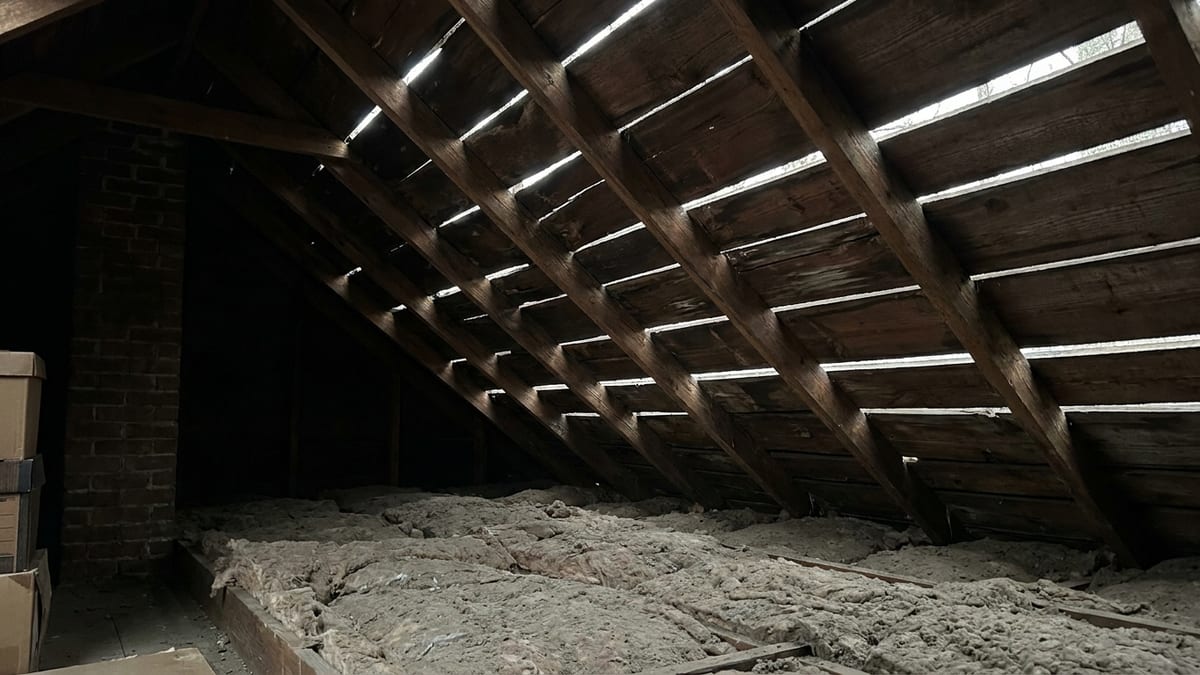
They will not stop ice dams. Holding snow on the roof over a poorly insulated attic gives that snow more time to melt from below and refreeze at the eave. If your metal roof already grows icicles, retention alone makes the symptom more visible, not better. The attic work comes first.
They also will not make an undersized gutter survive winter, and they will not substitute for correct eave flashing or coordinated gutter work during a roof project.
Getting a real number
If you have a metal roof and are deciding about retention, or you are comparing roof coverings and want to understand what each one does in a February thaw, the options are laid out on our roofing materials page. We work across Hartford, Middlesex, New Haven and Fairfield counties, and the town list is on the service areas page.
When you request an estimate, someone comes out, measures the slopes, looks at what sits below each eave and gives you a written price with the scope spelled out. Ask for the snow retention to appear as its own line so you can see exactly what it adds and decide slope by slope.