Short answer
Not always. Gutters are a separate system from the roof covering, and a sound set with tight seams, straight runs and solid hangers can stay in place. The real argument for doing both at once is access, because the drip edge, the eave flashing and the fascia board behind the gutter are only exposed while the roof is off.
On this page
Not always. Gutters are a separate system from the roof covering, and a set with tight seams, straight runs and hangers that still hold can outlive the shingles above them. The reason the question comes up on almost every roofing estimate is access. The drip edge, the flashing at the eave and the fascia board the gutter is fastened to are only exposed while the old roof is off. Paying for that access twice is the expensive version of this decision.
This post is about how to judge the gutters you already have, what the roof crew touches at the eave whether or not you replace them, and the cases where keeping the old gutters is the right financial call.
What happens at the eave during a roof replacement
The bottom three feet of a roof is where most of the work that protects your house actually happens, and it is the part homeowners see least.
Drip edge
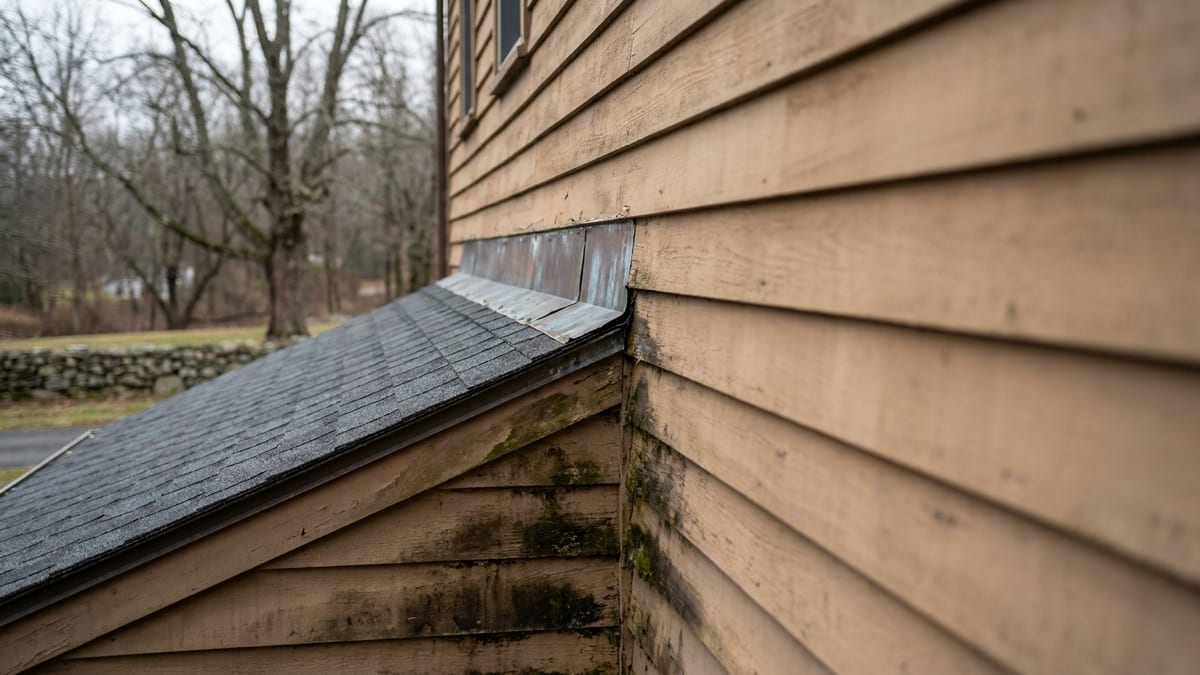
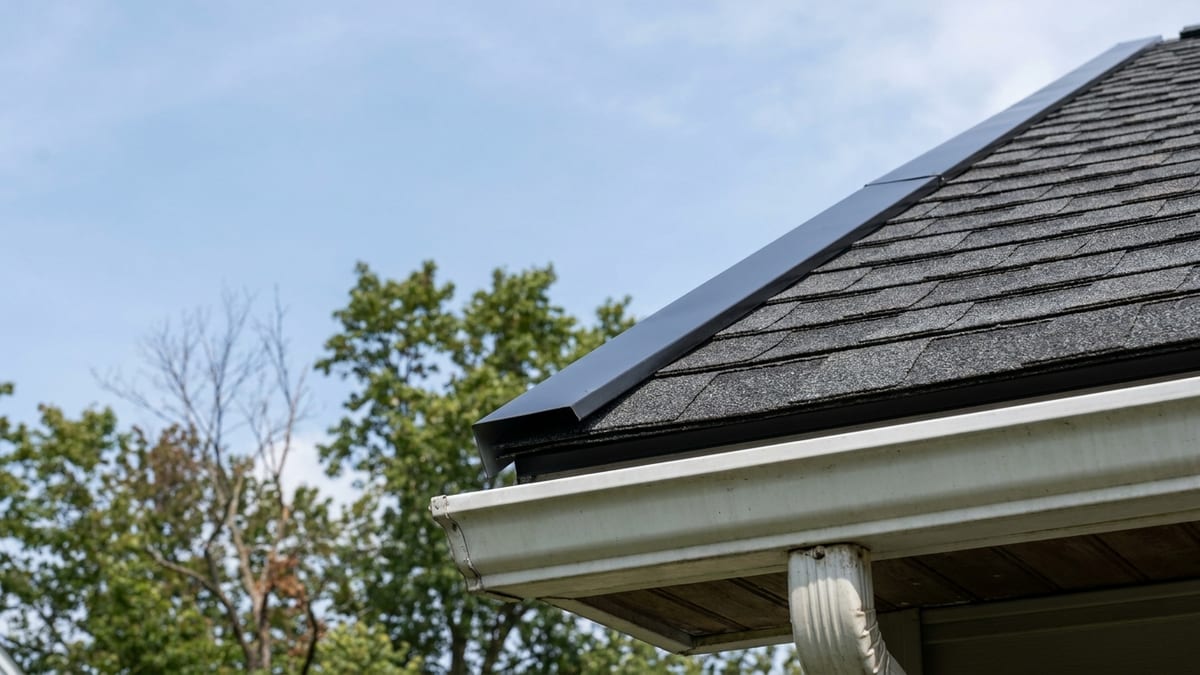
Drip edge is the metal angle that runs along the eave and the rake. Its job is to carry water off the edge of the deck and into the gutter instead of letting it curl back under the shingle and run down the fascia. New drip edge goes on as part of every roof we install, and it is listed in our roof replacement process for that reason. If your current gutters were hung tight against a fascia that has been getting wet for years, the drip edge is often the reason.
Ice and water shield
The self-adhering membrane at the eave is the second line of defense when water backs up behind ice. It is installed against a clean deck, and it works best when the deck edge and the drip edge are new and flat. Gutters removed and rehung by a crew working around fresh membrane is a normal sequence. Gutters left in place, packed with debris, and worked around is where sloppy edges start.
Fascia and soffit
This is the part that changes budgets. Once the gutter comes down, the fascia board behind it is visible for the first time in twenty years. Soft, delaminated or previously patched fascia has to be dealt with before anything gets rehung, because a hanger screwed into rotten wood will not hold a gutter full of frozen slush. Rot at the eave often reads as rot on the deck edge too, which is a related but separate line item covered in our post on rotten roof decking replacement cost.
Judging what you already have
Stand at the corner of the house after a hard rain and look at four things.
- Seams and end caps. Sealed seams fail before the metal does. A stain streak below an inside corner or an end cap is a leak, not a stain.
- Pitch and standing water. Water sitting in the trough after the rain stops means the run has sagged or the hangers have pulled. Standing water freezes, and frozen water weighs enough to finish the job.
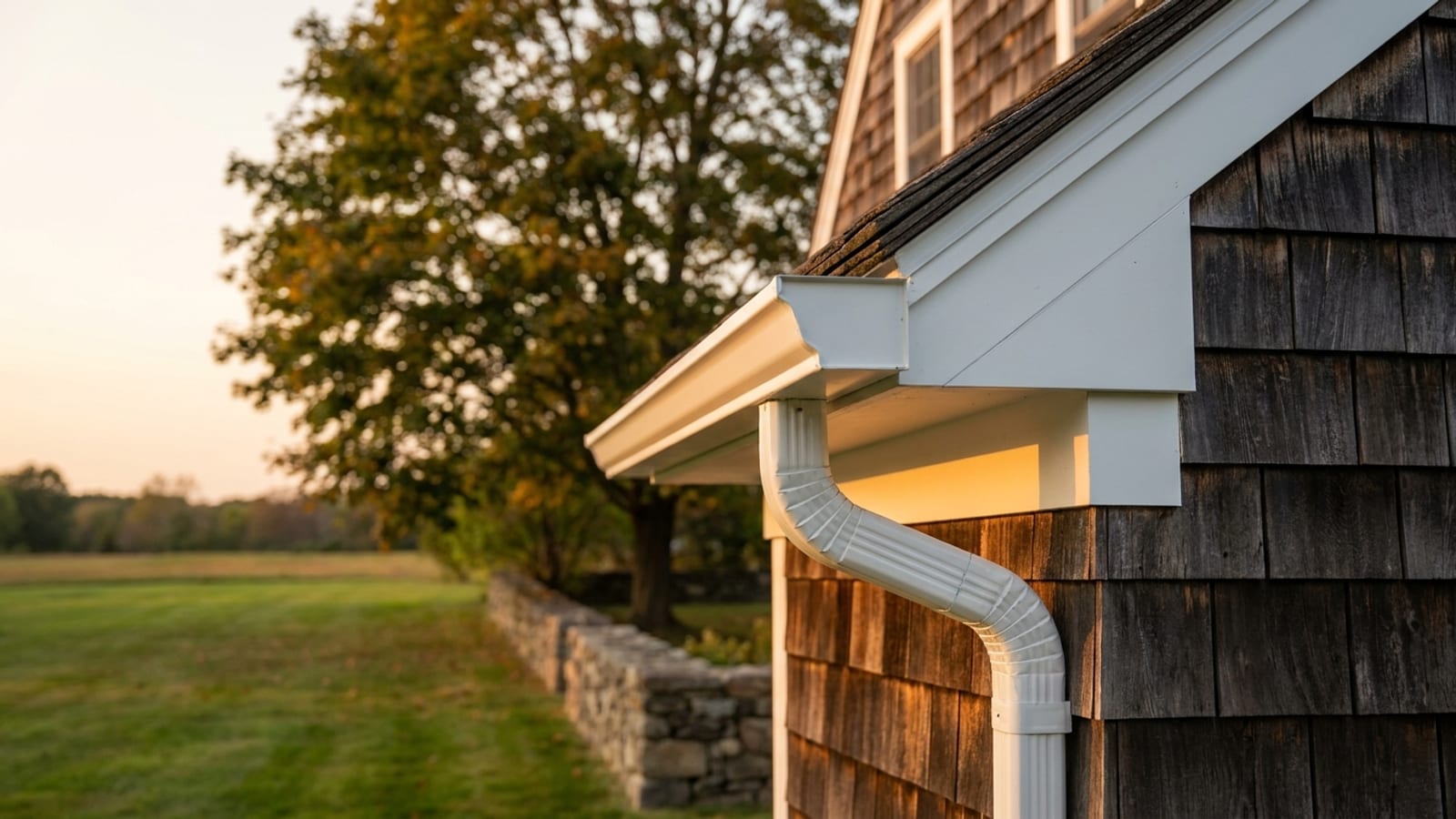
- Hanger spacing and type. Old spike-and-ferrule gutters loosen every freeze-thaw cycle. Hidden hangers screwed into solid fascia do not.
- Downspout count. A long run with a single downspout at one end overflows in a heavy rain no matter how new the gutter is. This is the most commonly under-specified part of the system.
If all four check out and the fascia is solid, the gutters can stay. That is a legitimate outcome, and a contractor should be willing to say it.
The decision, in a table
| What you find | Reasonable call | Why |
|---|---|---|
| What you findTight seams, good pitch, solid fascia | Reasonable callKeep them, have them detached and rehung carefully | WhyNothing is gained by replacing a working system |
| What you findSagging runs, loose spikes, leaking seams | Reasonable callReplace with the roof | WhyThe labor to remove and rehang is already being spent |
| What you findSoft or rotted fascia found at tear-off | Reasonable callReplace fascia first, then new gutters | WhyNew hangers need something to bite into |
| What you findChronic overflow in heavy rain | Reasonable callRework capacity, not just the gutter | WhyUsually a downspout count or size problem |
| What you findCopper or half-round on a period house | Reasonable callRepair rather than convert | WhyMaterial change carries approval and appearance consequences |
When keeping the old gutters is the honest answer
There are real cases against spending the money.
If the gutters are five or eight years old, aluminum, hung on hidden hangers, and nothing about them is failing, replacing them with the roof buys you nothing but a matching color. If you are selling within a couple of years, a sound gutter system is not something a buyer's inspector flags. And if the budget is tight, gutters are the part of the eave you can come back to later without disturbing the roof, which is not true of drip edge, ice and water shield or fascia. Spend the money on the layers that get buried.
Connecticut-specific considerations
Ice loading
Every town we serve carries a ground snow load of 30 psf under Appendix AY of the 2022 Connecticut State Building Code, except Avon, Farmington and Simsbury at 35 psf. That figure is a structural requirement on the framing and has nothing to do with gutters. What it tells you indirectly is how much snow sits above the eave waiting to melt. Gutters do not cause ice dams and gutter guards do not prevent them, which we cover in detail in the post on why Connecticut roofs leak in winter. What overloaded gutters do is tear hangers out of fascia when they fill with ice.
Salt air on the shoreline
Salt air is harder on metal fasteners and flashing than it is on the shingles themselves. On the shoreline, corrosion-resistant hangers and fasteners matter more than the gauge of the gutter, and mixing dissimilar metals at the eave is worth avoiding. If you are pricing a roof replacement in Madison or anywhere else along the central shoreline, ask specifically what the hangers and fasteners are made of.
Historic districts
Under Connecticut General Statutes Sec. 7-147f(a), replacing gutters with similar materials in the same configuration is ordinary maintenance and does not require a Certificate of Appropriateness. Swapping half-round copper for K-style aluminum changes both the material and the configuration, and that is exactly what does require review. Plan for a commission meeting rather than assuming a schedule.
What to ask for in writing
Gutters get quoted vaguely more often than any other part of an exterior job. A line that reads "gutters as needed" is not a scope. Ask the estimate to state:
- Whether existing gutters are being removed and reinstalled, or replaced.
- Linear footage of gutter and the number of downspouts, with sizes.
- Hanger type and spacing, and fastener material.
- Fascia replacement priced per linear foot, so a discovery after tear-off has a known number instead of a negotiation.
- Who is responsible for cleaning debris out of gutters that are staying.
The permit your contractor pulls covers the roof replacement itself, which is required in every town we serve and can only be pulled by a registered Home Improvement Contractor. Anything you add to the scope should be priced on the same document, not agreed to on the driveway.
Getting a number for your house
Roof size, pitch, eave length and the condition of what is behind the gutter all move this decision, and none of them can be judged from a photograph. If you want it priced properly, request an estimate and someone will come out, measure the roof and the eave runs, look at the fascia condition where it is visible, and give you a written price with the gutter scope written as its own line.