Short answer
A metal roof lasts far longer than asphalt and sheds snow more readily, but it costs several times more up front and requires an installer who works in that system regularly. Architectural asphalt is still the right default on most Connecticut homes, because 25 to 30 years of service covers the period most people own a house. Metal earns its price on a home you intend to hold for decades, or on porch, dormer and low-slope sections where shingles struggle.
On this page
Metal and asphalt are not really competing for the same job. Architectural asphalt buys 25 to 30 years for a price most Connecticut homeowners can finance in one step. Metal buys something closer to a lifetime, at a multiple of that price, and only pays off if you stay long enough or the roof geometry suits it. This post lays out where each one actually wins on a Connecticut house.
What people mean by "metal roof"
The category covers three very different products, and quotes that just say "metal" are hiding which one is being proposed.
Standing seam
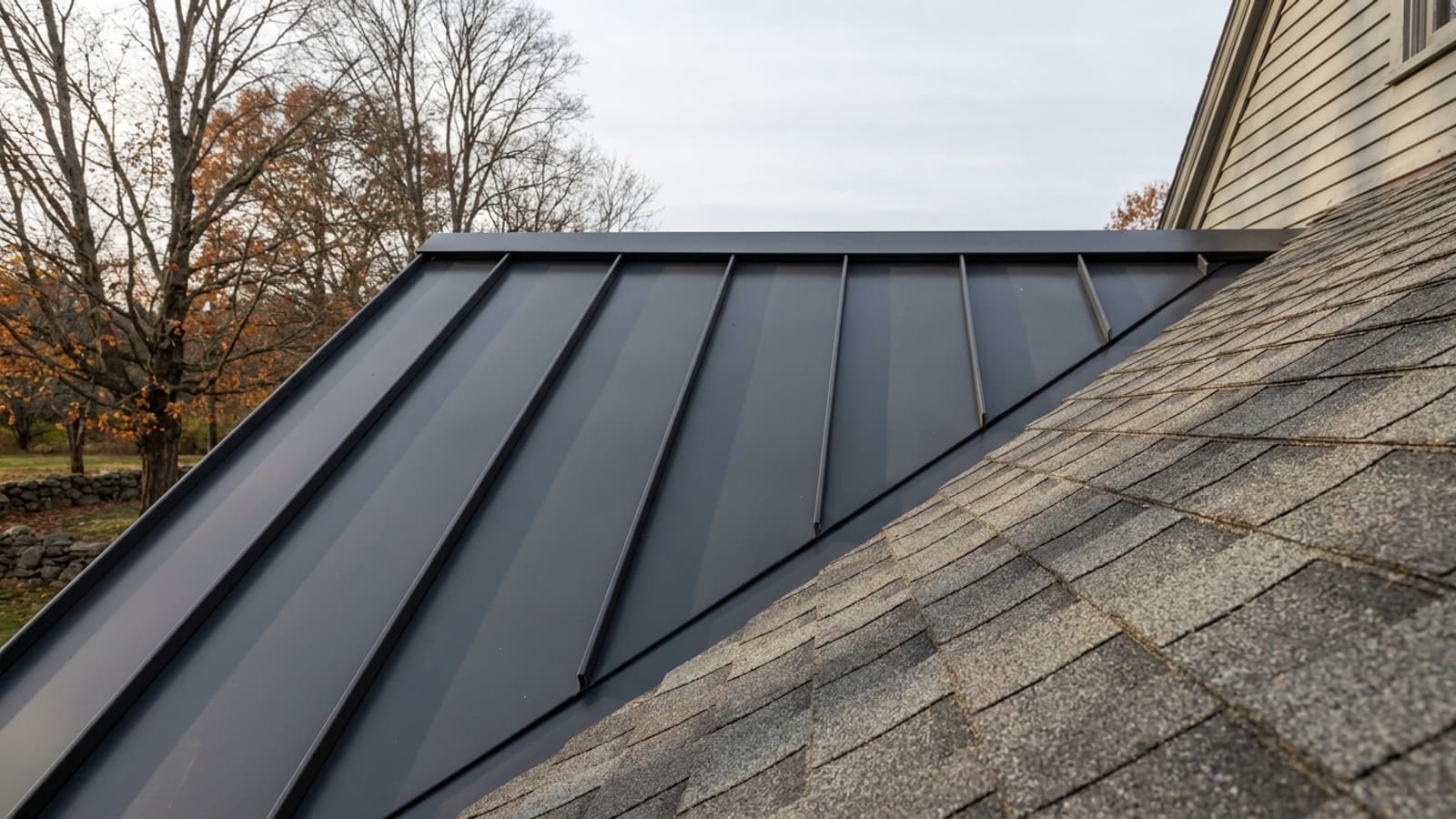
Flat panels run vertically from ridge to eave, joined by raised seams. Fasteners are hidden clips underneath the panel, so nothing penetrates the water plane in the field of the roof. Clips allow the panel to expand and contract with temperature, which matters on a material that moves measurably between a January night and a July afternoon. This is the system most people picture, and the most expensive one.
Exposed fastener panel
Ribbed panels screwed straight through the face with gasketed screws. Cheaper, faster, and common on agricultural and outbuilding work. The weakness is predictable: every screw is a hole with a rubber washer in it, and washers age. Expect to walk the roof and retorque or replace fasteners over the decades.
Metal shingles and stamped panels
Steel or aluminum pressed to imitate slate, shake or tile, installed in courses like shingles. It solves the visual objection on a traditional Colonial better than a broad standing seam field does, and it handles complex roofs with more forgiveness.
Cost, lifespan, and the number that actually matters
The published Connecticut ranges for the coverings we install are below. They are general ranges that depend heavily on the specific house, not quotes.
| Covering | Typical lifespan | General Connecticut range |
|---|---|---|
| CoveringThree-tab asphalt | Typical lifespan15 to 20 years | General Connecticut range$8,000 to $15,000 |
| CoveringArchitectural asphalt | Typical lifespan25 to 30 years | General Connecticut range$10,000 to $28,000 |
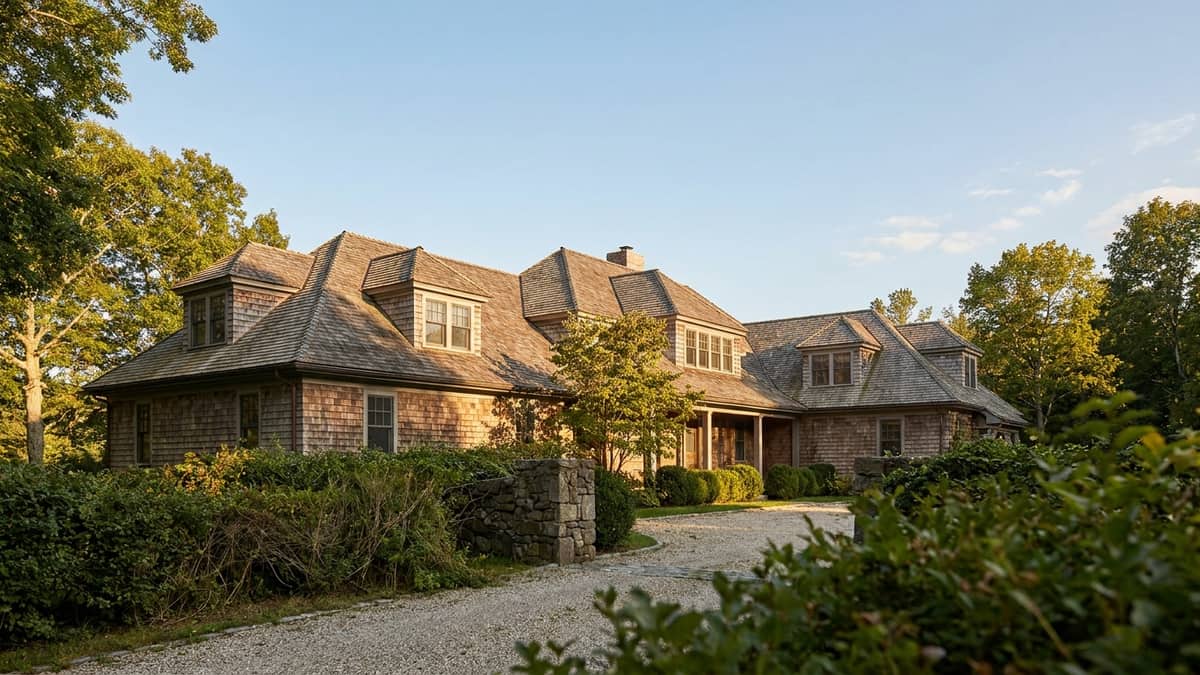
| CoveringCedar shake | Typical lifespan30 to 40 years | General Connecticut range$20,000 to $50,000 |
| CoveringCopper | Typical lifespan100+ years | General Connecticut range$40,000 to $80,000+ |
We do not publish a range for steel or aluminum standing seam, and you should be skeptical of any figure quoted to you without a measurement of your roof. Ask for an itemized written price for your address. You can see the full list of coverings we install on our roofing materials page.
Run it the other way and metal starts to make sense. A house you plan to leave to your children will go through roughly three architectural asphalt cycles in the life of one good metal roof, and each of those cycles costs more in future dollars than the last.
Wind: the town figure applies to both
Appendix AY of the 2022 Connecticut State Building Code assigns every town an ultimate design wind speed. In the towns we serve that is 120 mph, or 125 mph in Guilford, Madison and New Haven, and every one of them sits inside a designated hurricane-prone region. The full explanation is in our post on the two code numbers every Connecticut roof must meet.
One clarification worth keeping straight: the high-wind underlayment provisions people sometimes hear quoted are keyed to Vasd, not Vult. Converted, Vasd in these towns lands around 93 to 97 mph, below the 110 mph trigger, so that requirement does not apply here.
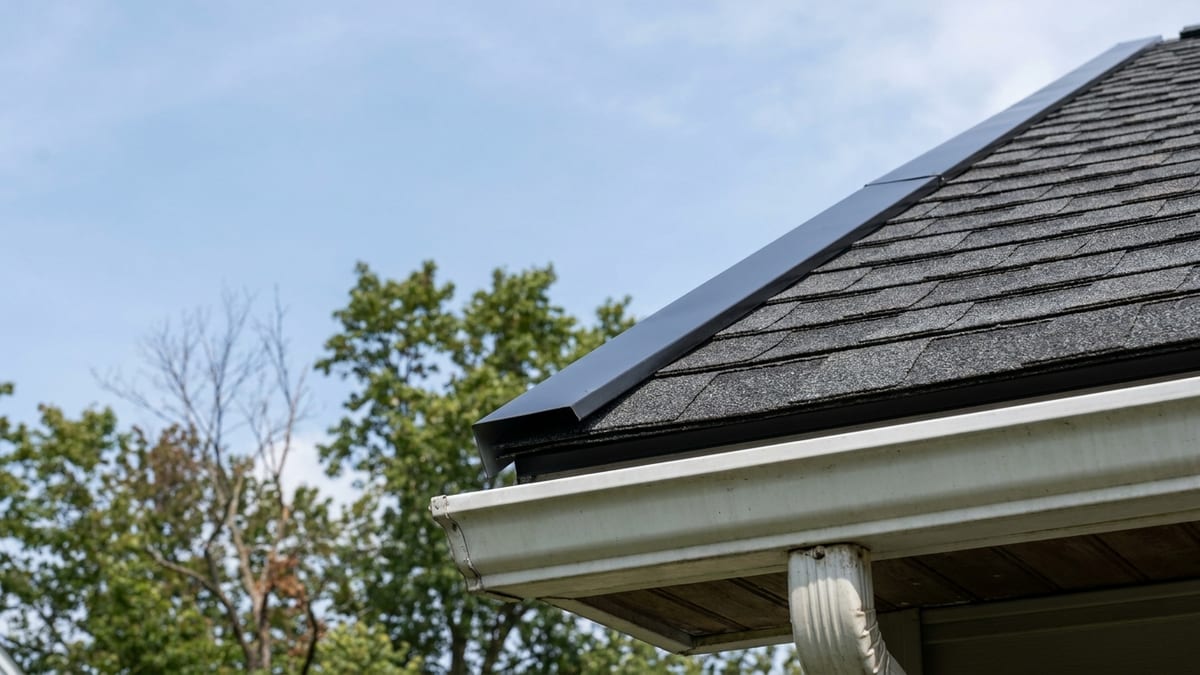
What does apply is the assembly. Asphalt earns its wind rating through nail count, usually six nails per shingle in a defined zone rather than four. A metal panel earns its rating through clip type and spacing, with tighter spacing required at eaves, rakes and corners where uplift concentrates. A metal quote with no clip spacing on it is the same problem as a shingle quote with no nail count on it.
Snow, and the case for snow guards
Ground snow load is 30 psf in most towns we serve and 35 psf in Avon, Farmington and Simsbury. That is a structural number carried by the framing. Neither covering changes it.
What metal changes is behavior. A slick panel releases an accumulated snow pack in one event rather than melting it off gradually. That is a benefit for load and a hazard for whatever sits below: an entry door, a walkway, a deck, a bay window roof, a heat pump condenser. Snow guards are not an upsell on a metal roof in Connecticut, they are part of the design, and they should appear on the quote by type and layout.
Metal does not exempt you from ice dams either. Dams are a heat-loss problem, not a covering problem, as we explain in why Connecticut roofs leak in winter and not in storms. Ice and water barrier at the eaves and a properly vented, air-sealed attic still do the work.
Salt air on the shoreline
Along the central shoreline the corrosion question outweighs the wind question. Salt accelerates attack on steel edges, cut ends and fasteners, and mixing dissimilar metals in flashing, gutters and fasteners sets up galvanic corrosion that can eat a detail long before the panel itself fails. Aluminum and copper hold up better than coated steel in that environment, and every fastener has to be compatible with the panel. This is worth pressing on hard for a roof replacement in Madison or anywhere else facing open water.
The honest case against metal
- Up-front cost. It is the largest single objection and it is a fair one. Money spent on a covering you will not outlive is money not spent on insulation, windows or the attic work that lowers your bills now.
- The installer pool is smaller. Standing seam is a sheet metal trade as much as a roofing trade. A crew that installs it twice a year is not the same as a crew that installs it weekly.
- Complex roofs cost more, fast. Dormers, valleys, chimneys and skylights each require custom flashing. Asphalt absorbs geometry cheaply. Metal does not.
- Cosmetic risks. Oil canning, the mild waviness visible in flat panel areas, is normal and not a defect. Hail and falling limbs can dent aluminum and lighter-gauge steel without compromising performance, which bothers some owners.
- Later penetrations are harder. Adding solar, a vent or a satellite mount to a standing seam roof requires clamps and planning, not a pipe boot and four nails.
- Historic districts. Going from asphalt to metal is a change of material type, which triggers a Certificate of Appropriateness under CGS Sec. 7-147f(a). A like-for-like asphalt job does not.
Where metal clearly wins
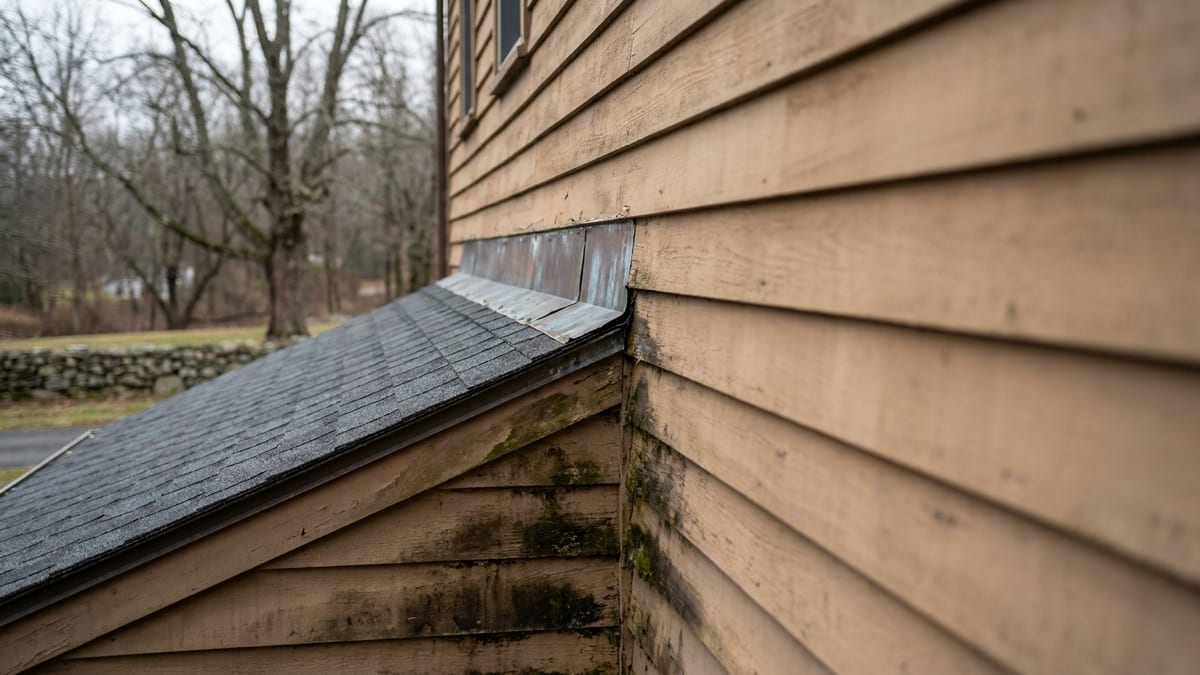
Even on houses that stay with asphalt shingles overall, metal is often the correct answer for specific sections: porch roofs, dormer caps, bay and bow window roofs, and low-slope areas where shingles are outside their minimum pitch. Copper is commonly used exactly this way, as an accent rather than a whole-house covering. Full metal makes the most sense on a simple gable roof, on a house you intend to hold for decades, and on properties already specified at the slate and copper tier.
Getting a real number
Whichever direction you lean, a roof replacement requires a building permit in every town we serve, and only a contractor registered as a Home Improvement Contractor can pull it for you. When you request an estimate, someone comes to the house, measures the roof, looks at the attic and the existing flashing details, and gives you a written itemized price you can compare line by line against anyone else's.