Short answer
Usually no, not as a default. A roof at the end of its life gets priced into the offer whether you replace it or not, so the real comparison is between what a replacement costs you and what a buyer, appraiser or lender will deduct if you leave it. Replacing before listing makes sense when the roof is actively leaking, when the house will likely be bought with FHA or VA financing, or when the worn roof is the first thing visible from the street.
On this page
A worn roof does not stay a secret through a sale. It shows up in the listing photos, in the home inspection report, sometimes in the appraisal, and always in the negotiation that follows. The question is not whether the buyer finds out. It is whether you pay for the roof at your price, with a contractor you chose, or at the buyer's price, under a deadline, with a lender deciding the schedule.
Start with the number the buyer will use
Buyers and their agents do not value a roof by how it looks. They value it by remaining life and by what a replacement would cost them. Architectural asphalt shingles typically last 25 to 30 years in Connecticut, and freeze-thaw cycles plus poor ventilation can shorten that. So a 22-year-old roof is not "fine, it doesn't leak." It is a known expense sitting a few years out, and it gets discounted accordingly.
That discount is rarely gentle. A buyer asking for a $20,000 credit on a roof is not negotiating in bad faith. They are protecting themselves against a number they cannot verify, so they round up. Your own quote is the only thing that pulls that number back down to reality.
The three paths, side by side
Assume a typical Connecticut home where an architectural shingle replacement would fall in the $10,000 to $30,000 range depending on size, pitch and complexity. Our breakdown of what a new roof costs in Connecticut explains what moves a house inside that spread.
| Path | What it costs you | What it buys | Main risk |
|---|---|---|---|
| PathReplace before listing | What it costs youFull price, paid up front | What it buysClean inspection, no financing condition, marketing point | Main riskYou may not recover the full amount in sale price |
| PathOffer a credit at closing | What it costs youUsually a negotiated figure, often higher than your own quote | What it buysSpeed, no construction before the sale | Main riskA lender can refuse to close on a conditioned roof |
| PathSell as-is with disclosure and a quote | What it costs youNothing up front | What it buysPrice already reflects the roof | Main riskNarrower buyer pool, more re-trading after inspection |
There is no universally correct row. There is a correct row for your house, your timeline and your buyer.
When replacing before you list is the right call
The roof is leaking now
Active water entry is not a negotiating item, it is a defect. It shows up as ceiling stains, wet insulation and, if it has been going on long enough, soft decking. Once a buyer's inspector writes the word "active," every subsequent conversation is about the worst case rather than the actual case. Fix it.
The buyer will likely use FHA or VA financing
Government-backed loans put the appraiser in a position to call out a roof that will not keep water out or has little remaining physical life. Two years of remaining life is the threshold appraisers commonly apply. If your price point and neighborhood draw FHA buyers, a roof at the end of its life can quietly eliminate a large share of your market, and a closing credit does not fix it because the loan will not fund until the work is done.
The roof is the first thing you see from the street
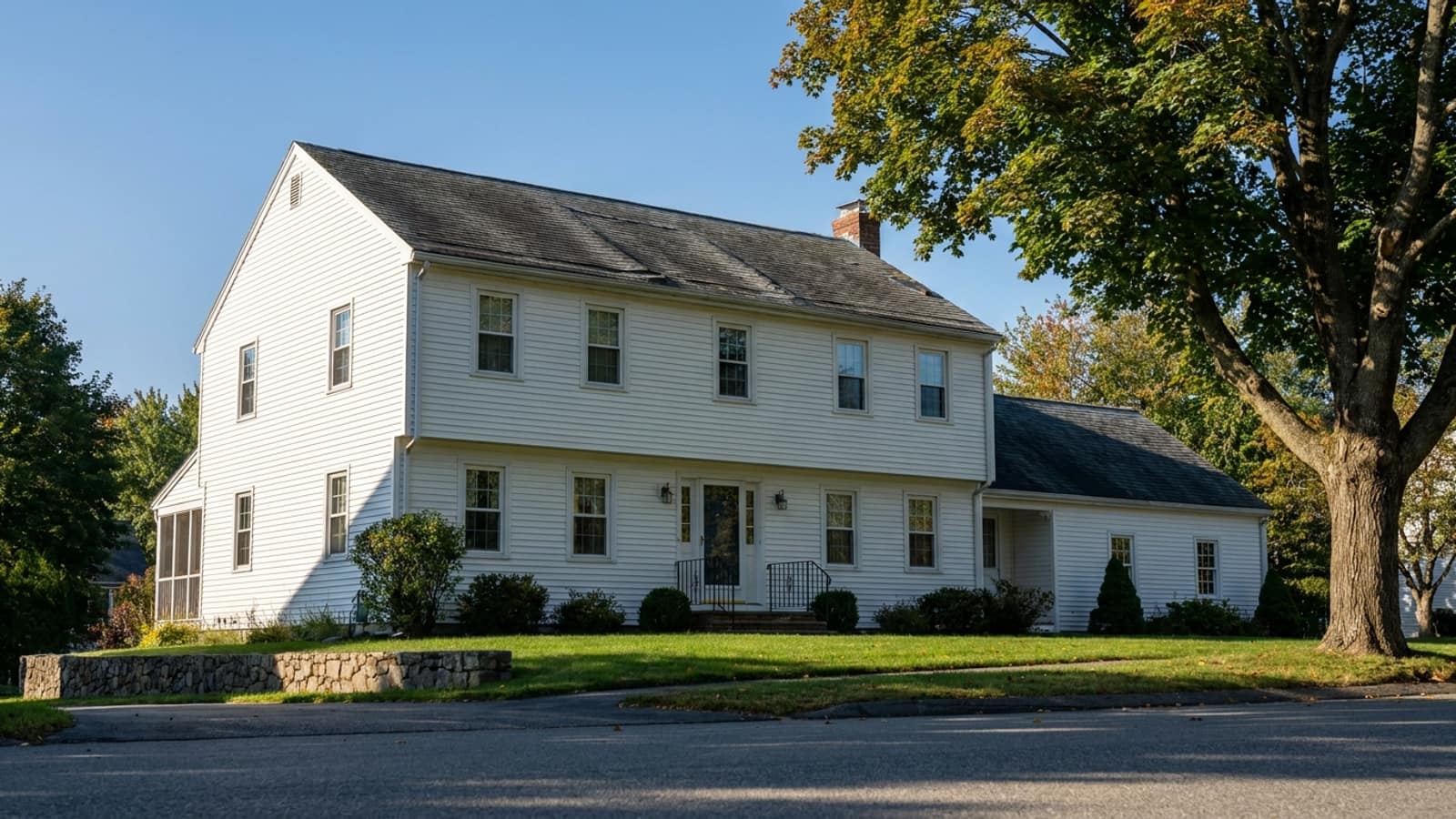
On a front-facing gable with curling, cupped or patchy shingles, the roof sets the tone before anyone opens the front door. Buyers generalize from what they can see. A worn roof over a well-maintained house reads as deferred maintenance across the whole property, and that costs more than the roof itself.
There are already two layers
A second layer of shingles is a known cost multiplier, because the tear-off is double and the deck underneath has been hidden for decades. A buyer's contractor will spot it from the rake edge in ten seconds and price accordingly.
When you should not replace it
The honest case against a pre-sale roof is real and it applies more often than contractors admit.
- The roof has real life left. A 12- to 15-year-old roof with no failures does not need replacing to sell. Document it and move on. Our guide to repair versus replacement covers where that line actually sits.
- Your buyer will want their own choices. In higher-end markets, a buyer planning a renovation may not value a standard architectural roof you just installed. Cedar, slate and metal decisions belong to whoever will live there.
- You need the cash for the move. Spending $18,000 to recover an uncertain portion of it at closing is a worse use of money than a smaller repair plus a credit, if financing allows a credit.
- The damage is isolated. Replacing a failed pipe boot, a section of step flashing or a row of wind-lifted shingles addresses the inspection finding without a full replacement.
What to do if you leave the roof alone
Get the roof inspected on your terms
A seller-side inspection before listing tells you what the buyer's inspector is going to write. That is worth knowing three weeks before a negotiation rather than three days after. We cover the buyer's version of this in what a pre-purchase roof inspection should include, and the same items are the ones that will be used against you.
Fill in the disclosure report accurately
Connecticut requires sellers of most one-to-four family homes to complete the Residential Property Condition Disclosure Report, which asks directly about the roof's age and any known leaks. Guessing on that form is the kind of shortcut that turns a routine closing into a dispute. Write what you know, and write "unknown" where you genuinely do not know.
Have permit records ready
A roof replacement requires a building permit in every town we serve, and the town inspects the work. If a prior roof was installed without one, a buyer's attorney may find the gap during a municipal search. If the roof was permitted and closed out, that record is an asset at the closing table.
Connecticut details a buyer's contractor will check
Appendix AY of the 2022 Connecticut State Building Code assigns every town an ultimate design wind speed and a ground snow load. Guilford, Madison and New Haven sit at 125 mph, higher than Greenwich, Stamford, Westport and Fairfield at 120 mph. Avon, Farmington and Simsbury carry a 35 psf ground snow load while every other town we serve carries 30 psf. A shingle's wind rating only holds if it was fastened the way the manufacturer requires to earn it, which for high-wind coverage usually means six nails per shingle in a defined nail zone rather than four. A sophisticated buyer's contractor will look at the nailing pattern in an attic or at a rake edge.
If the house is in a local historic district, replacing roofing with similar material does not require a Certificate of Appropriateness under Connecticut General Statutes Sec. 7-147f(a). Changing the material type does. That distinction decides whether a pre-listing roof starts next month or waits for a commission meeting, which matters when you are working backward from a listing date.
The practical sequence
- Get a written inspection and a written price while you still have time to act on either.
- Decide, with your agent, whether your likely buyer pool is financing-sensitive.
- If you replace, do it far enough ahead that the permit is closed and the photos are taken with the new roof on.
- If you do not replace, disclose accurately and keep the quote where you can hand it over during the inspection period.
If you want the actual number for your house, request an estimate through our roofing page or on the estimate request form. Someone comes out, measures the roof, looks at the decking access and ventilation, and gives you a written, itemized price. Whether you use it to schedule work or to hand a buyer a real figure instead of a guess, it is the same piece of paper.