Short answer
A standard home inspection reports the roof's visible condition against a general standard of practice, but it does not tell you how many years are left or what the next replacement will cost. Before you close, pull the town's roofing permit record, count the shingle layers at the rake edge, and look in the attic for ventilation and past leaks. If any of that comes back thin, a separate roof inspection costs a small fraction of the roof you would otherwise inherit.
On this page
- What the home inspection actually covers
- Start with the permit record
- Five things you can check yourself
- The code numbers that set the price of the next roof
- Documents to request from the seller
- Credit at closing, or seller replaces
- What the replacement would actually cost
- Multi-family and flat roofs
- Before you waive the inspection contingency
A home inspection tells you the roof's condition on the day someone looked at it. It does not tell you how many winters are left in it, whether it was fastened the way the shingle manufacturer required, or what the replacement will cost you three years into the mortgage. Those are the three things that actually affect your money, and none of them are in a standard inspection report.
Here is how to close that gap before you sign, using records anyone can pull and observations anyone can make from the ground and the attic.
What the home inspection actually covers
Home inspectors work to a standard of practice. Those standards require the inspector to observe and report on the roof covering, flashings, gutters and visible penetrations. They generally do not require the inspector to walk a roof that is steep, wet, icy or fragile, do not require an estimate of remaining life, and do not require a cost figure for repairs.
So a report that says "asphalt shingles, granule loss noted, monitor" is not the inspector being vague. It is the inspector staying inside the scope of the job you hired him for. The report is a screening tool, and it is a good one. It is not a roofing assessment, and it was never sold as one.
When to pay for a separate roof inspection
A second opinion from a roofer is worth it when the home inspector could not get on the roof, when the report flags anything at valleys, chimneys or sidewalls, when the house has a flat or low-slope section, or when the roof is clearly past fifteen years. A dedicated roof inspection looks at nail placement where it can be observed, flashing detail, deck feel underfoot, and the attic side of the assembly.
It is also fair to skip it. On a house with a five-year-old roof, a signed-off town permit and clean attic sheathing, a separate inspection is buying you a document you already have.
Start with the permit record
This is the single most useful step, and it is free.
Roof replacement requires a building permit in every town we serve, and only a contractor registered as a Home Improvement Contractor can pull it on the owner's behalf. That means the town holds a record of the job: date, address, contractor, declared value, and whether the final inspection was passed.
Most building departments will look up a property by address over the phone or through an online portal. Ask for roofing permits specifically, and ask whether the final was signed.
Five things you can check yourself
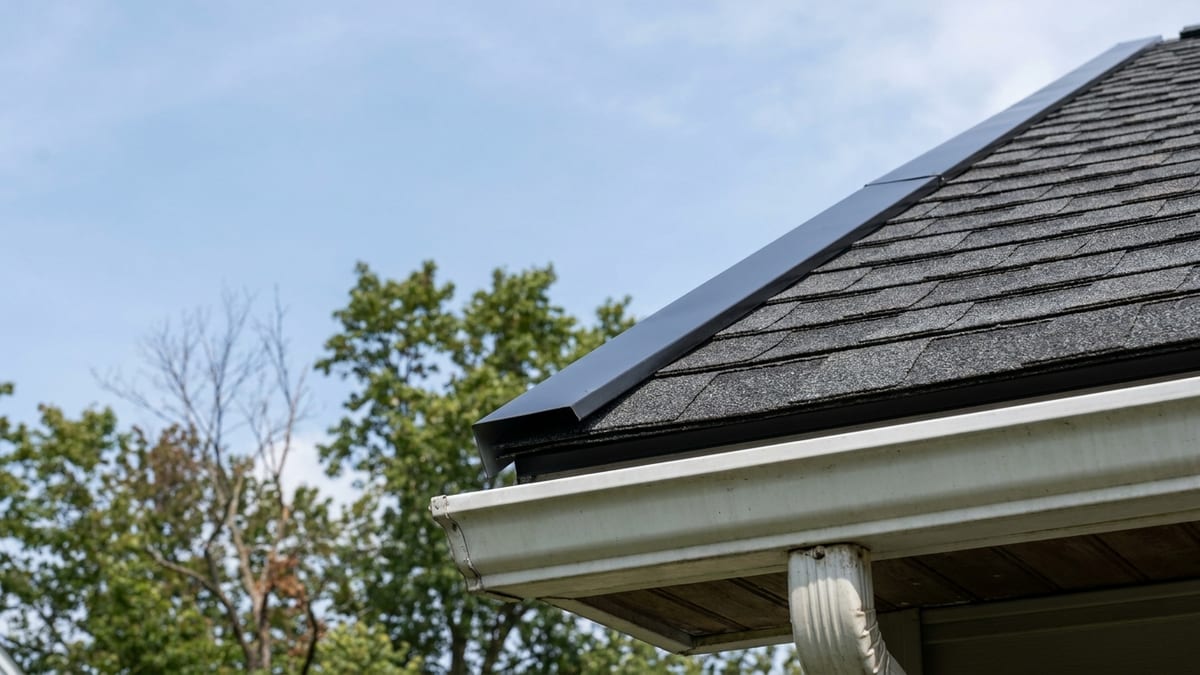
- Layer count. Look at the rake edge or where shingles meet a wall. Two layers means the next job is a full tear-off and disposal of double the material, and it usually means the deck has not been seen in decades.
- Granule loss. Bare black mat showing through, and granules piled at the downspout outlets, point to a shingle near the end of its service life rather than a shingle that had a rough year.
- The attic. Look for daylight at the ridge, dark staining on the sheathing around nails, compressed insulation jammed into the soffit, and any bathroom fan venting into the attic instead of outside. Blocked soffits are the most common cause of a roof aging faster than its rating.
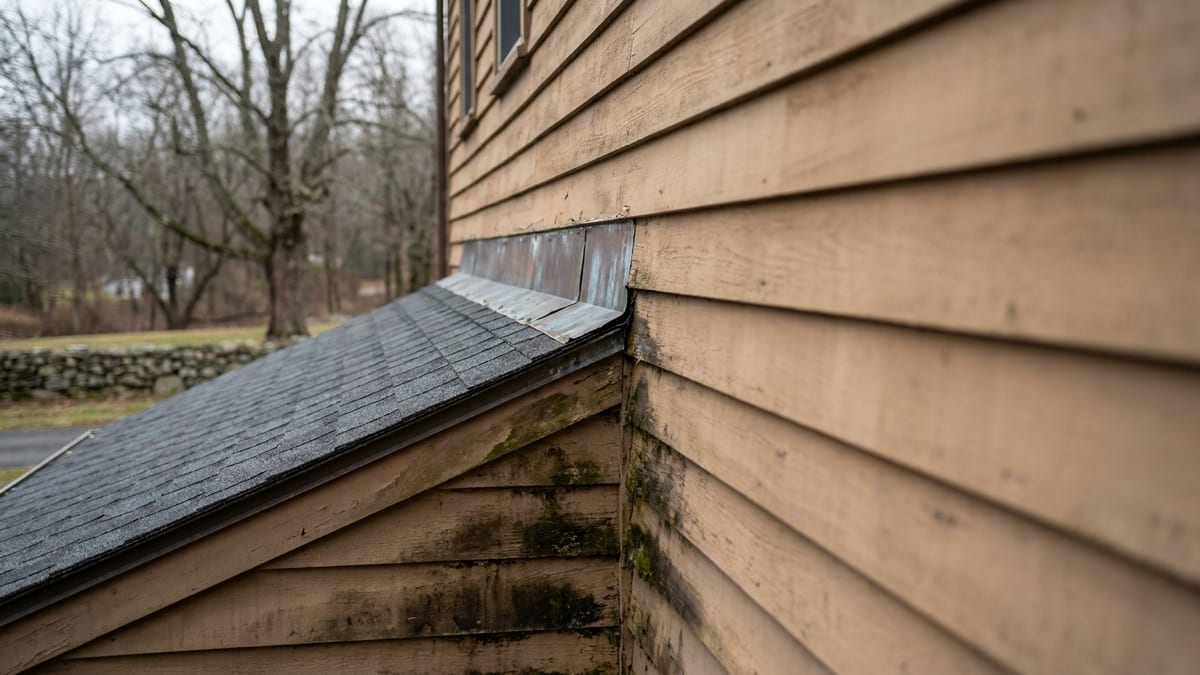
- Flashings. Chimney, sidewall and skylight flashing is where most leaks start. Tar smeared over a flashing joint is a repair that was made to get through a season.
- Ceilings inside. Fresh paint on a single bedroom ceiling, particularly directly below a valley or chimney, is worth a question.
The code numbers that set the price of the next roof
Appendix AY of the 2022 Connecticut State Building Code assigns every town an ultimate design wind speed and a ground snow load. They matter to a buyer because they govern how the next roof has to be fastened and structured.
| Town | Design wind speed (Vult) | Ground snow load (pg) |
|---|---|---|
| TownGuilford, Madison, New Haven | Design wind speed (Vult)125 mph | Ground snow load (pg)30 psf |
| TownGreenwich, Stamford, Westport, Fairfield | Design wind speed (Vult)120 mph | Ground snow load (pg)30 psf |
| TownAvon, Farmington, Simsbury | Design wind speed (Vult)120 mph | Ground snow load (pg)35 psf |
| TownHartford, West Hartford, Glastonbury, Manchester, Middletown | Design wind speed (Vult)120 mph | Ground snow load (pg)30 psf |
Two things people get wrong about this table. First, the central shoreline towns carry a higher wind figure than the Fairfield County shoreline, because the figure follows exposure to open water rather than distance from New York. Second, the commonly quoted 110 mph trigger for high-wind underlayment attachment is keyed to Vasd, the allowable stress design wind speed, which works out to roughly 93 to 97 mph in these towns. It is not keyed to Vult, so it does not apply here. A contractor who cites the Vult number to justify that upgrade is misreading the code.
What does matter for a buyer is nailing. A shingle earns its wind rating only when it is fastened the way the manufacturer specifies, which for high-wind coverage is usually six nails per shingle in a defined nail zone instead of four. You cannot see nail count from the driveway, which is one more reason the permit and the original invoice are worth asking for.
Documents to request from the seller
- The roofing invoice, with the shingle line named, not just "architectural shingles."
- The manufacturer warranty registration, if one exists.
- The permit number, or confirmation there was one.
- Any insurance claim paperwork for storm or hail damage, including the adjuster's scope.
- Documentation of deck replacement, if sheets were swapped.
If the seller has none of it, treat the roof as an unknown of its stated age rather than a documented asset.
Credit at closing, or seller replaces
Both appear in Connecticut contracts. They are not equivalent.
| Seller replaces before closing | Credit to buyer | |
|---|---|---|
| Who picks the contractor | Seller replaces before closingSeller | Credit to buyerYou |
| Who picks the shingle and nail count | Seller replaces before closingSeller | Credit to buyerYou |
| Warranty registered to | Seller replaces before closingSeller, transfer rules vary | Credit to buyerYou |
| Schedule pressure | Seller replaces before closingHigh, tied to closing date | Credit to buyerNone |
| Risk of a low-bid job | Seller replaces before closingHigher | Credit to buyerLower |
The honest case for letting the seller handle it is simple: you do not want to manage a construction project during a move, and the work is done when you get the keys. The case against it is that a seller paying for a roof he will never live under has one incentive, which is the smallest number that closes the deal.
What the replacement would actually cost
General Connecticut ranges, which depend heavily on the specific house, its pitch, its complexity and what is found under the old roof:
| Roof type | General Connecticut range |
|---|---|
| Roof typeThree-tab asphalt | General Connecticut range$8,000 - $25,000 |
| Roof typeArchitectural asphalt | General Connecticut range$10,000 - $30,000 |
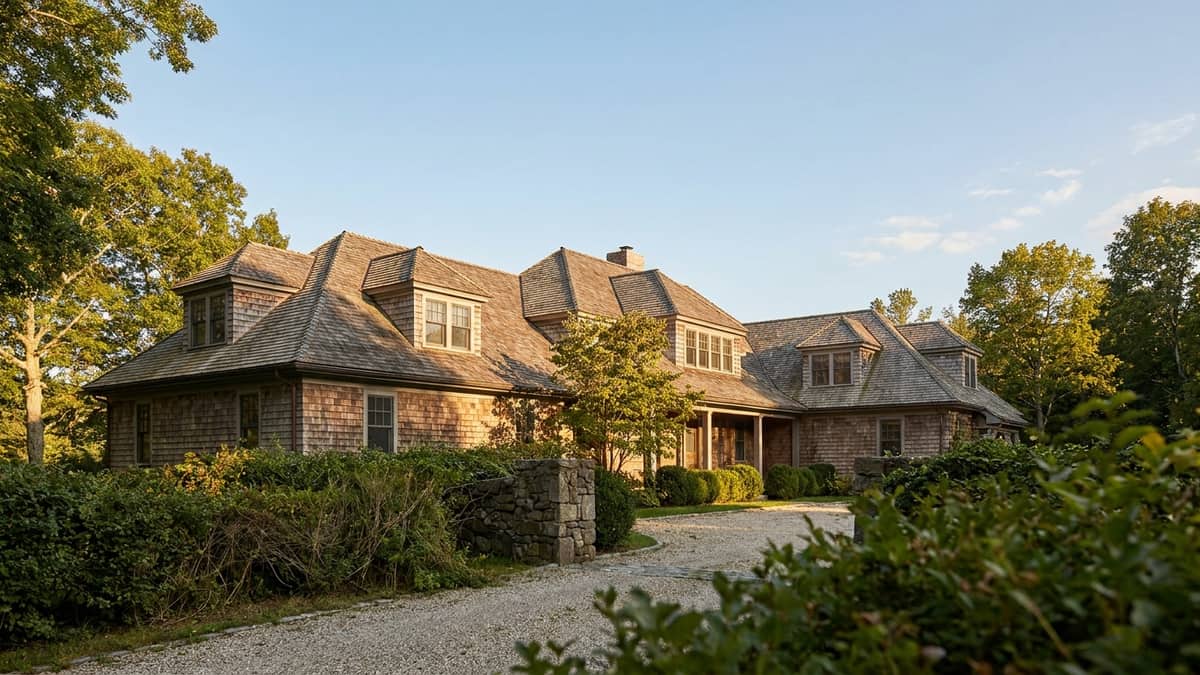
| Roof typeCedar shake | General Connecticut range$20,000 - $50,000+ |
Our breakdown of what drives a roof replacement price goes through the variables line by line. If the roof turns out to be sound with isolated problems, the question shifts to repair versus replacement, and repair is frequently the right answer on a roof under fifteen years old.
Multi-family and flat roofs
If you are buying a two-family or triple-decker, especially in Hartford or New Haven, the low-slope section is the part that matters. Ask when the membrane was installed, what system it is, and whether there is ponding water twenty-four hours after rain. A flat roof does not announce its age the way shingles do, and the inspection report line for it is often a single sentence.
Before you waive the inspection contingency
Get the permit record, walk the attic, count the layers, and read the flashing details in the report rather than the summary page. If that leaves a real question, have a roofer look at it while the contingency is still open. When you want a written price on what the next roof would cost so you can negotiate against a real number, request an estimate and someone will come out, measure, and put it in writing.