Short answer
Usually yes, if the door itself is failing, because the flashing and trim around a door are part of the siding assembly and doing both at once avoids cutting into brand new siding later. The labor overlap is real and the weather detailing comes out better. If the door only looks dated and still seals, new hardware and paint is the honest cheaper answer.
On this page
An exterior door is not a separate project from siding. It sits in a hole in the wall, and everything that keeps water out of that hole (the flashing, the water-resistive barrier lap, the trim, the siding cut) is installed by the siding crew, in order, before the wall is closed up. That is the whole argument for doing the two together, and it is also the reason a door swapped in two years later never quite looks like it was always there.
So the question is not really whether the work overlaps. It does. The question is whether your door is worth replacing at all.
Start by deciding whether the door has failed
There is a real difference between a door that looks dated and a door that no longer works as part of the wall. Only the second one earns the money.
Signs the assembly is done
- The jamb or the brickmold trim is soft when you press a screwdriver into it near the bottom corners. Rot almost always starts there.
- The threshold is split, spongy or has separated from the sill pan, and water tracks inside during a driving rain.
- You can see daylight at the strike side with the door locked, and no amount of adjusting the hinges or the strike plate closes it up.
- The unit has racked enough that the door drags or the deadbolt no longer lines up, which usually means the framing or the sill below it has moved.
- The glass in a half-lite or full-lite door has a failed seal and the insulated unit cannot be replaced separately.
Signs it is only cosmetic
- The slab is faded, chalky or an unfashionable color, but the jamb is sound and the door closes cleanly.
- The weatherstripping is flattened. That is a part, not a door.
- The lockset is worn or the handle finish is tired.
- There is a draft at one spot that a sweep or a threshold adjustment screw fixes.
A sound door that needs paint, a sweep and a new handleset is a few hundred dollars of parts and an afternoon. Nothing about a siding job changes that math. The crew can pull and reset the trim around it so the new siding meets it correctly.
Why the siding job is the cheap moment to do it
The water detailing happens behind the siding
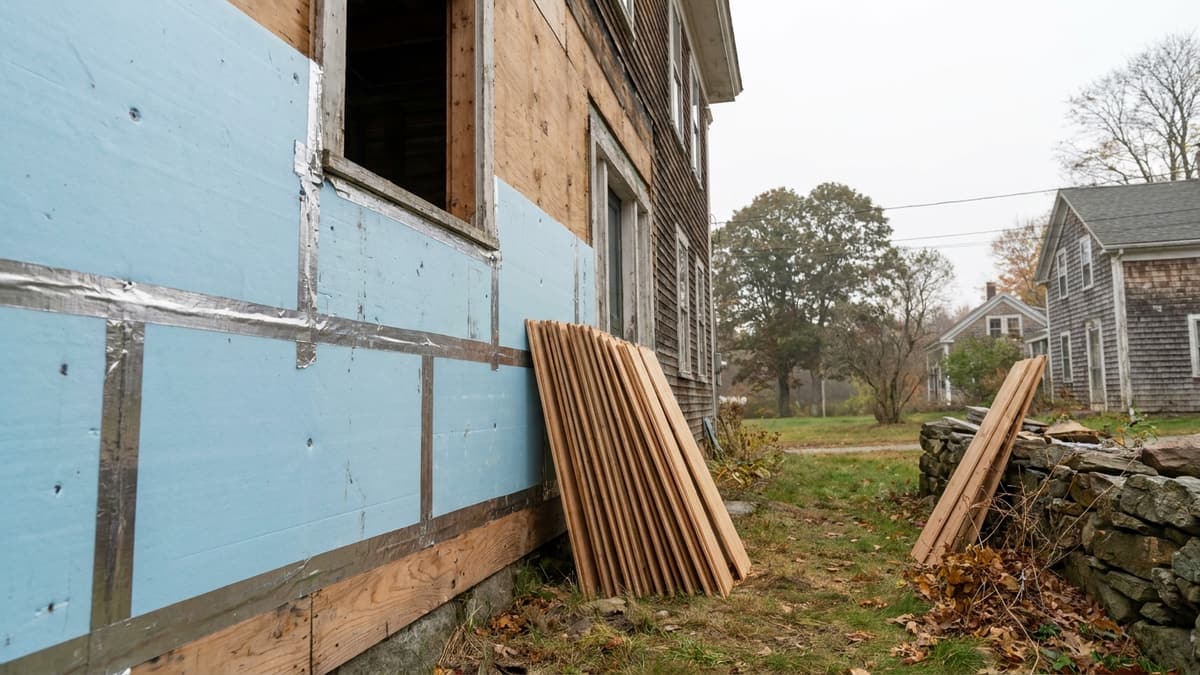
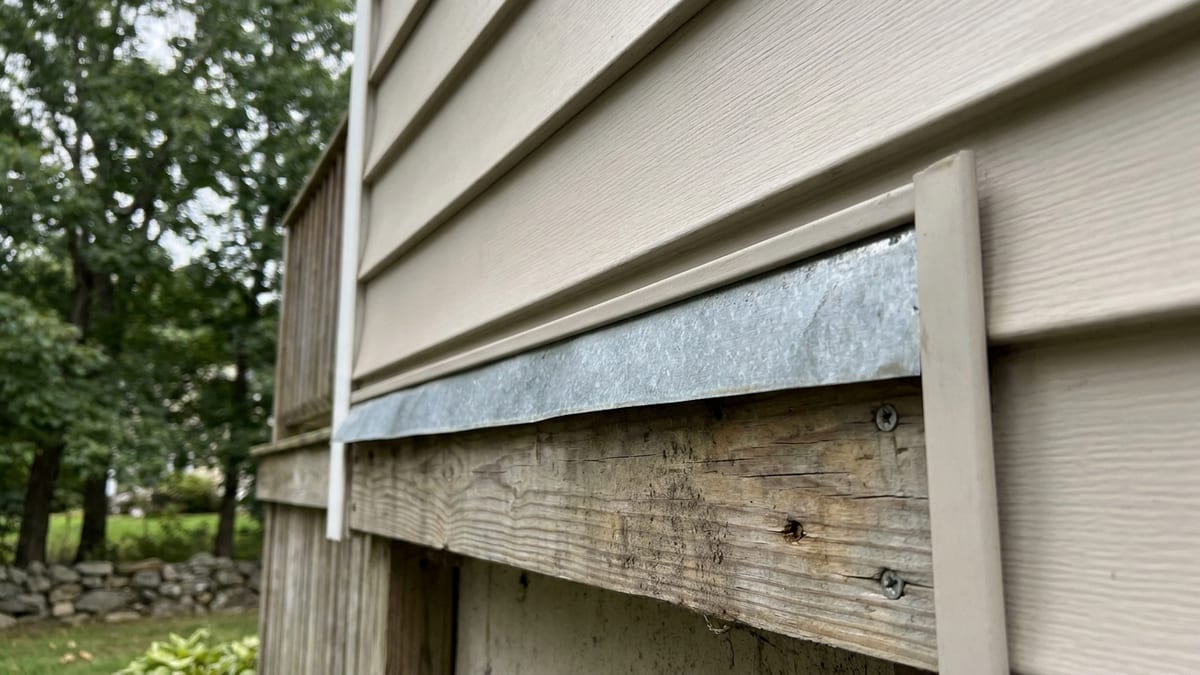
A door opening is waterproofed in layers that go on before any siding does: a sloped sill pan, jamb flashing, head flashing, and the house wrap lapped over the head flashing so water running down the wall is shed outward rather than behind the unit. We cover how that assembly works in our piece on house wrap and flashing behind siding, and it applies to doors the same way it applies to windows.
When the walls are stripped, all of that is accessible. The installer can see the sheathing condition below the threshold, replace what is soft, and set the pan correctly. After the siding is on, the same work means cutting the wall back open.
Trim and siding get cut once
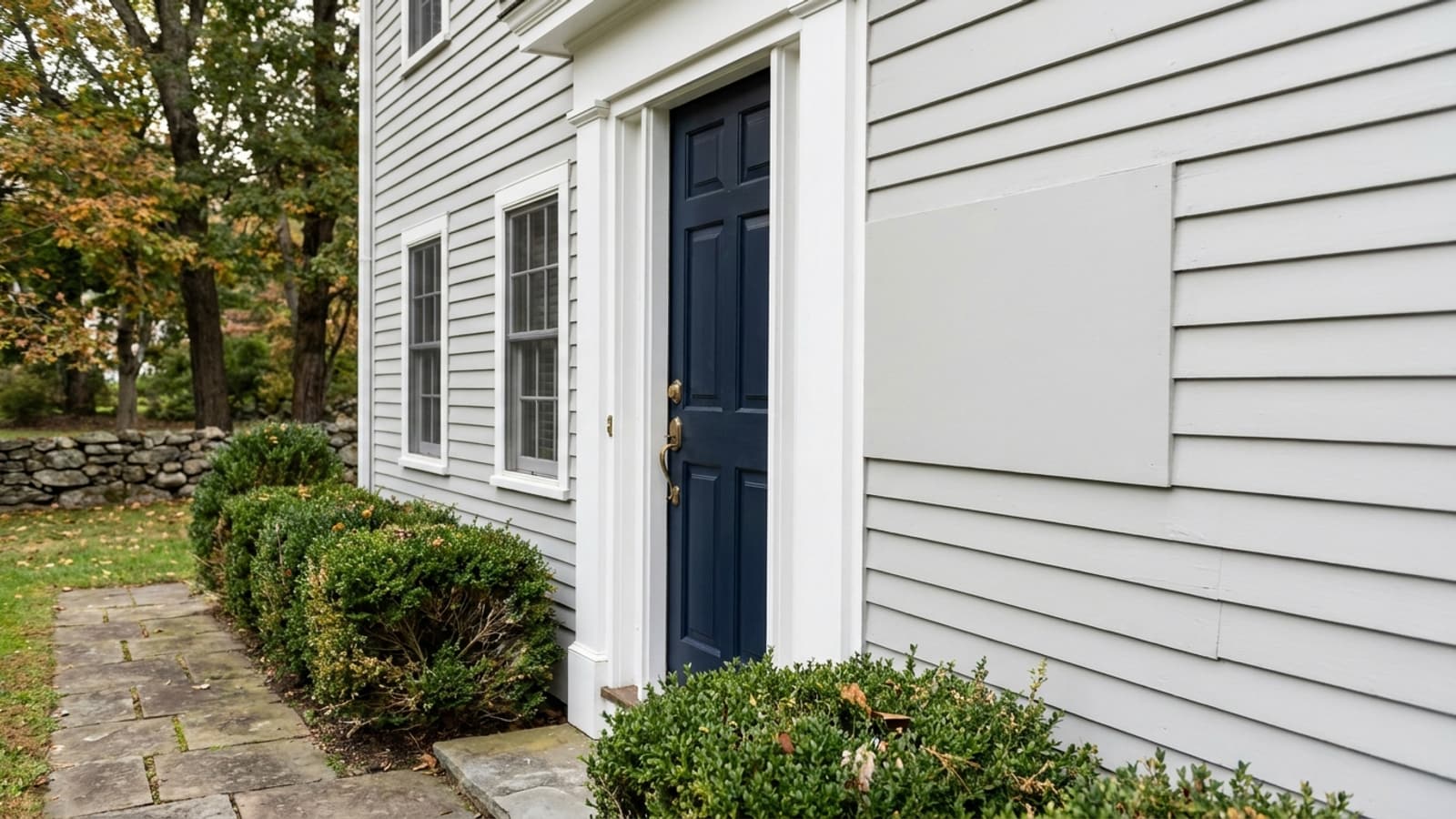
Siding is fitted around the door casing with the correct gaps and a J-channel or a trim detail depending on the material. Install the door first and the crew lays out the courses around the finished opening in one pass. Install it later and someone is removing courses, cutting new pieces, and trying to match a profile and color that may have changed since your order. Our post on matching existing siding on a repair explains why that match is harder than it sounds, especially after a season or two of sun on the new wall.
The mobilization is already paid for
Staging, protection, dumpster, and a crew already on the house are fixed costs that do not double when a door is added to the scope. That is the one genuine bundling saving, and it is a labor saving, not a material one. The door unit costs what it costs.
The case against adding the door
An honest list, because this is where the project goes sideways.
Lead time. Siding crews work to a schedule. A custom-width unit, a specific glass package or a factory-finished color can take weeks. If the door is not on site when the wall is open, the opening gets temporarily closed in and the detailing is done twice.
Scope found after demolition. Old siding comes off and sometimes reveals rotted sheathing or failed flashing that has to be fixed. That is the work that protects the house. If the budget is tight, the wall wins over the door.
Changing the opening is a different project. A same-size door in the same hole is trim carpentry. Widening the opening means a new header, which is structural work, requires a permit, and brings an inspector. Worth doing if you want it, but price it as its own line and expect it to extend the schedule.
Your siding budget may already be the ceiling. General Connecticut ranges run roughly $8,000 to $35,000 for vinyl, $18,000 to $80,000 or more for James Hardie fiber cement, and $25,000 to $60,000 or more for cedar, depending heavily on wall area, trim complexity and what is found behind the old siding. A door added on top of the high end of those ranges is a real decision, not a rounding error.
What changes on permits and historic review
Most Connecticut towns do not require a permit for a straightforward like-for-like siding replacement. The scope that triggers one is well defined, and door work only crosses the line when the opening changes.
| Scope | Permit generally required | Certificate of Appropriateness in a local historic district |
|---|---|---|
| ScopeSiding replaced like for like, no door work | Permit generally requiredNo | Certificate of Appropriateness in a local historic districtNo |
| ScopeNew door in the existing opening, same size | Permit generally requiredNo | Certificate of Appropriateness in a local historic districtNo, if material and configuration match |
| ScopeDifferent door material or added sidelights, same opening | Permit generally requiredGenerally no | Certificate of Appropriateness in a local historic districtYes |
| ScopeOpening widened, door added, header altered | Permit generally requiredYes | Certificate of Appropriateness in a local historic districtYes |
| ScopeSheathing replacement or exterior insulation added | Permit generally requiredYes | Certificate of Appropriateness in a local historic districtDepends on the visible result |
The historic rule is statutory. Under Connecticut General Statutes Sec. 7-147f(a), similar-material replacement is ordinary maintenance and is not subject to review. Changing the material type or the configuration is. For more on where the siding permit line sits, see our explanation of permits for siding and window work.
Wind, water and the shoreline
Every town we serve sits inside a designated hurricane-prone region under Appendix AY of the 2022 Connecticut State Building Code. Guilford, Madison and New Haven carry an ultimate design wind speed of 125 mph, higher than Greenwich, Stamford, Westport and Fairfield at 120 mph, because exposure to open water along the central shoreline drives that number more than anything else.
For a door, that matters in two practical ways. Exterior door units carry a design pressure rating from the manufacturer, and a west or south elevation facing open water is the wall to spend that rating on. Second, salt air corrodes fasteners, hinges and threshold hardware, so corrosion-resistant fasteners at the opening are worth specifying rather than assuming.
How to read the line on the estimate
Ask for the door broken out from the siding, not folded into a square-foot price. A usable line says:
- Manufacturer, model, size and swing.
- Whether the price is a slab, a prehung unit, or a full unit with new jambs and brickmold.
- Who finishes it. A factory finish and a field-painted door are different products and different warranties.
- Hardware included or by owner, including the lockset and the threshold.
- Sill pan and flashing method, named.
- Interior trim work, which is frequently excluded and then discovered on the last day.
If an estimate says only "replace front door" with a number, that is not enough information to compare against anyone else's. You can see how we sequence the exterior work and the detailing around openings on our siding services page.
The short version
Do the door with the siding when the door has failed, when you are changing the look of the entry anyway, or when the opening needs structural attention that is easier to reach with the wall open. Skip it when the door still seals and the complaint is cosmetic. Order it early either way.
When you are ready for real numbers, request an estimate. Someone comes out, measures the house and the openings, and gives you a written, itemized price with the door as its own line so you can decide on it separately from the siding.