Short answer
Most chimney leaks are a flashing failure rather than a shingle failure, and on a roof with years of service left the correct fix is rebuilding the step and counter flashing where it meets the masonry. Replacement becomes the honest answer when the shingles around the chimney are already at the end of their life, when the deck under the flashing has softened, or when the same area has been patched repeatedly. The deciding factors are the age of the roof covering and how far the water has already traveled.
On this page
A leak that shows up at the chimney is almost always a flashing problem, not a shingle problem. The shingles a foot away can be in fine condition while the metal that ties the roof to the masonry has corroded, pulled out of its mortar joint, or was never installed correctly in the first place. On a roof with real life left, rebuilding that flashing is the right repair and it is far cheaper than a replacement.
The question worth answering before you spend anything is which of three separate assemblies failed: the flashing, the masonry above it, or the roof covering itself. They look identical from the ground and they cost very different amounts to fix.
Why chimneys leak before the rest of the roof
A chimney is a hole cut through a water-shedding surface, and it is a hole that moves. Masonry expands, contracts and settles on its own schedule. The roof deck moves with humidity and temperature. The metal between them absorbs that differential movement for decades until a joint opens.
It is also the one detail on a typical roof that depends on two trades doing their part correctly, which is why it is the most commonly botched assembly we see.
Step flashing and counter flashing are two different parts
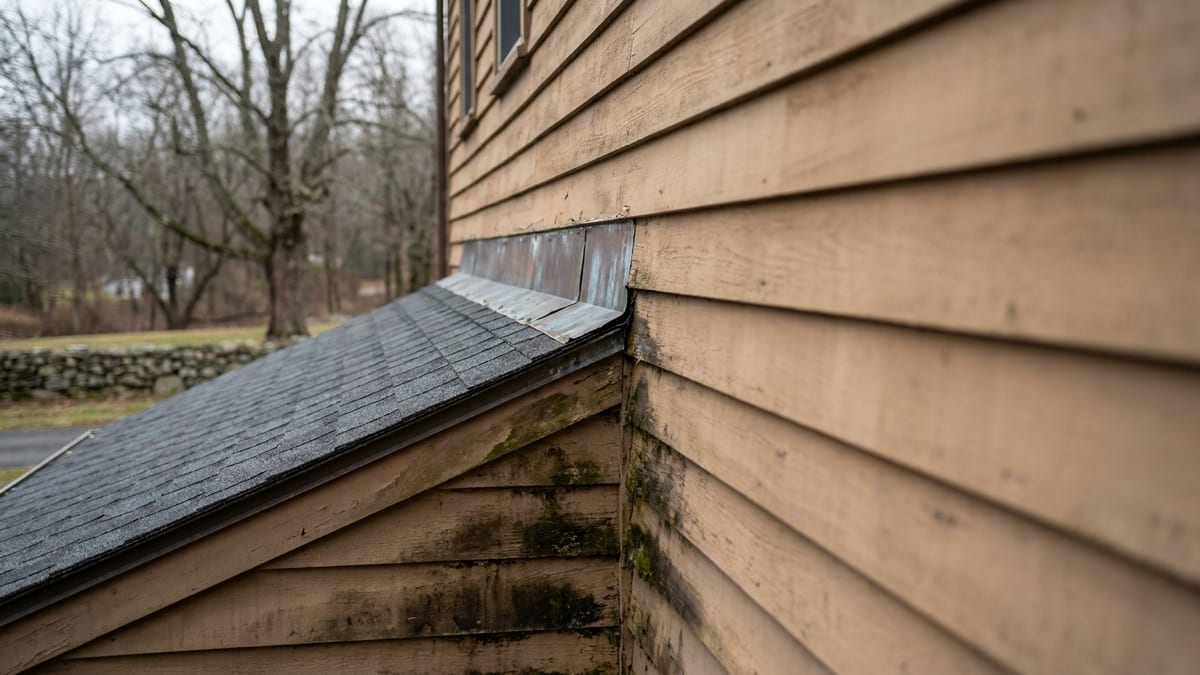
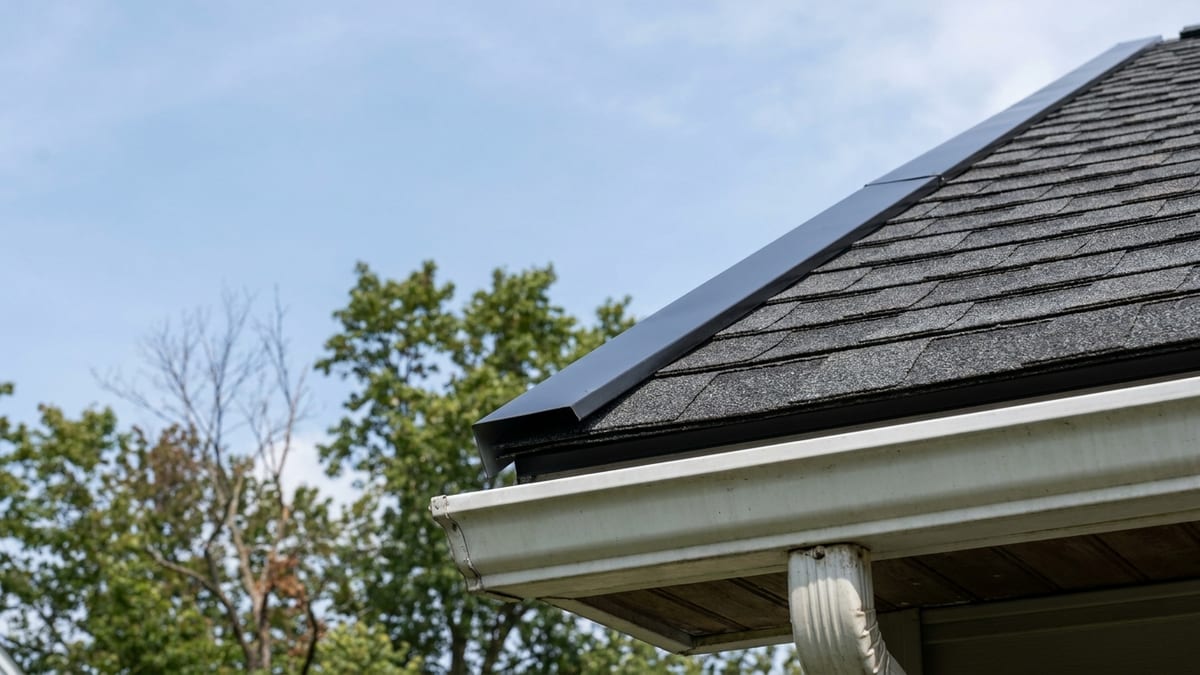
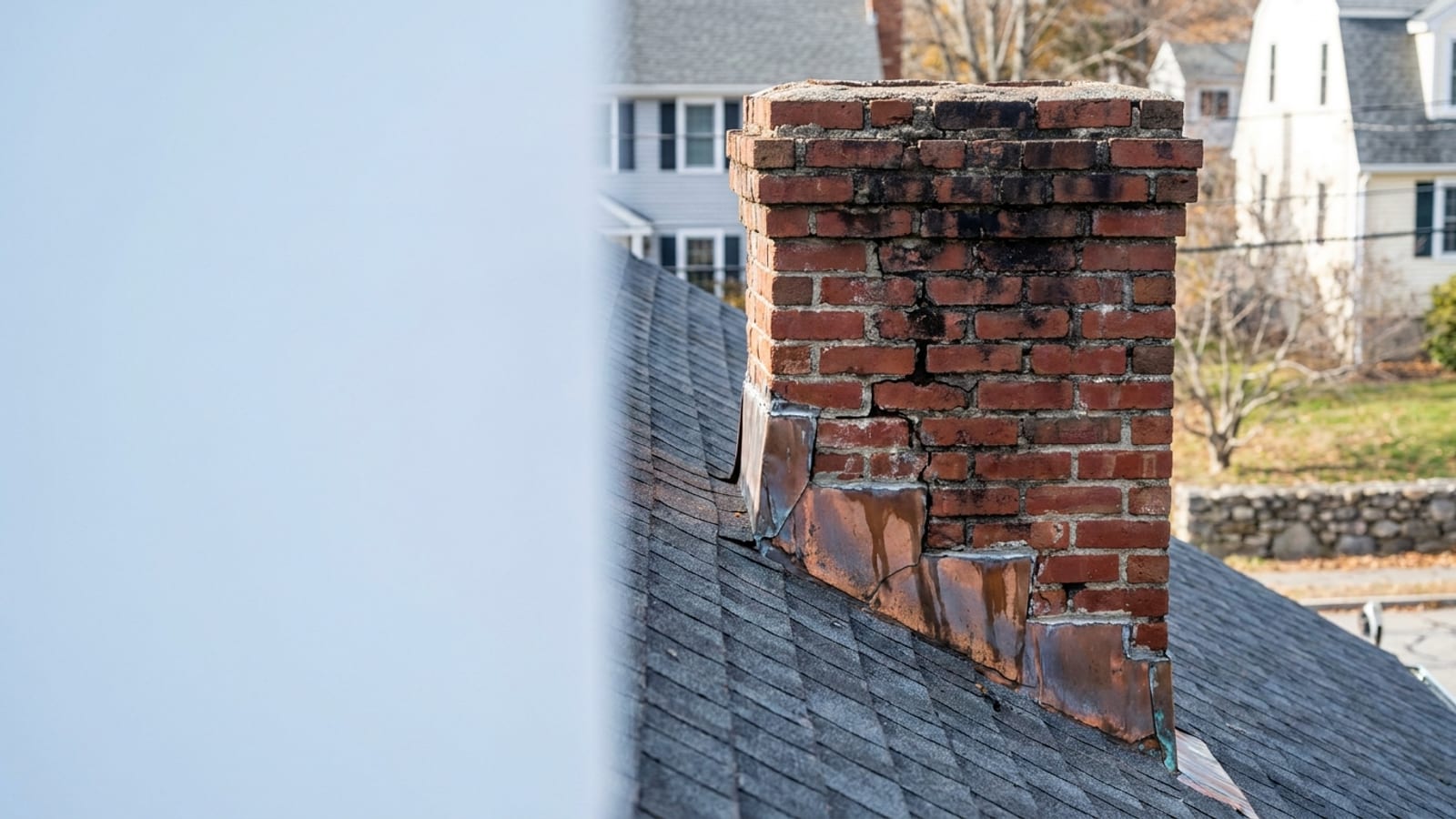
Step flashing is a series of small L-shaped metal pieces, one per shingle course, woven up the sides of the chimney. Each piece laps the one below it. Counter flashing is a second layer that is cut or set into a mortar joint in the brick and folded down over the top of the step flashing, so water running down the face of the masonry is directed out onto the roof rather than behind the metal.
Miss either one and the chimney leaks. The most common shortcut is a single long piece of bent metal run up the side of the chimney and sealed to the brick with roofing cement. That assembly relies entirely on caulk, and caulk on masonry has a service life measured in a few years, not a few decades.
Telling the three failures apart
It is probably the flashing
- The stain appears at the ceiling directly below or beside the chimney chase.
- Leaking coincides with wind-driven rain more than with steady rain.
- In the attic, water tracks down the side of the chimney from the roof line, not from higher up.
- The visible metal is rusted through, lifted at the edges, or held down with black roofing cement that has cracked.
It is probably the masonry
- The chimney is damp inside the attic well above where it passes through the roof.
- The crown, the concrete cap on top, is cracked or spalling.
- Mortar joints are recessed, crumbling or missing, or there is no rain cap on the flue.
- White efflorescence appears on the brick face.
Masonry repairs are a mason's work, not a roofer's. A flashing rebuild on a chimney that is drinking water through its crown will not stop the stains, and any honest contractor will tell you that before taking the job.
It is probably time for the roof
- The shingles around the chimney are curling, losing granules, or past 20 to 25 years.
- The deck under the flashing feels soft when stepped on, or the plywood is delaminated.
- The chimney area has already been patched two or three times by different people.
Our post on how to tell repair from replacement walks through the same decision for the roof as a whole.
What a correct flashing rebuild includes
A proper job on an asphalt roof looks like this:
- Shingles on the chimney sides are lifted and the old metal removed entirely.
- Deck condition at the chimney is checked, since this is where rot hides.
- Ice and water membrane is run up the chimney sides and across the back where the roof meets the masonry.
- New step flashing is installed one piece per shingle course, fastened to the deck and not to the brick.
- New counter flashing is set into a cut mortar joint, folded down over the step flashing and sealed at the reglet.
- Shingles are woven back in, and an apron flashing handles the downslope face.
That sequence is what we mean by roof repair at a chimney, as opposed to sealing a joint from above.
The cricket question
Where a chimney is more than 30 inches wide measured perpendicular to the slope, the residential code requires a cricket or saddle behind it: a small framed peak that splits water and directs it around the chimney instead of letting it pond against the back wall. Wide chimneys with no cricket are one of the most reliable sources of chronic back-wall leaks on Connecticut homes, and they are common on the older housing stock in places like Hartford, where the chimneys are large and the roofs have been redone several times without anyone addressing the framing.
Adding a cricket during a repair is more work than reflashing. Adding it during a full replacement costs relatively little.
What drives the cost of a chimney flashing repair
We do not publish a flat rate for this, because the honest range is too wide to be useful and depends on what is behind the metal. These are the factors that move it:
| Factor | Effect on cost |
|---|---|
| FactorChimney size and number of sides on the roof | Effect on costMore perimeter means more step flashing and more shingle work |
| FactorRoof pitch and height | Effect on costSteep or third-story work needs staging and slows everything down |
| FactorCounter flashing method | Effect on costCutting a reglet into mortar costs more than surface-mounting, and lasts longer |
| FactorCricket required or missing | Effect on costAdds framing, sheathing and membrane work |
| FactorDeck condition found underneath | Effect on costSoft sheathing has to be replaced before anything is reinstalled |
| FactorMasonry condition | Effect on costRepointing or a new crown is separate work by a mason |
That last row matters. Rot at a chimney is usually the result of a leak that ran for years, and once the sheathing is soft the repair grows. Our post on rotten roof decking covers how that gets priced and why it usually shows up as a unit rate rather than a fixed number.
When the replacement is the better spend
Here is the arithmetic that decides it. A flashing rebuild on a roof with 15 years left is money well spent. The same rebuild on a roof with three years left buys you three years, and then the new flashing gets torn out with everything else.
General Connecticut replacement ranges, which depend heavily on the specific house rather than the shingle line alone:
| Roof type | General Connecticut range |
|---|---|
| Roof typeThree-tab asphalt | General Connecticut range$8,000 to $25,000 |
| Roof typeArchitectural asphalt | General Connecticut range$10,000 to $30,000 |
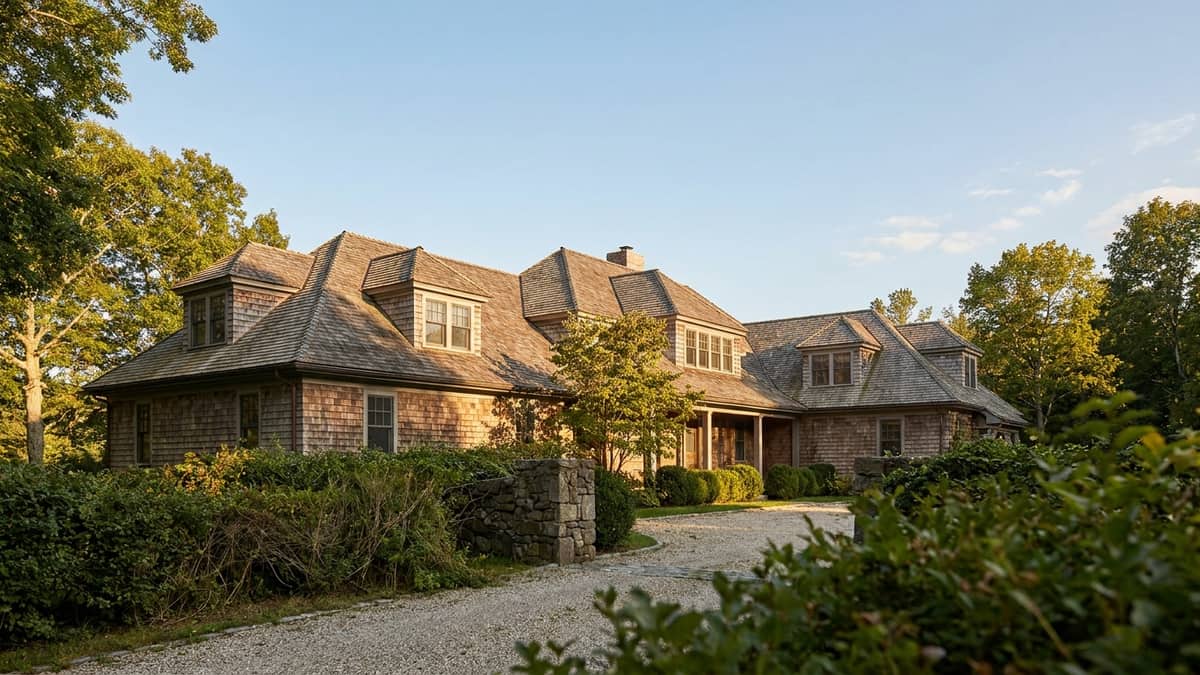
| Roof typeCedar shake | General Connecticut range$20,000 to $50,000 and up |
Those are not quotes. They are the spread we see across the towns we cover, and roof size, pitch and complexity move a house inside them.
Replacement is the better decision when the covering is at the end of its life anyway, when the chimney needs a cricket that the existing framing does not have, or when the deck around the chimney has to come out. In those cases the flashing work is happening either way, and doing it as part of a full replacement means it gets integrated with new underlayment instead of stitched into 22-year-old shingles that crack when they are lifted.
The case for the cheaper repair
Contractors have an obvious incentive to recommend the larger job, so it is worth stating the other side plainly. If your shingles are under 15 years old, lying flat, holding granules and showing no soft spots, a flashing repair is the correct and complete answer. You are not deferring an inevitable replacement; you are fixing the one component that failed. Roofs commonly need flashing work once during their service life, particularly on chimneys that were originally flashed with galvanized metal that has since corroded.
Be suspicious of a diagnosis that jumps from one ceiling stain to a full tear-off without anyone having lifted a shingle or looked in the attic. Ask what was inspected and what was found.
Before you sign anything
Ask for the quote to say which flashing pieces are being replaced, whether the counter flashing is cut into the mortar, what metal is being used, and what happens on price if bad decking is found. Ask whether the chimney needs masonry work first, and if so, sequence that before the roofing.
If you want a written diagnosis for your own chimney, request an estimate and someone will come out, inspect the flashing and the deck around it, and give you a written price for the repair and, where the roof's age makes it relevant, for replacement so you can compare the two against each other.