Short answer
On site, most Connecticut window replacements take one to two days, and a whole-house job on a larger home can run three or four. The full calendar is longer than that, because replacement windows are built to the measurements of your specific openings, so three to eight weeks between signing and installation is normal. Resizing an opening, adding a window, or changing the material type in a historic district adds review time before anything gets manufactured.
On this page
Most of the calendar time in a window project is spent waiting, not working. The installation itself is short and predictable. What stretches the schedule is that replacement windows are manufactured to the measurements of your openings, and nothing is built until those measurements exist.
Here is the whole sequence, with the parts that actually move the date.
The phases, and what each one costs you in time
| Phase | What happens | Typical time |
|---|---|---|
| PhaseEstimate visit | What happensSomeone comes out, measures roughly, looks at frames, sills and interior trim, and asks what you want changed | Typical timeOne visit of roughly an hour or two |
| PhaseWritten price | What happensAn itemized quote, by opening | Typical timeWithin 24 to 48 hours of the inspection |
| PhaseSelection and contract | What happensBrand, line, type, color, grille pattern, hardware, screen type | Typical timeHomeowner-controlled, often the slowest step |
| PhaseFinal measure | What happensEvery opening measured precisely for manufacture | Typical timeOne shorter visit |
| PhaseManufacturing | What happensUnits built to your sizes and shipped | Typical timeCommonly weeks, brand and option dependent |
| PhaseInstallation | What happensRemoval, set, insulate, trim, caulk, cleanup | Typical timeOne to four days for most houses |
| PhasePunch list | What happensScreens, a stuck lock, a trim return, touch-up | Typical timeDays to a couple of weeks |
Phase one: the estimate and the measure are not the same visit
An estimate appointment is a sales appointment. Someone comes to the house, measures, looks at the condition of the existing frames and sills, and gives you a written price. That is what it is, and it is worth an hour of your time because you cannot price windows over the phone.
The measure that the factory builds from is a separate, more exacting step, and it usually happens after you sign. There is a good reason for the split: a quarter inch of error on a custom unit is not something you find out about until the unit arrives and does not fit, and then you are back in the manufacturing queue. A contractor who measures once, casually, and orders from that measurement is taking a risk with your schedule.
This is also the point where the decisions get made that change everything downstream. The choice between an insert and a full-frame replacement affects price, install time, and what the finished window looks like. We break that decision down in detail in our post on insert versus full-frame window replacement, and it is worth reading before you sign, because changing your mind afterward means re-measuring and re-ordering.
Phase two: manufacturing is the long pole
Every replacement window is made to order. Lead times move with the product line, the options, and the factory's current queue, so treat any number you hear as a quote for that week rather than a constant. In general:
- Stock-size vinyl units in common colors are the quickest.
- Wood and clad-wood units, specialty finishes, and anything with a custom shape or a nonstandard grille pattern take longer.
- Bay and bow assemblies involve more components, and the head and seat boards add site work as well as build time. See what those units involve on our bay and bow window page.
If the contract does not state the lead time, ask for it to be added. You are entitled to know whether you are waiting three weeks or ten.
Phase three: install day
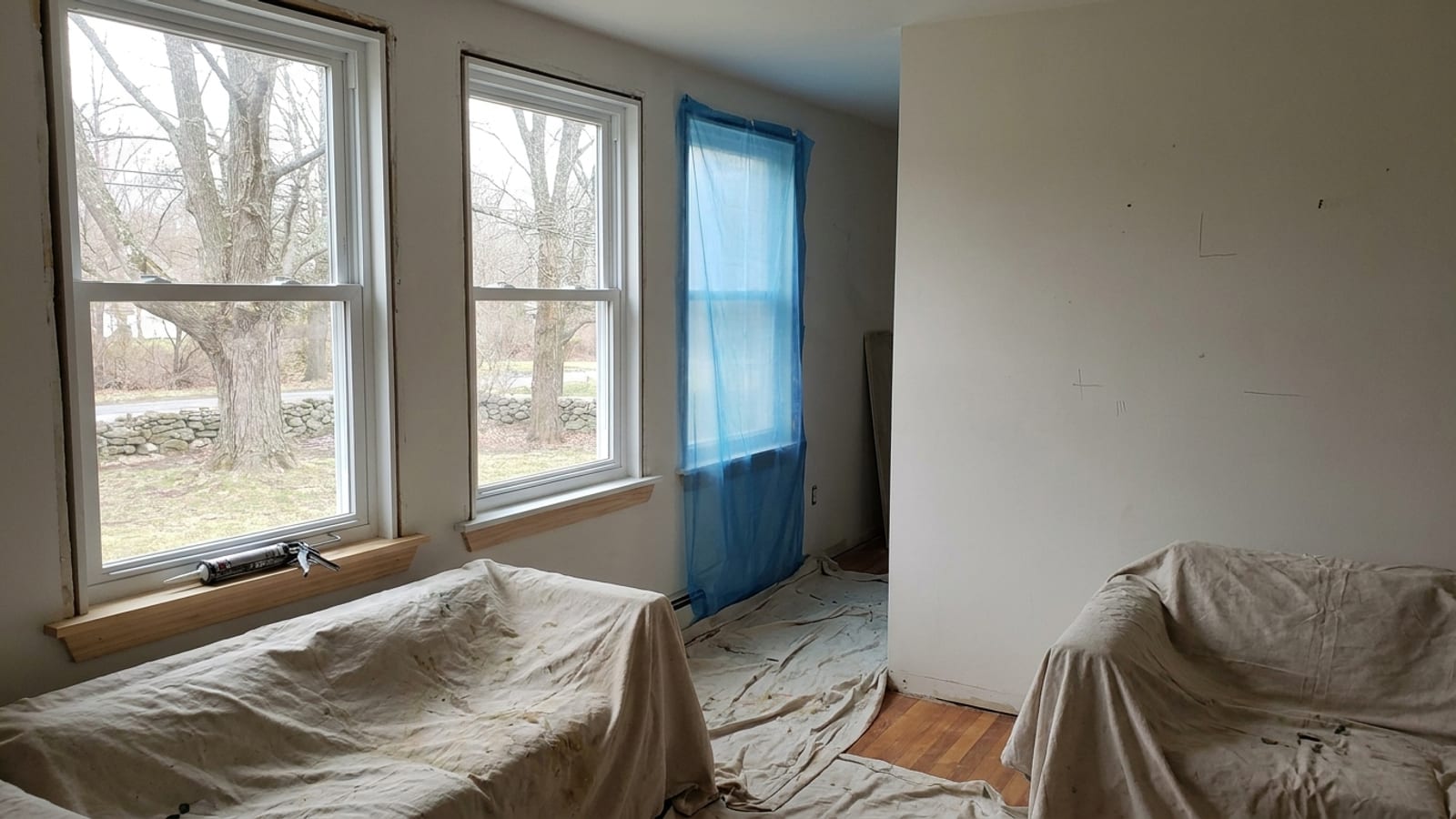
The crew works opening by opening. Interior window treatments come down, furniture gets moved back, drop cloths go down, the old unit comes out, the new one is set and shimmed square, the gap is insulated, and interior and exterior trim is finished. Nothing is left open overnight.
What makes a day faster or slower
- Insert replacement into a sound wood frame is the fastest scenario. The existing frame stays, so there is no exterior trim to rebuild.
- Full-frame replacement means removing the old frame down to the rough opening. That adds interior casing work, exterior trim and flashing, and often a repaint. Budget substantially more time per opening.
- Aluminum capping, vinyl siding returns, brick or stucco slow the exterior side of the work.
- Second and third floors mean staging or ladder work for the exterior details.
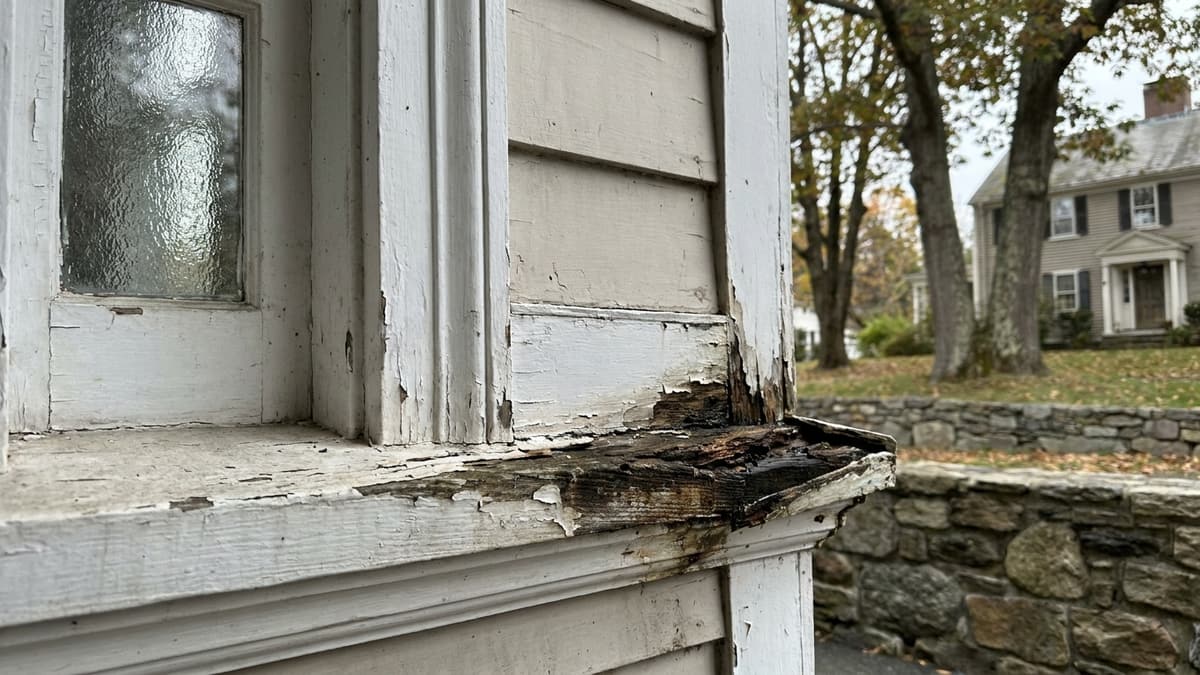
- Rot found at the sill or jamb is the most common reason a day runs long. It is also the reason a good estimate probes the sills instead of eyeballing them.
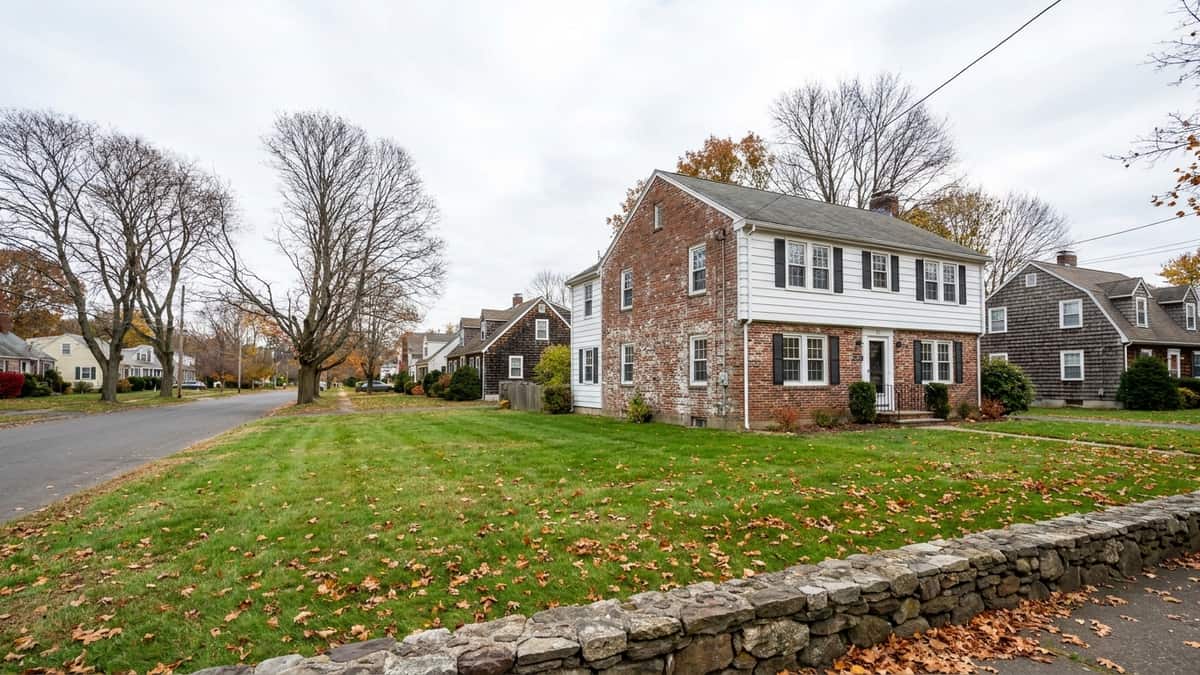
On older stock in particular, this matters. A 1920s Colonial in West Hartford with 20 openings, painted-shut sashes and weight pockets is a different job from a 1990s Colonial with 12 openings, even though both are "a house of windows."
What adds weeks, not hours
Three things can push a project out before manufacturing even starts.
Resizing an opening or adding a window
Most Connecticut towns do not require a permit for a like-for-like replacement where the opening size does not change. Once you resize an opening, add a window, or alter a header, a permit is generally required, and that brings framing work and an inspection into the schedule.
Historic districts
Under Connecticut General Statutes Sec. 7-147f(a), replacing windows with similar materials in a local historic district does not require a Certificate of Appropriateness. It is required when the material type or the configuration changes — wood to vinyl, or a six-over-six becoming a picture window. That means waiting for a commission meeting, and commissions meet on their own calendar, not yours. Like-for-like keeps you off that calendar entirely.
Egress on bedroom windows
Every bedroom needs at least one window meeting egress dimensions. An insert sits inside the old frame and reduces the clear opening, which can take a bedroom that was compliant out of compliance. Catching that at the measure stage may change the product for that one opening, which is a design decision, not a delay. Catching it after installation is a real problem. We cover it in bedroom window egress in Connecticut.
The case for a slower project
There is a version of this job that finishes faster: inserts everywhere, stock sizes, one brand, no trim changes. On plenty of houses that is genuinely the right answer, and paying for a longer, more invasive project buys nothing.
But if the sills are soft, if the existing frames are out of square, or if you want the interior casing to look like it belongs to the house, full-frame is the honest answer, and it takes longer. Picking the fast path around a rotten sill just means the next owner pays for it. Our window process page walks through what each path actually involves.
Season and weather
Windows are not weather-dependent the way shingles are. There is no temperature at which a window stops sealing, and each opening is closed within the hour it is opened. Cold weather mainly narrows the choice of sealants and lengthens cure times. Rain is the real constraint, because exterior trim and caulk need a dry surface.
The practical effect of season is scheduling pressure rather than performance. Fall is busy across every exterior trade in Connecticut, so a project signed in September may sit longer in the queue than the same project signed in February.
A realistic expectation
For a like-for-like replacement of 10 to 15 windows on a Connecticut house, plan on three to eight weeks from signing to installation, one to three days on site, and a short punch list afterward for screens and small adjustments. Add time if you are resizing, adding openings, or going through a historic district commission.
If you want a real date rather than a range, the next step is a measured, itemized price for your specific openings. Request one through our estimate form and someone will come out, measure, and put the lead time and scope in writing so you can hold the schedule to it.