Short answer
Grilles are a priced option on every window order, not a free styling choice, and the way they are built matters more than the pattern you pick. Grids sealed between the panes are the least expensive and the easiest to clean, simulated divided lite with bars bonded to both glass surfaces costs more, and true divided lite with individual panes of glass costs the most by a wide margin. Because the charge is per unit, a modest upcharge turns into a meaningful number across ten to fifteen openings.
On this page
Grilles are priced per window, as an option line on the order, and how they are built matters more to the price than which pattern you choose. The least expensive version is a grid sealed between the two panes of glass. The most expensive is a sash made from individual pieces of glass separated by real structural bars. Between them sits simulated divided lite, where bars are bonded to the interior and exterior glass surfaces of a single sealed unit, usually with a matching spacer bar hidden between the panes so the shadow line reads correctly from the street.
That spread turns into real money once it is multiplied. A full-house replacement in Connecticut is usually ten to fifteen openings, so a per-unit option that looks minor on one window decides which price tier the whole project lands in.
The four ways a grille gets built
Grilles between the glass
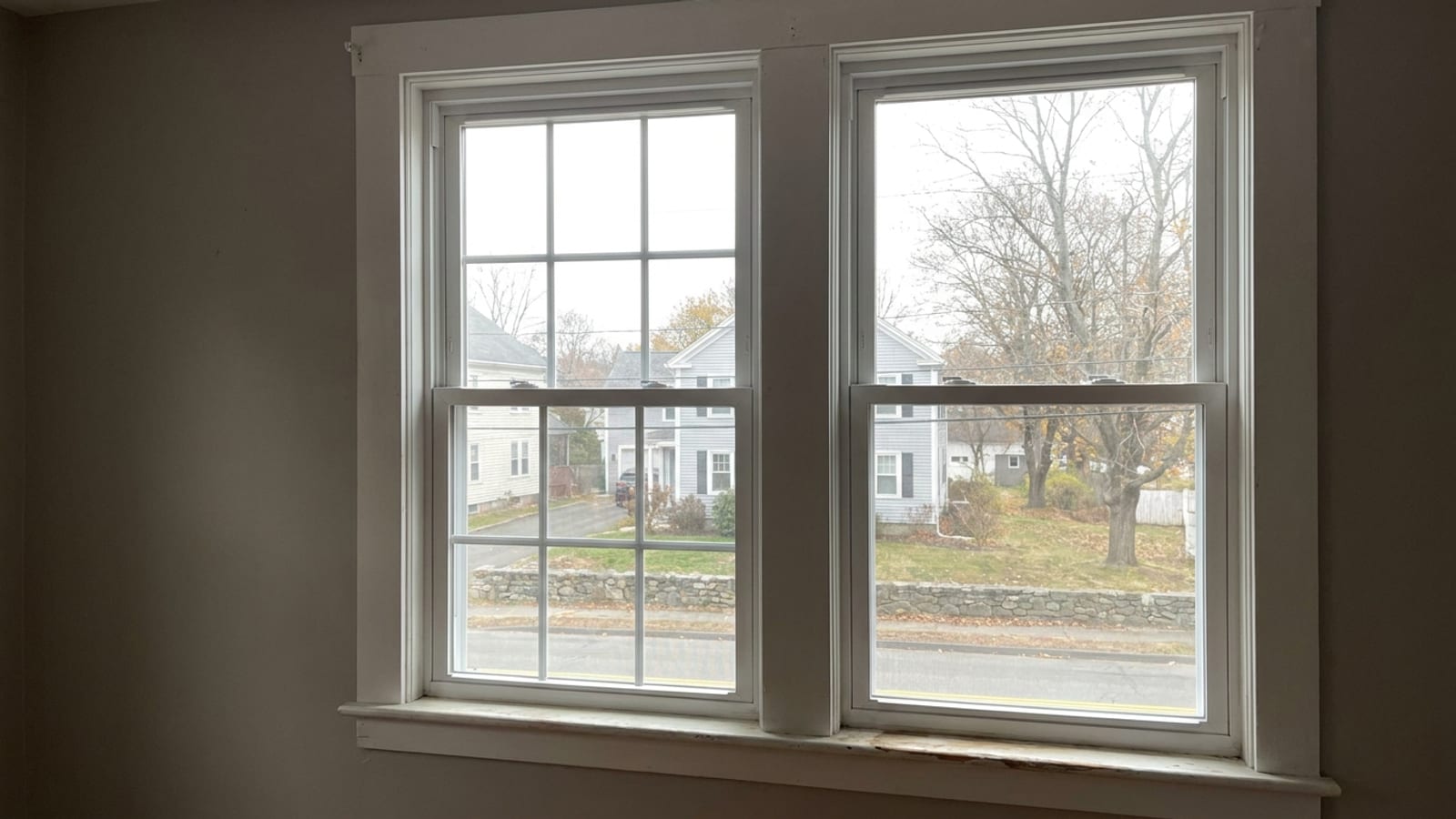
Aluminum or vinyl bars sit inside the sealed insulating glass unit. Nothing protrudes on either face, so the glass wipes clean in one pass and there are no edges collecting dust. This is the default on most vinyl replacement windows and the cheapest grille option every manufacturer offers.
The honest drawback is appearance. From outside, especially in raking light, the bar reads as something floating inside the glass rather than as a muntin holding panes. On a 1960s colonial most people never notice. On an antique with original sashes next door, the difference is visible.
Simulated divided lite
Bars are adhered to the outside and inside of the glass, with a spacer bar between the panes aligned to them. The window still has one sealed unit per sash, so thermal performance stays close to a clear unit, but the exterior profile casts a shadow and looks like a divided sash from the sidewalk. This is the option most homeowners end up choosing when the house deserves a real pattern.
It costs more than grids between the glass, and it has to be cleaned around. Each bar is an edge.
True divided lite
Each lite is a separate small insulating glass unit set into a sash with structural muntins. This is what a genuinely historic sash does, and it is the only version that is correct under close inspection. It is also the most expensive by a wide margin, because the sash is more glass units, more edge seal, and more labor.
Removable interior grilles
A one-piece grid that clips into the interior of the sash. The cheapest to buy and the only one you can change your mind about later. It also looks like what it is from the inside, and it has to come out every time you wash the glass.
| Grille type | Where the bars sit | Cleaning | Relative cost |
|---|---|---|---|
| Grille typeBetween the glass | Where the bars sitSealed inside the unit | CleaningEasiest, flat glass both sides | Relative costLowest |
| Grille typeRemovable interior | Where the bars sitClipped to interior only | CleaningMust be removed to wash | Relative costLow |
| Grille typeSimulated divided lite | Where the bars sitBonded to both glass faces | CleaningClean around each bar | Relative costHigher |
| Grille typeTrue divided lite | Where the bars sitStructural, separate panes | CleaningClean around each bar | Relative costHighest |
How the upcharge shows up on your quote
Grilles do not get their own column on most estimates. They are built into the per-window price, which is why two quotes for the same house can differ without either contractor doing anything wrong. Published general Connecticut ranges give you the bands the option moves you within.
| Window category | General Connecticut range, installed |
|---|---|
| Window categoryStandard vinyl | General Connecticut range, installed$300 to $700 per window |
| Window categoryPremium wood or fiberglass | General Connecticut range, installed$800 to $1,500 or more per window |
| Window categoryLarge or custom units, common in Greenwich and Westport | General Connecticut range, installed$1,000 to $2,500 or more per window |
| Window categoryFull house of 10 to 15 windows | General Connecticut range, installed$5,000 to $20,000 or more |
Those are general ranges that depend on the specific house, not a quote. The practical effect of grilles is that they push a given window toward the top of its band rather than moving it into a new one, and true divided lite is the exception that can move it into the next band entirely.
Pattern choice is its own cost driver
Bar count is the variable. A six-over-six colonial pattern has ten bars per unit. A prairie pattern, with bars only near the perimeter, has fewer. A pattern applied only to the top sash, which is historically common on many Connecticut colonials and capes, roughly halves the bar count per window while keeping the look from the street.
There is a second decision hiding here, which is whether every window gets the same treatment. Front elevation only is a legitimate choice, and it is cheaper. It is also the choice that looks wrong if the side elevations are highly visible from the road. Walk the property and decide elevation by elevation before the order goes in, because grilles between the glass and simulated divided lite are built into the sash at the factory and cannot be changed afterward.
What grilles do to the energy label
Connecticut sits entirely in the ENERGY STAR Northern climate zone. Under version 7.0, effective October 2023, a qualifying window needs a U-factor of 0.22 or lower and a solar heat gain coefficient of at least 0.17 — and that SHGC figure is a minimum, not a maximum, because in a heating-dominated climate a window that blocks too much sun is giving away free winter heat. We covered both numbers in detail in our post on the two window numbers that matter in Connecticut.
The point specific to grilles is that an NFRC label belongs to a tested configuration. A grille-between-glass option adds metal inside the cavity and can shift the rated numbers slightly. Simulated divided lite adds a spacer bar in the same place. Neither one is likely to disqualify a good unit, but the way to know is to ask for the rating sheet for the exact configuration on your order, not the headline number from the brochure. Marvin, Andersen and Pella all publish ratings by configuration.
Historic districts and the configuration rule
If the house is in a local historic district, the grille decision is not purely cosmetic. Connecticut General Statutes Sec. 7-147f(a) does not require a Certificate of Appropriateness for replacement in similar materials, but it does require one when the material type or the configuration changes. Lite pattern is configuration. Removing a nine-over-six pattern in favor of clear glass, or substituting a six-over-six where the original was twelve-over-twelve, is the kind of change a commission reviews.
This matters on schedule more than on budget. A like-for-like order goes straight to the factory. A configuration change waits for a meeting. Towns with established districts in our area include Farmington Village, Guilford's green, Glastonbury near the town green and sizable districts in Hartford and New Haven, so it is worth a phone call to the town before you finalize the pattern.
The case against grilles
The case is stronger than most window salespeople will tell you.
- They cost money on every unit, and the money buys nothing functional.
- They cut the view. On a window facing anything worth looking at, clear glass is better.
- Simulated and true divided lite add cleaning time for the life of the window.
- On a mid-century ranch, a split-level or a contemporary, a colonial grid is a style the house never had. Plenty of Manchester capes and North Stamford contemporaries look better with clear glass than with bars added because the previous owner liked them.
The case for them is architectural accuracy. On a colonial, a cape or an antique where the original sashes were divided, clear glass reads as flat and the house loses its face. That is a real loss and worth paying for. What is not worth paying for is a pattern added to a house that never had one.
A note on egress
Grilles do not affect egress. Clear opening is measured at the operating sash, and a grid sits in the glass area. What does reduce clear opening is the insert frame of a replacement window sitting inside the existing frame, which can take a bedroom that previously complied out of compliance. That check belongs on every bedroom in the house and is covered in our post on bedroom window egress.
What to put on the quote
Before signing, make sure the estimate names the grille type in words, not just "grids": between the glass, simulated divided lite, or true divided lite. It should state the pattern and lite count per window, which sash the pattern applies to, the bar width and color inside and out, and which elevations are getting it. Window styles carry different conventions, and a double-hung with a top-sash pattern is a different order line than a casement with a full grid, so both should appear explicitly. Our window services page lays out the styles we install and the brands behind them.
If you want a number for your own house, request an estimate. Someone comes out, measures every opening, goes through the grille options on the actual windows, and gives you a written price you can compare line by line.