Short answer
Vinyl is the sensible default for most Connecticut replacement windows because it insulates well, never needs painting and costs the least to install. Fiberglass costs more but moves far less with temperature, allows narrower frames on wide openings, and holds dark exterior colors without the warranty restrictions vinyl carries. The energy numbers on the label matter more than the frame material itself.
On this page
Vinyl is the right default for most Connecticut replacement windows. It insulates well, it does not rot, it never needs painting, and it is the cheapest way to get a compliant, well-performing window into an existing opening. Fiberglass costs more and earns that money in specific situations: wide or tall units, dark exterior colors, and walls that take hard sun and weather.
What follows is what actually differs between the two frames, what each costs here, and where the cheaper option is the smarter one.
What the two frames are made of
Vinyl
A vinyl window frame is extruded PVC, formed into a hollow multi-chamber profile and welded at the corners. The air trapped in those chambers is part of what makes vinyl a good insulator, and better lines add foam fill or extra chambers. Color is not paint. The pigment runs through the material or sits in a bonded exterior capstock, which is why vinyl does not need refinishing and why a scratch usually does not show.
The tradeoff is stiffness. PVC is not a structural material on its own, so a vinyl frame has to be thicker to carry glass. That shows up as wider frames and narrower glass area, and on large units it shows up as reinforcement inside the sash.
Fiberglass
A fiberglass frame is pultruded: glass fiber strands are pulled through a resin bath and a heated die, producing a solid, dense profile. That profile is far stronger than vinyl, so the frame can be narrower for the same span. Fiberglass takes a factory-applied finish and can be repainted later, which vinyl cannot.
Across the brands we install, frame material varies by product line rather than by brand, and some lines use a wood-and-composite blend rather than true pultruded fiberglass. Ask which one you are being quoted, and ask in writing.
The real difference is thermal movement
This is the point most comparisons skip. Vinyl has a high coefficient of thermal expansion. A vinyl frame in direct summer sun moves noticeably more than the glass it holds, then contracts on a January night. Fiberglass expands at a rate close to glass itself.
On a standard double-hung in a shaded wall, that movement is absorbed by the design and you will never see it. It starts to matter when:
- The unit is large. A picture window or a wide slider has more linear frame to move.
- The exterior color is dark. Dark surfaces run much hotter in sun.
- The wall faces west or south with no shade and takes full afternoon exposure.
Repeated expansion and contraction is what stresses corner welds, sealant joints and the perimeter seal on the insulated glass. It is not a reason to avoid vinyl. It is a reason to be careful about pairing vinyl with dark colors on very large units, which is exactly where many manufacturers place warranty limits of their own.
Neither frame wins the energy label automatically
Connecticut sits entirely in the ENERGY STAR Northern climate zone. Under version 7.0, effective October 2023, a qualifying window needs a U-factor of 0.22 or lower and a solar heat gain coefficient of at least 0.17. That SHGC figure is a minimum, not a maximum, because in a heating-dominated climate a window that blocks too much sun throws away free winter heat.
Both numbers are printed on the NFRC label, and they describe the whole window, frame included. A well-built vinyl unit with a good glass package routinely hits those numbers. So does a fiberglass unit. The glass package, the spacer and the gas fill usually move the U-factor more than the frame does. We go through what each rating means in the only two window numbers that matter in Connecticut.
The practical rule: do not pay a fiberglass premium expecting a better label. Pay it for structure, color and longevity, and confirm the label separately.
What each costs here
| Frame type | General Connecticut range, installed | Notes |
|---|---|---|
| Frame typeStandard vinyl | General Connecticut range, installed$300 to $700 per window | NotesCommon sizes, standard colors |
| Frame typePremium frames including fiberglass and wood | General Connecticut range, installed$800 to $1,500 or more per window | NotesNarrower sightlines, more color options |
| Frame typeLarge or custom units | General Connecticut range, installed$1,000 to $2,500 or more per window | NotesCommon on larger homes in Greenwich and Westport |
| Frame typeWhole house, 10 to 15 windows | General Connecticut range, installed$5,000 to $20,000 or more | NotesDepends heavily on size, count and finish work |
These are general Connecticut ranges that depend on the specific house, not a quote. Size, count, interior trim condition and whether the job is an insert or a full-frame replacement move a price inside those ranges more than the frame material does. The insert versus full-frame decision is usually the bigger line item.
On a fifteen-window house, the gap between a good vinyl package and a fiberglass package can be five figures. That is real money, and it should buy something you can name.
When vinyl is the right call
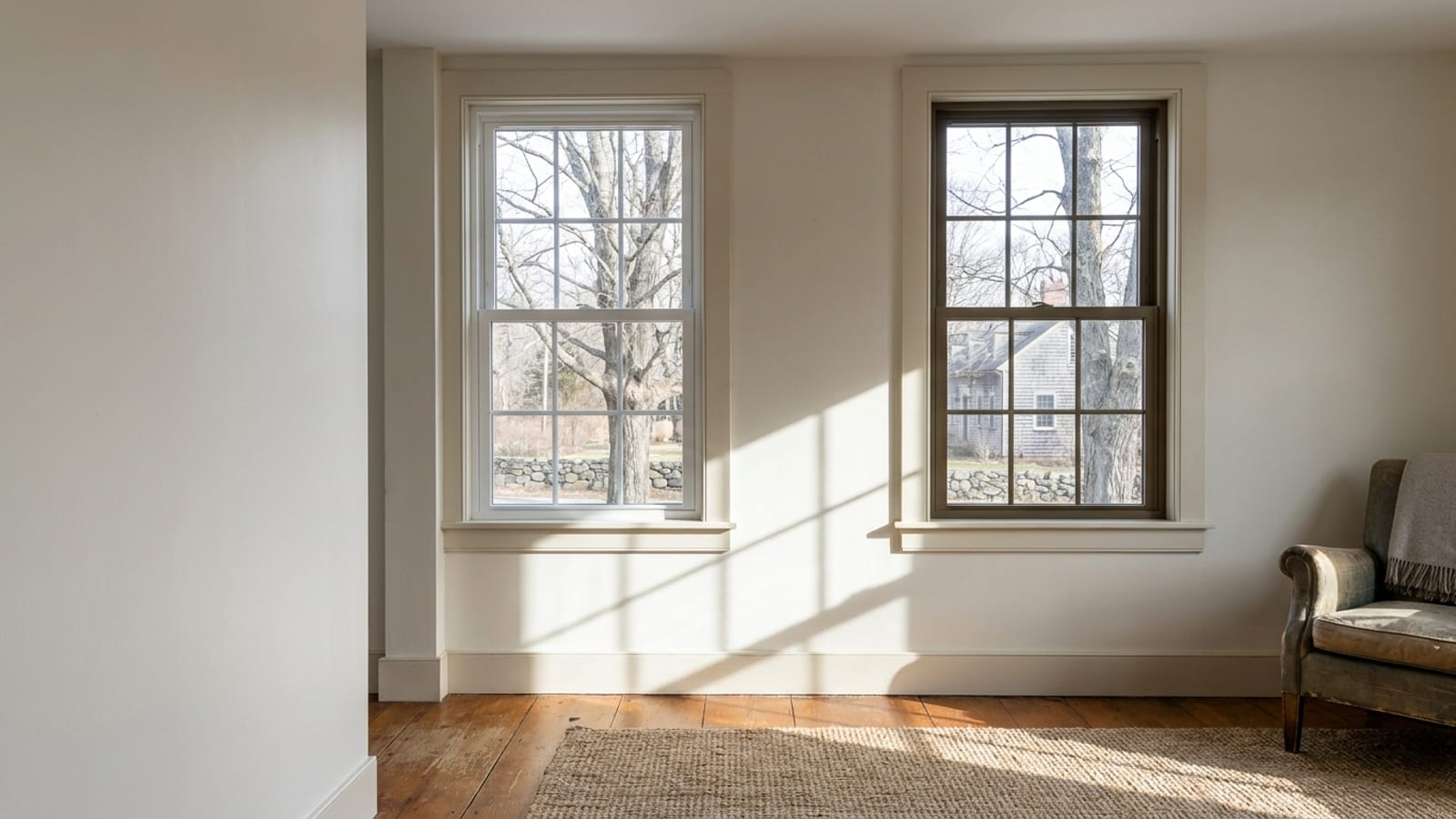
- Standard-size double-hungs in typical openings. This is most of the housing stock in most of the towns we serve, and vinyl handles it well. Double-hung remains the common configuration here, and the double-hung section of our windows page covers how they are ordered.
- White or light exterior colors. No thermal stress issue worth discussing.
- A budget that has to cover the whole house at once. Replacing every window in good vinyl usually beats replacing half the house in fiberglass. Mixed frames on one elevation look mixed.
- A holding period under ten to fifteen years. You will not recover a premium frame in resale on a typical suburban Colonial.
When fiberglass earns the money
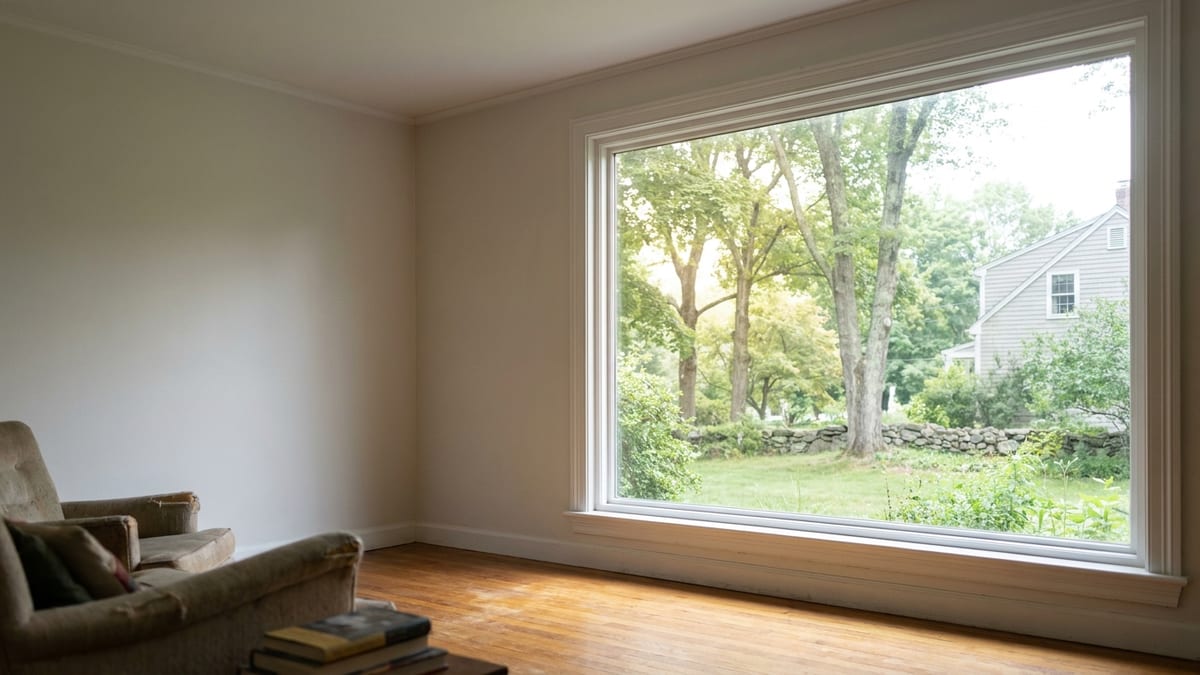
- Large picture windows, wide sliders and tall units. More strength per inch of frame means more glass and less frame in the opening.
- Dark exterior colors, especially on sun-exposed walls. This is the clearest single reason to move up.
- Shoreline walls that take wind-driven rain and salt air. Neither material rots, but the more dimensionally stable frame keeps its seals working longer under that load.
- Historic-adjacent homes where sightlines matter. A narrower frame reads closer to an original wood window from the street.
- You want the option to repaint later. Fiberglass can be refinished. Vinyl cannot.
Two rules that apply whichever you pick
Historic districts care about material, not price. Under Connecticut General Statutes Sec. 7-147f(a), replacing windows with similar materials in a local historic district does not require a Certificate of Appropriateness. Changing the material type, wood to vinyl for example, does. That is a commission meeting on your schedule, so find out before you order.
Bedroom egress is easy to lose. Most towns do not require a permit for a like-for-like replacement where the opening does not change size. But an insert sits inside the existing frame and reduces the clear opening. On a bedroom window already close to the minimum, that reduction can take a compliant room out of compliance regardless of whether a permit was pulled. Frame material does not fix it; frame thickness can make it worse, and vinyl frames are thicker.
Getting a real number
The way to compare quotes is by frame material, product line, U-factor, SHGC and installation method, side by side, on paper. A quote that says only "energy efficient replacement windows" is not a specification.
You can see the styles and brands we install on our windows page. When you want a price, someone comes out, measures every opening, goes through frame and glass options, and leaves you with a written, itemized number. Start that at get an estimate.