Short answer
If the roof under a solar array needs replacing, the panels come off and go back on, and that work is a separate scope from the roofing — normally performed by a solar contractor or licensed electrician and priced per panel. Whoever owns the array, whether that is you, a lessor, or a power purchase provider, controls who is allowed to touch it. Settle that question and get the detach and reset price in writing before the roofing schedule is set.
On this page
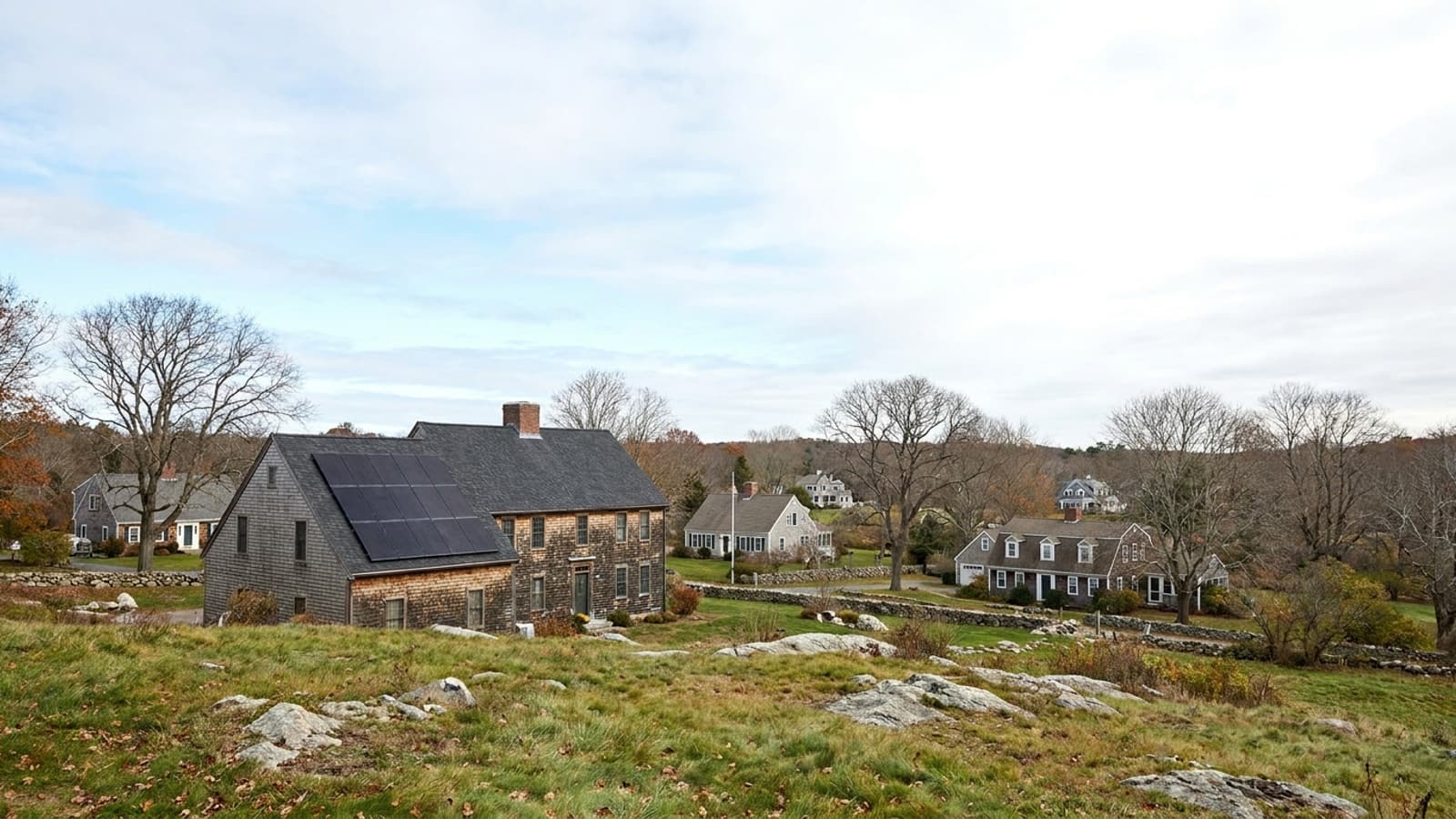
If there is a solar array on a roof that has reached the end of its life, the panels come off, the roof gets replaced, and the panels go back on. There is no way around it and no shortcut worth taking. What surprises most homeowners is that the removal is not part of the roofing price at all. It is a separate scope, performed by a different trade, and quoted separately — almost always per panel.
This post covers who is allowed to touch the array, what the detach and reset involves, what drives the price, and the cases where the honest answer is to leave the roof alone for now.
Who controls the array
Before anyone prices anything, answer one question: who owns the panels.
You own them outright
You can hire whoever you want, subject to whatever the equipment and installation warranties require. Most solar installers offer a detach and reset service on arrays they installed, and many will service arrays they did not. Using the original installer is usually the cleanest path, because the racking, flashing and monitoring are all theirs and the workmanship warranty on the mounts stays intact.
The array is leased or on a power purchase agreement
Then you do not own the hardware on your roof, and the agreement almost certainly specifies who may handle it and what you pay when a roof replacement forces a removal. Read that section before you schedule anything. Homeowners get caught here: they line up a roofing date, then find the lessor needs weeks of lead time and has its own approved crew.
What the detach and reset actually involves
It is two visits, not one.
On the first visit the system is shut down at the inverter and the DC disconnect, the panels are unbolted from the rails, the rails and mounting feet come off the roof, and the wiring is labeled, coiled and protected. The panels are stacked and stored somewhere on the property, usually a garage or a covered pad, because a stack of panels sitting in a driveway is expensive glass exposed to a lot of risk.
After the roof is finished, the second visit re-installs mounting feet into the new roof, rebuilds the racking, remounts each panel, reconnects and re-commissions the system, and confirms production on the monitoring platform. Any conduit, rooftop junction boxes or optimizers come off and go back with everything else.
Two details deserve attention because they are where leaks start. First, the old mounting holes are abandoned penetrations in the deck and they need to be addressed as part of the new roof, not covered and forgotten. Second, the new mounts need real flashing worked into the shingle courses. A mounting foot screwed through a finished shingle with sealant around it is not a flashed penetration, and Connecticut freeze-thaw cycling finds that kind of detail within a few winters.
What drives the removal price
We do not publish a figure for detach and reset, because it is not our scope and because the spread between systems is enormous. What you can do is understand what the solar contractor is pricing against, which makes the quote you get readable.
| Driver | Why it moves the price |
|---|---|
| DriverPanel count | Why it moves the priceLabor is per module, on the way off and on the way back |
| DriverRoof pitch and height | Why it moves the priceSteeper and higher means more staging and fall protection |
| DriverRacking type | Why it moves the priceBallasted, flush-mount and tilt systems differ in labor |
| DriverStorage and handling | Why it moves the priceWhere panels sit for a week, and who moves them twice |
| DriverRe-commissioning | Why it moves the priceInverter restart, monitoring, and any utility notification |
| DriverAge of the array | Why it moves the priceOlder hardware and discontinued parts complicate the reset |
What we can quote is the roof. These are general Connecticut ranges that depend on the specific house, not a price for your project, and they do not include anything to do with the solar equipment.
| Roof covering | General Connecticut range |
|---|---|
| Roof coveringThree-tab asphalt | General Connecticut range$8,000 to $15,000 |
| Roof coveringArchitectural asphalt | General Connecticut range$10,000 to $28,000 |
| Roof coveringCedar shake | General Connecticut range$20,000 to $50,000 and up |
The drivers inside those ranges are covered in more detail in our post on what a new roof costs in Connecticut. The presence of an array adds to the roofing side too, because the crew works around stored panels and conduit, and because the slope that was covered often has abandoned penetrations to repair.
Sequence matters more than price
The order is fixed: panels off, roof off, deck inspected, new roof complete, panels on. What varies is how much dead time sits between those steps.
Build the schedule backward from the solar company's availability. Get the roofing crew on site the day after the array comes down, so the deck is not exposed longer than it needs to be and so you are not paying for two separate mobilizations with a gap in the middle. If you are also replacing skylights, do that in the same tear-off — the logic is the same as in our post on replacing skylights with a roof.
Season matters here as well. Asphalt shingles need temperatures above about 40 degrees to seal properly, so a project that needs two contractors coordinated is better started in spring through fall than pushed into December.
Wind, fastening and the code figures
Appendix AY of the 2022 Connecticut State Building Code assigns every municipality an ultimate design wind speed. In the towns we serve that is 120 mph, or 125 mph in Guilford, Madison and New Haven, and every one of them sits inside a designated hurricane-prone region. A shingle's advertised wind rating only holds if it is fastened the way the manufacturer requires to earn it, which for high-wind coverage usually means six nails per shingle in a defined nail zone rather than four.
One point of confusion worth clearing up: the high-wind underlayment trigger people sometimes hear about is keyed to Vasd, which lands around 93 to 97 mph in these towns, not to the Vult figures above. It does not apply here. What does apply is the fastening schedule, and it applies just as much under the array as it does on the visible slopes. On a shoreline roof such as a Guilford roof replacement, the corrosion resistance of the mounting hardware and flashing matters as much as the shingle itself.
The case for leaving it alone
The expensive option is not always the right one. If the roof under the array has ten or more years of service left, the shingles are sound, and there is no leak history, paying for a detach and reset now buys you very little. You would be spending real money to reset the clock early on a roof that was not asking for it.
The opposite case is stronger than most homeowners expect. If the roof has fewer than about ten years left, replacing it while the array is already coming down for any reason — a repair, a panel swap, an inverter replacement — is the cheapest version of this project you will ever see. And if you are considering adding solar to an aging roof, replace the roof first. Paying for a removal you could have avoided is the most common expensive mistake in this whole category.
A roof inspection is what settles it. We will tell you if the roof has years left, and if a repair solves the problem we will say so rather than sell a replacement.
What to get in writing
- The per-panel detach and reset price, with both visits included
- Where the panels are stored and who is responsible for them while they are down
- Which contractor seals the abandoned mounting penetrations, and how
- How the new mounting feet will be flashed into the new roof
- Shingle manufacturer, product line, color, and nail count per shingle
- Who pulls the roofing permit, and whether the solar side requires anything separately
- What happens to the array's workmanship warranty after the reset
A quote missing the nail count or the flashing method on the mounts is not a specification. Ask for both before you sign either contract.
Getting a price
We handle the roof: tear-off, deck inspection, ice and water shield, underlayment, drip edge, flashing and a properly ventilated shingle system, with the permit pulled and the town inspection scheduled. You can see the full scope on our roof replacement page. We coordinate our start date around whoever is detaching your array so the deck is not open any longer than necessary.
If you want a number, request an estimate. Someone comes out, measures the roof, looks at the array, the penetrations and the attic, and gives you a written itemized price for the roofing scope so you can set it next to the solar contractor's detach and reset quote and see the real total.