Short answer
If the skylight is more than a few years old, replace it while the roof is off. Most of what a skylight replacement costs is the roof work around it — staging, tear-off, flashing and the shingle tie-in — and every bit of that is already being paid for during a re-roof. Doing it two years later means opening up a roof that is otherwise new.
On this page
If a skylight is more than a few years old, replace it while the roof is off. This is one of the few genuinely easy decisions in a re-roof, and the reason is arithmetic rather than sales pressure: nearly all of what a skylight replacement costs is roof work — setting up, stripping shingles around the opening, installing new flashing, weaving the shingles back in. During a tear-off, all of that is already happening and already priced. Two years later, the same job means paying a crew to open a roof that is otherwise new.
The harder questions are which skylights are worth replacing, which should simply be reflashed, and which should come out of the roof entirely.
Why the timing matters more than the unit
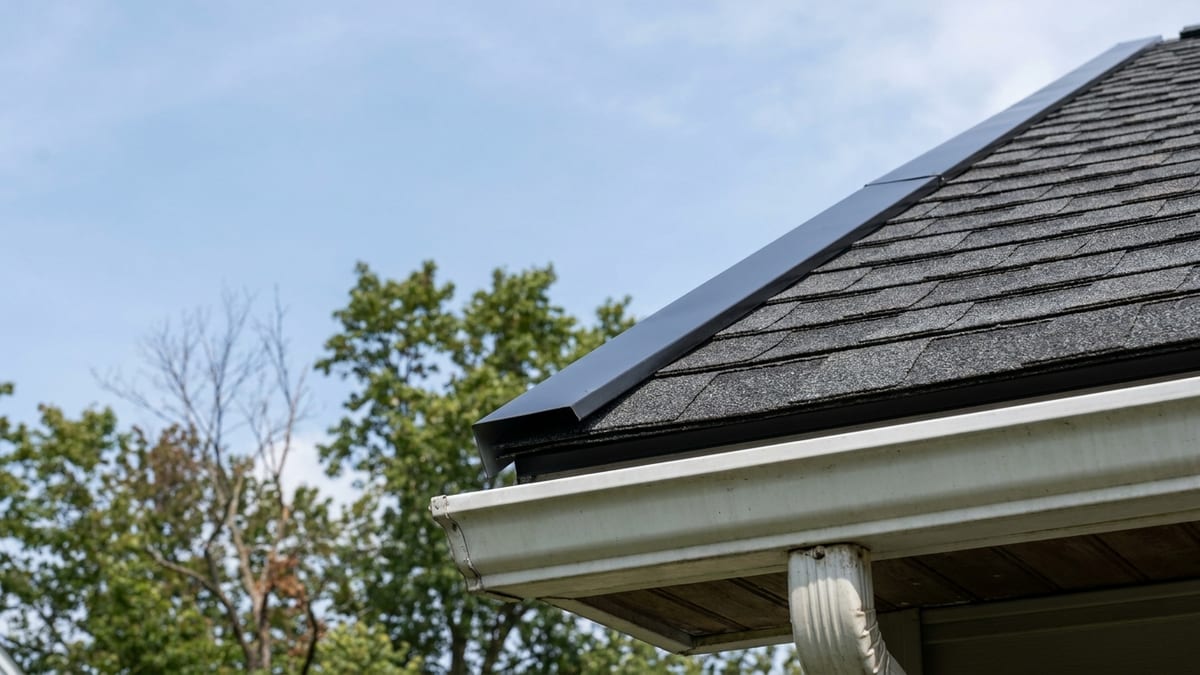
A skylight is not really a window in a wall. It is a hole cut through the weather plane of the house, sitting in the one surface that sheds water for a living. What keeps it dry is not the glass. It is the flashing kit — a head flashing, sill flashing and a set of step pieces that interleave with each shingle course as the roofer works up the slope.
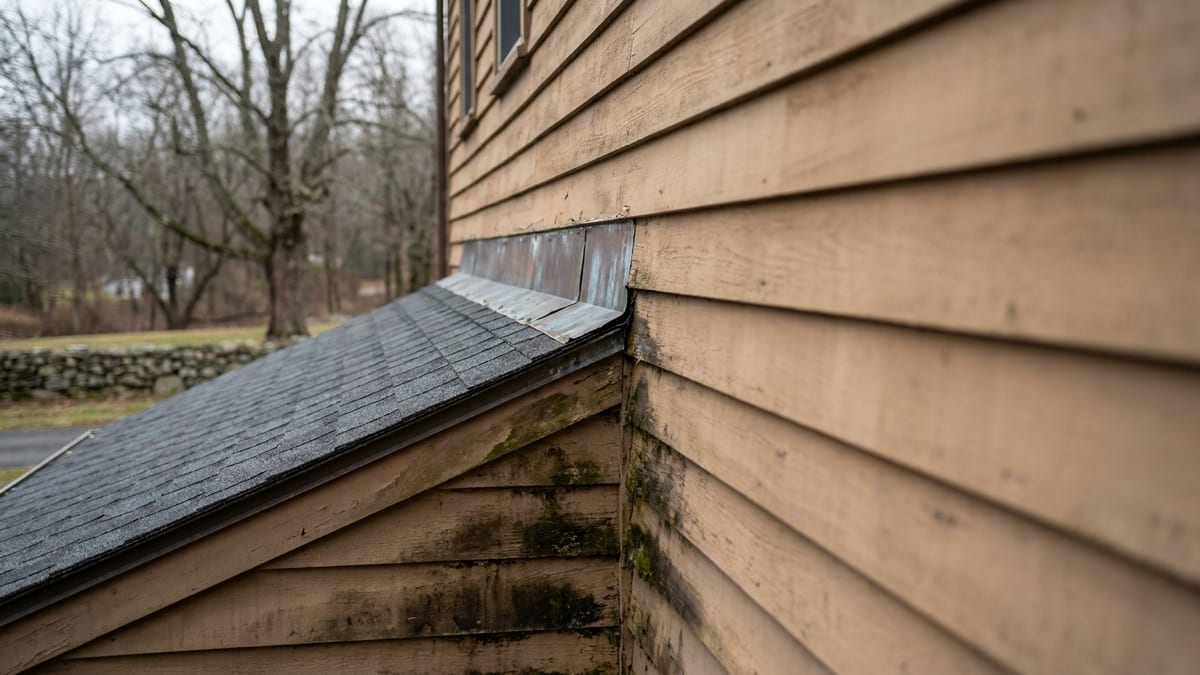
That interleaving is the point. Flashing has to be built into the roof as it goes on, course by course. It cannot be slid under finished shingles afterward without lifting and breaking the seal strips that hold them down. So when a skylight is replaced on an existing roof, the crew has to strip a working area around it, cut the shingles, install the new kit and patch back in with material that will not match perfectly. When it is replaced during a full tear-off, the flashing is simply installed as part of a normal roof.
Judging the skylight you have
Four things decide it.
Age relative to the new roof
An architectural asphalt roof in Connecticut is generally good for 25 to 30 years. Most residential skylight units do not get there. The insulated glass unit relies on a perimeter seal, and seals eventually fail; on a sloped, sun-exposed unit that goes through freeze-thaw cycling every winter, they tend to fail sooner than on a vertical window. If the existing skylight is already 15 or more years old, it will almost certainly need attention well before the new shingles do.
Condition of the glass
Fog, haze, or a milky film between the panes that will not wipe off means the seal has failed and the insulating gas is gone. That unit is now a single-pane hole in the roof from an energy standpoint. It is not repairable.
Whether it opens
Operable units have more to go wrong: hinges, crank hardware, gaskets, and on the electric versions, a motor and a rain sensor. Fixed units are simpler and last longer. If the operator has already stopped working, replacing the unit is usually more sensible than sourcing parts for an older model.
What the drywall around it looks like
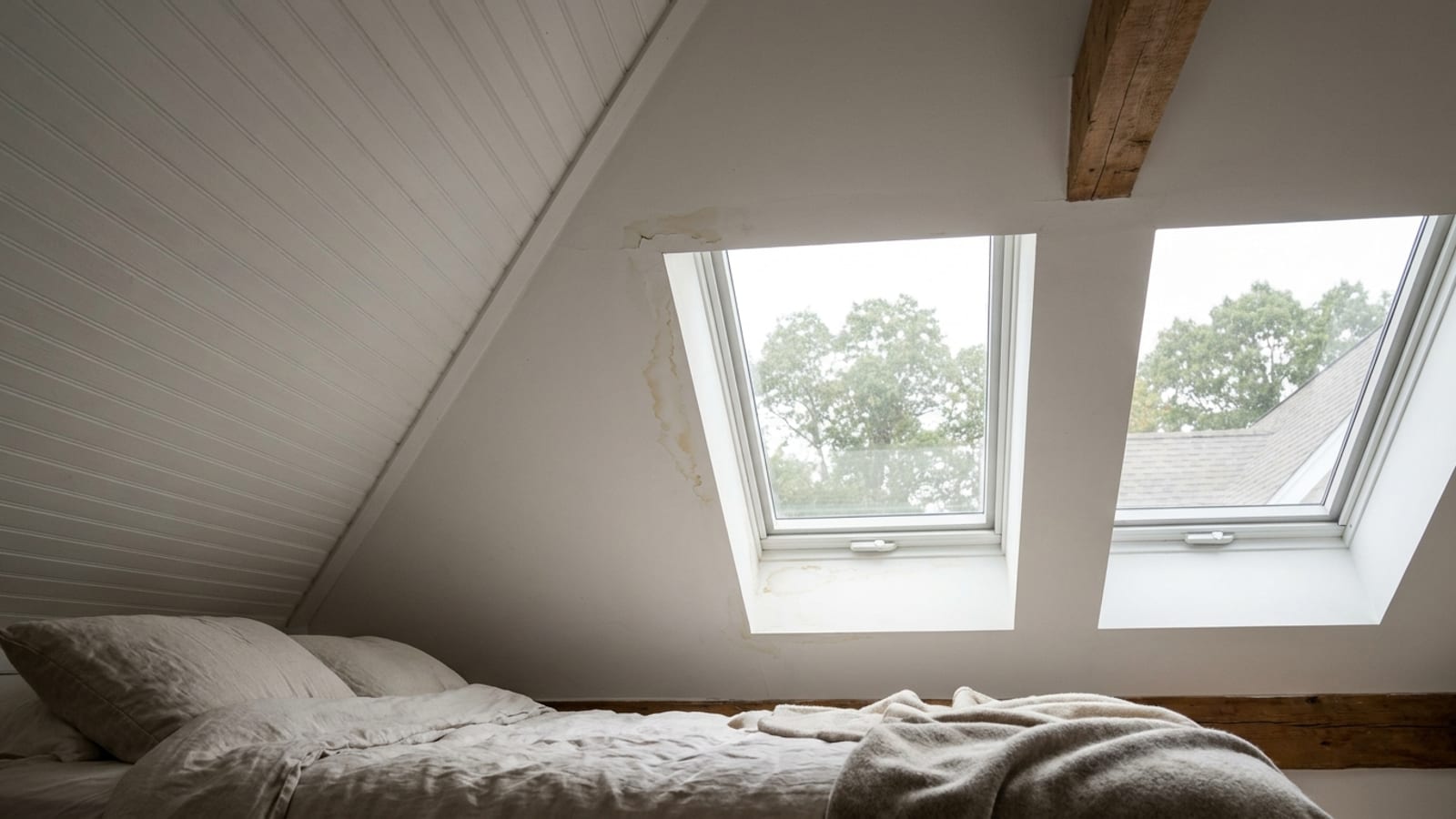
Staining at the head of the skylight shaft usually points to flashing. Staining at the corners or condensation running down the inside of the glass in January often points to warm, humid air escaping into an uninsulated shaft. Those are different problems with different fixes, and it is worth knowing which one you have before you spend money. Our post on why Connecticut roofs leak in winter and not in storms covers the second one in detail.
Four options, honestly compared
| Option | When it makes sense | Trade-off |
|---|---|---|
| OptionLeave the skylight, reuse the old flashing | When it makes senseAlmost never | Trade-offOld flashing has already been bent, nailed and sealed once. Reusing it inside a new roof puts the weakest component back into the newest assembly. |
| OptionKeep the unit, install a new flashing kit | When it makes senseUnit is recent, glass is clear, operator works | Trade-offCheapest path that is still defensible. Does nothing for the glass seal, so you may be back in ten years. |
| OptionReplace the unit and the flashing kit | When it makes senseUnit is aging, fogged, or leaking | Trade-offHighest cost of the three, but it resets the skylight clock to match the roof clock. |
| OptionRemove the skylight and frame the opening closed | When it makes senseThe room does not need it, or it has been a persistent problem | Trade-offCheapest long-term outcome. Costs you the daylight and requires interior drywall and paint work. |
That last row deserves more attention than it usually gets. Not every skylight earns its place. A lot of them were added in the 1980s and 1990s to brighten a hallway or a bathroom that would now be served better by an LED fixture and a good bath fan. If a skylight has leaked twice, sits over a room nobody uses, or dumps summer heat into a bedroom, removing it during a tear-off is a legitimate and often cheaper choice. Framing the opening closed, sheathing it and roofing straight over is a small amount of extra work while the deck is exposed.
Connecticut specifics worth knowing
Appendix AY of the 2022 Connecticut State Building Code assigns every town an ultimate design wind speed and a ground snow load. In the towns we serve, wind is 120 mph, or 125 mph in Guilford, Madison and New Haven, and every one of these towns sits inside a designated hurricane-prone region. Snow is 30 psf, or 35 psf in Avon, Farmington and Simsbury.
For skylights, two consequences follow. First, the unit itself has a rated performance for wind-borne pressure and impact; that is a manufacturer figure on the label, not something a roofer establishes on site. Second, snow and ice load against the head of a skylight is real. A skylight positioned low on a long slope, or directly below a valley, is sitting where drifting snow and meltwater collect. That is a placement problem, and a re-roof is the one moment you can correct it by moving the unit or eliminating it.
One clarification, because it gets misquoted: the high-wind underlayment provisions that some contractors cite are keyed to Vasd, the allowable stress design wind speed, at values above 110 mph. Converted from the Vult figures above, Vasd in these towns lands roughly in the 93 to 97 mph range, so that trigger does not apply here. What does apply is the manufacturer's own printed installation instruction for the flashing kit and the shingle fastening pattern.
Permits and historic districts
A roof replacement requires a building permit in every town we serve, and only a contractor registered as a Home Improvement Contractor can pull it on your behalf. Replacing a skylight in an existing opening rides along inside that permit. Cutting a new opening is a different matter, because it means altering rafters and framing a header — structural work the building department will look at.
In a local historic district, Connecticut General Statutes Sec. 7-147f(a) draws the line at material and configuration. Replacing an existing skylight with a similar unit is ordinary maintenance and does not require a Certificate of Appropriateness. Adding a skylight where there was none, or putting one on a street-facing slope, changes the configuration and does. On the older housing stock in towns like West Hartford, that distinction is worth confirming with the town before ordering anything.
What the quote should say
Skylights should never be buried in a lump sum. Ask for a separate line item that names:
- The manufacturer, model and size of each unit
- Whether it is fixed, manual-venting or electric
- Whether it is deck-mounted or curb-mounted, and if curb-mounted, who is building or reusing the curb
- The specific manufacturer flashing kit, by part designation, matched to the shingle profile
- Whether the interior shaft will be air sealed and insulated, and who patches drywall and paint
Roof cement smeared around a skylight is not flashing. If a quote does not name a flashing kit, that is worth a direct question. The same standard applies to the rest of the roof, which we lay out under roof replacement.
Costs for the roof itself run in general Connecticut ranges — roughly $10,000 to $30,000 for architectural shingles on a typical home, driven far more by size, pitch and complexity than by any single component. We break that down in what a new roof costs in Connecticut. Skylight work sits on top of that as its own line, and the number depends entirely on the unit, the size of the opening and whether the interior finish is in scope.
If you have skylights and a roof approaching the end of its life, this is the decision to make before the crew is scheduled, not after the first bundle is lifted. Request a written price through our estimate form and someone will come out, measure the units, look at the interior shaft, and put a figure on paper for each option so you can compare them side by side.