Short answer
Often yes. If the frame and sash are solid, the window operates correctly and the only problem is a failed or broken insulated glass unit, swapping the glass is a legitimate repair that costs a fraction of a new window. It stops making sense when the sash is rotted, the hardware or balances have failed, the window is single pane, or you want current energy performance numbers.
On this page
The question behind this one is almost always the same: one or two windows look hazy or milky between the panes, and a full replacement quote feels like a large answer to a small problem. It often is. Whether glass-only works comes down to a single judgment call about which part of the window actually failed.
A window is three systems, not one
Before deciding what to replace, it helps to separate what you are looking at.
The glass
In any window made since roughly the late 1970s, the glass is an insulated glass unit: two (or three) panes separated by a spacer, sealed at the perimeter, often with argon between them and a low-emissivity coating on one interior surface. This is a manufactured component. It can be ordered and replaced on its own.
The sash
The sash is the frame around the glass that moves. It carries the glazing, the weatherstripping, the lock and the balance hardware. On a double-hung window there are two of them.
The frame
The frame is fixed to the house. It is the jamb, the sill and the exterior trim connection, and it is the part that has to stay dry. When the frame is wet or rotted, nothing you do to the glass matters.
Failure in the first system is repairable on its own. Failure in the second or third is not, at least not economically.
When replacing only the glass is the right call
A failed seal in a window that still works
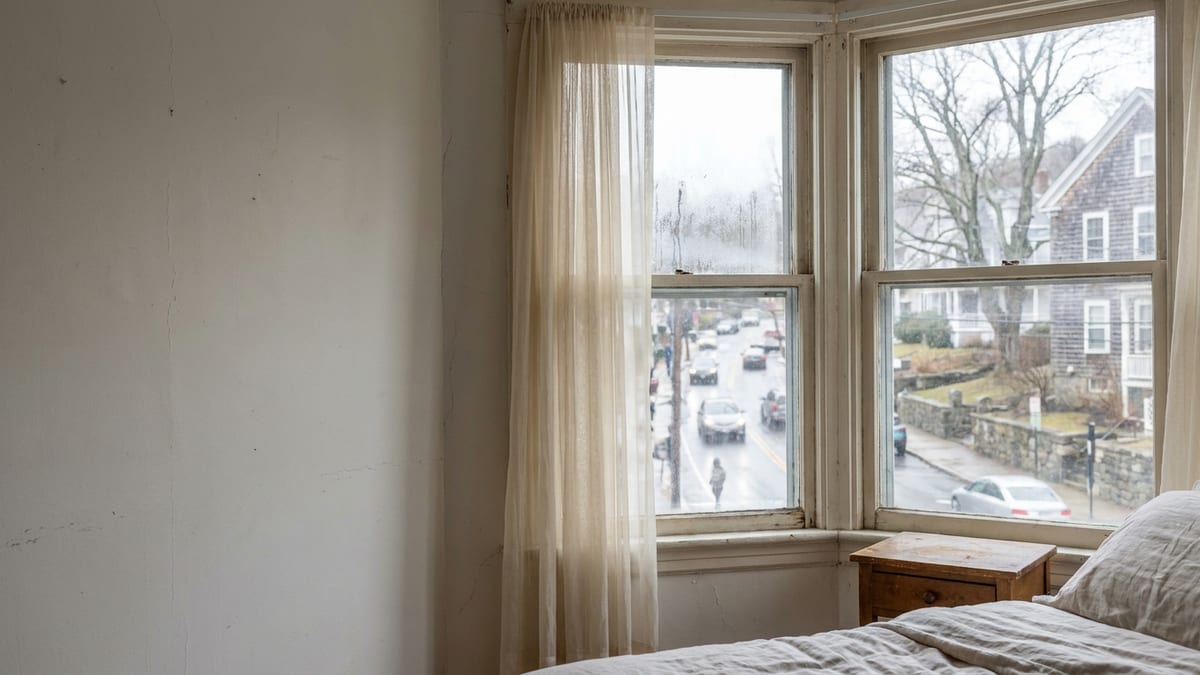
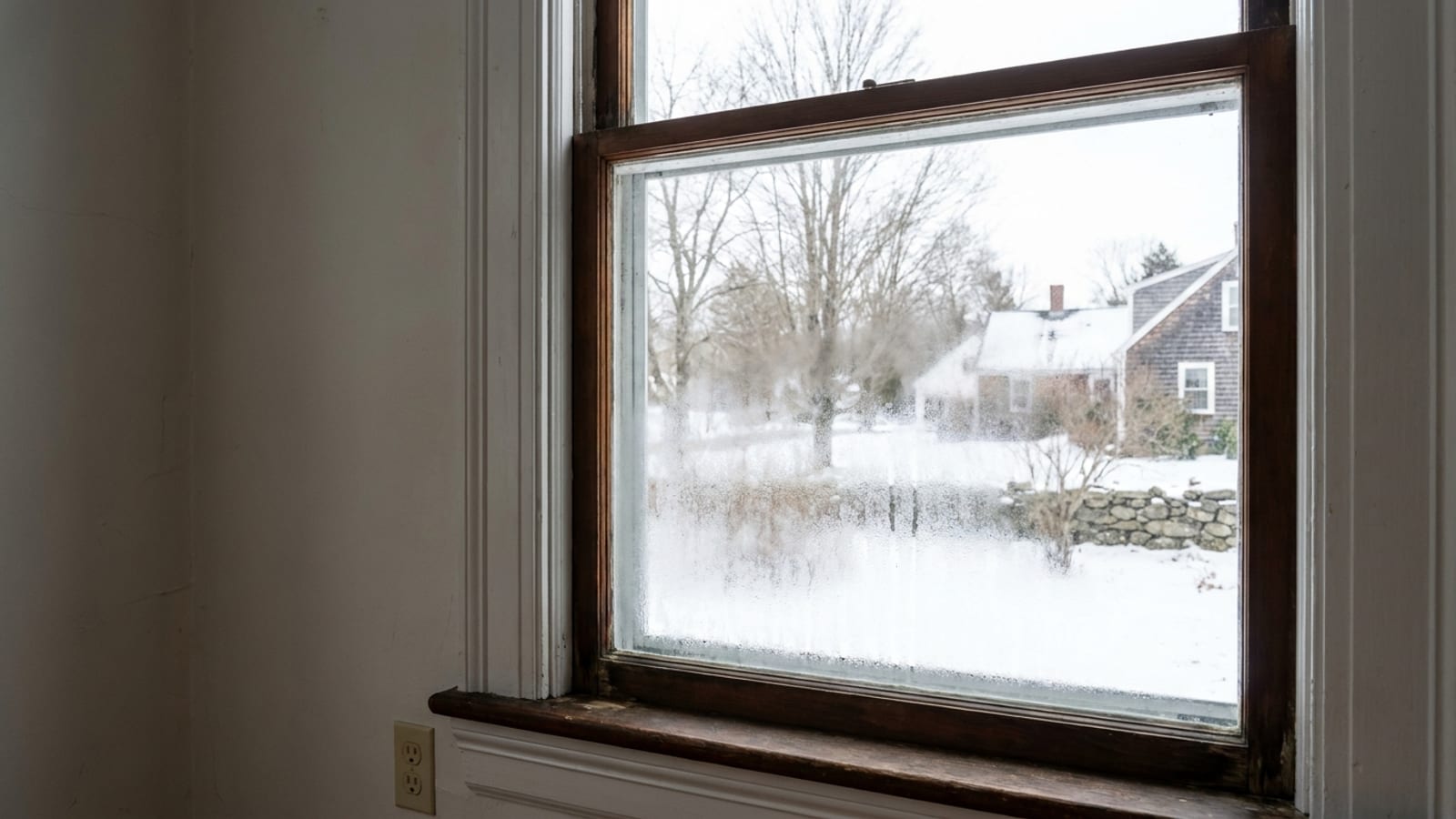
This is the classic case. The perimeter seal on the insulated unit gives out, moisture enters the cavity, and you get fog, haze or a white mineral film that will not wipe off from either side. The sash is fine. The frame is fine. The window opens and closes the way it always did. We wrote in detail about what that haze actually means in our post on window condensation and failed seals. A replacement insulated unit restores the clear view and restores most of the glass performance, because the gas fill and the coating come back with the new unit.
Breakage
A rock from a mower, a branch, a ladder. The glass is gone and the rest of the window is untouched. Glass-only is obviously correct here, and if the break was a covered loss, this is the kind of small claim where the deductible usually makes paying out of pocket the cheaper path anyway.
Custom or historic sash worth keeping
On an older home in Hartford, Farmington Village or around the Guilford Green, the existing sash may be better made than anything currently sold at a comparable price. If the joinery is tight and the wood is sound, reglazing preserves the sight lines and muntin profiles that make the house look right. That is a real argument, not a sentimental one.
When glass-only is the wrong call
The honest list is longer than most homeowners expect.
- The window is single pane. There is no sealed unit to replace. Adding an insulated unit to a sash never designed for its thickness and weight is not a repair, it is a modification, and the result is usually a window that binds.
- The sash is rotted or swollen. New glass in a failing sash is money set on fire. Check the bottom rail and the corner joints.
- Balances, cranks or locks have failed. Hardware for older vinyl and aluminum units is frequently discontinued. If the part is unavailable, the repair path ends.
- The vinyl frame is distorted. Older vinyl can sag or bow at the head, which is why the sash stopped sealing in the first place.
- Several units failed around the same time. Seal failure clusters by age and by sun exposure. If three went in a year, the rest of that batch is on the same clock.
- You are after the energy numbers. New glass alone will not get you there.
Why the energy argument favors whole-window replacement
All of Connecticut is in the ENERGY STAR Northern climate zone. Under version 7.0, effective October 2023, a qualifying window needs a U-factor of 0.22 or lower and a solar heat gain coefficient of at least 0.17. Both numbers appear on the NFRC label, and both describe the entire assembly: glass, spacer, frame and the air leakage of the whole unit. A new insulated glass unit in a twenty-five year old sash improves the center of glass and does nothing for a frame that leaks air at the meeting rail. If your complaint is drafts rather than fog, the glass was probably not the problem.
How the costs compare
Glass-only pricing is quoted per unit after someone measures the daylight opening and identifies the coating, thickness and whether tempered glass is required by location. It varies too much by size and glass type for a published range to mean anything, which is why we do not print one. What is stable is the other side of the comparison. These are general Connecticut ranges for full window replacement and depend heavily on the specific house.
| Scope | General Connecticut range |
|---|---|
| ScopeStandard vinyl window, installed | General Connecticut range$300 to $700 per window |
| ScopePremium wood or fiberglass window, installed | General Connecticut range$800 to $1,500 or more per window |
| ScopeLarge or custom units, common in Greenwich and Westport | General Connecticut range$1,000 to $2,500 or more per window |
| ScopeFull house of 10 to 15 windows | General Connecticut range$5,000 to $20,000 or more |
The practical rule: an insulated glass unit is a fraction of a new window, so glass-only wins decisively on one or two units. Once you are reglazing five or six sashes in windows that are also stiff, drafty and out of hardware, the repair total starts closing in on replacement without delivering a new frame, new weatherstripping, a current NFRC rating or a manufacturer warranty on the whole assembly.
How the work gets done
There are two approaches, and which one applies affects both price and disruption.
Sash removal
On most double-hung windows, the sash comes out of the frame, goes to a shop, gets reglazed and comes back. The opening is covered in the meantime. This is the cleaner method and it allows the stops and glazing beads to be handled properly.
On-site glazing
Fixed units, picture windows and some casements have to be glazed in place. The old unit is cut out, the opening is cleaned and the new unit is set and sealed. It takes longer at the house and it is weather dependent.
Either way, confirm that the quote names the glass package: double or triple pane, low-E coating type, argon fill, warm-edge spacer and whether tempered glass is included. Glass is not a generic commodity, and a quote that just says "replace glass" is not telling you what you are buying.
Permits, egress and the one thing glass cannot fix
Most Connecticut towns do not require a permit for like-for-like window replacement where the opening size does not change, and glass-only work is further from that line still. A permit is generally required when an opening is resized, when a window is added, or when a header is altered.
Separately from permits, every bedroom needs at least one window meeting egress dimensions. This is worth knowing in both directions. Glass-only repair does not reduce the clear opening at all, which is a quiet advantage. An insert replacement sits inside the existing frame and does reduce it, which on a window already near the minimum can take a compliant bedroom out of compliance. Our posts on insert versus full-frame replacement and the broader window service page cover how that decision gets made.
A reasonable way to decide
- Operate every suspect window. Note which ones stick, drop or fail to lock.
- Press a screwdriver handle firmly into the bottom rail and the sill. Soft means rot.
- Count how many units are fogged. One or two is a repair. Half the house is a batch failure.
- Decide what is actually bothering you. Fog is a glass problem. Drafts and operation are window problems.
- Check the age. A window with ten good years left is worth reglazing. One at the end of its hardware life is not.
If you want a second opinion on which category your windows fall into, request an estimate and someone comes out, measures, looks at the sashes and frames, and gives you a written price for what the house actually needs. If the sound answer is to keep the windows and fix the glass, that is worth hearing before you spend on full units.