Short answer
Yes, replacement windows can noticeably cut traffic and aircraft noise, but the glass package matters far more than the fact that the window is new. Laminated glass and two panes of unequal thickness do most of the work, while a standard double-pane unit may sound almost the same as the window it replaced. Expect a meaningful reduction, not silence, because sound also travels through walls, doors, roof vents and any gap left around the frame.
On this page
Yes, new windows can cut road and airport noise, and in some rooms the change is dramatic. But the reason is almost never that the window is new. It is the glass package inside it, how well the unit is sealed, and whether the window was the weakest point in that wall to begin with.
If you replace a drafty single pane window with a standard double pane unit, you will gain comfort and lower heating bills, and you may find the street sounds only slightly softer. If you specify laminated glass with panes of unequal thickness, the same opening can sound like a different house. The price difference between those two choices is real, so it is worth understanding what you are buying.
How window noise ratings work
Two numbers describe acoustic performance, and manufacturers publish them for specific glass configurations, not for the product line as a whole.
STC
Sound Transmission Class is the general measure. It was developed around speech frequencies, which makes it useful for neighbors, voices and lawn equipment. Higher is better, and each point represents roughly one decibel of reduction across the tested range.
OITC
Outdoor Indoor Transmission Class weights the low frequencies more heavily. That is the rating to ask for if your problem is highway traffic, heavy trucks, trains or aircraft, because those sources put most of their energy down low where STC is least informative. A window can post a respectable STC and still let a truck rumble through.
What the numbers feel like
| Typical configuration | Approximate STC range |
|---|---|
| Typical configurationSingle pane, old wood sash | Approximate STC range26 to 28 |
| Typical configurationStandard double pane, equal thickness | Approximate STC range28 to 32 |
| Typical configurationDouble pane with one laminated lite | Approximate STC range34 to 38 |
| Typical configurationLaminated plus unequal thickness and wider air space | Approximate STC range38 to 42 |
Those are industry ranges, not a promise for your house. The practical rule is that a gain of about 5 points is clearly audible and a gain of 10 points is usually described as cutting the noise roughly in half. Going from 28 to 30 is a number on a spec sheet that nobody in the room will notice.
The four things that actually quiet a window
Laminated glass
A laminated lite is two sheets of glass bonded to a plastic interlayer. The interlayer damps the vibration that would otherwise pass straight through. Used as the outer lite of an insulated unit, it is the single most effective change available on a standard residential window, and it also adds security and blocks nearly all ultraviolet light.
Unequal glass thicknesses
Two panes of the same thickness resonate at the same frequency and hand sound to each other efficiently. Pairing, for example, a thicker outer lite with a thinner inner lite means each pane fails to transmit at a different frequency. This is a specification change, not a product upgrade, and it often costs less than people expect.
The air space
A wider gap between panes improves low frequency performance. Insulated glass units are built to a fixed depth for thermal reasons, so there is a ceiling here, but it is a reason a shallow triple pane sandwich can underperform a thoughtfully built double pane.
The seal and the installation
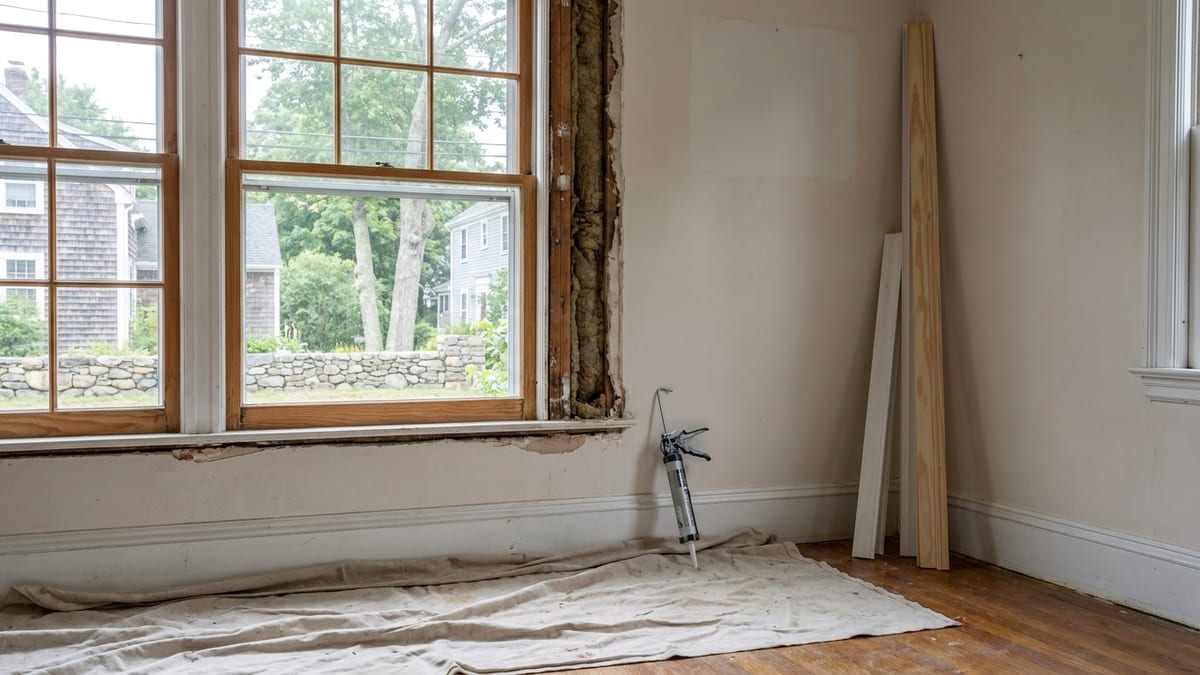
Sound follows air. A 1 percent gap in an assembly can erase much of its rated performance. That means a compression seal at the sash, a frame that is actually shimmed and insulated rather than stuffed, and interior and exterior sealant that closes the perimeter. On older double-hung windows, the open sash weight pockets in the jamb are a direct path from outside to inside, and closing them is part of why a replacement helps at all. Our window service page describes how the units are set and insulated.
Where noise gets in besides the glass
This is the honest part of the conversation. Windows are usually the weakest acoustic element in a wall, but not always the only one.
- Doors. An uninsulated entry door or a slider on the noisy side will often outperform nothing and underperform your new windows.
- Walls. An uninsulated 1920s wall cavity passes sound well. New windows in a wall like that reach a limit quickly.
- Roof and attic vents. Aircraft noise arrives from above, and no window addresses that path.
- Through-wall air conditioners and bath fan ducts. These are open holes in the envelope.
- Flanking paths. Sound entering a quieter adjacent room travels through the interior.
If you fix the three windows facing the street and the bedroom still hears every bus, the remaining path is one of the items above.
What this costs in Connecticut
General Connecticut ranges, which depend heavily on the house, the opening sizes and the brand:
| Scope | General range |
|---|---|
| ScopeStandard vinyl window, installed | General range$300 to $700 each |
| ScopePremium wood or fiberglass window | General range$800 to $1,500 or more each |
| ScopeLarge or custom units | General range$1,000 to $2,500 or more each |
| ScopeFull house, 10 to 15 windows | General range$5,000 to $20,000 or more |
An acoustic glass package is an option price added on top, and it is normally quoted per unit. That matters for strategy: you rarely need it on every window. The back of a house facing a yard does not benefit from laminated glass the way the front facing Route 1 does. A mixed order costs less than upgrading everything, and the quote should show which openings carry the upgrade.
Do not lose the energy numbers
Connecticut sits entirely in the ENERGY STAR Northern zone, which under version 7.0 means a U-factor of 0.22 or lower and a solar heat gain coefficient of at least 0.17. The SHGC figure is a minimum, because in a heating climate a window that blocks too much sun throws away free winter heat. Ask for the NFRC label on the laminated configuration specifically, since the numbers shift when the glass changes. We covered both figures in detail in the only two window numbers that matter.
When new windows are the wrong fix
There are cases where we would tell you to spend the money elsewhere.
- Your current windows are sound and tight. A ten year old double pane unit in good condition is already at the point of diminishing returns, and air sealing plus heavy interior treatments may be enough.
- The noise is intermittent and low frequency. A flight path or a nearby rail line puts energy into the whole structure, and glass addresses only one path.
- The budget is better spent on insulation. On an uninsulated wall, dense pack insulation improves both comfort and sound, and it usually costs less than the window upgrade.
- You are moving in two years. Acoustic glass is not a line item buyers price separately.
The case for doing it is strongest in a bedroom or home office on the street side of a house with single pane or failing double pane windows. That is where the gain is largest and the room use is most sensitive.
Where this comes up most
Urban and shoreline streets carry the most constant traffic noise. Older housing stock in New Haven, with its dense blocks and original sash, often has the biggest available improvement, while homes near the highway corridors in Stamford tend to be dealing with steady low frequency traffic that argues for OITC numbers rather than STC alone. In both cases, double-hung replacements are the common unit, and laminated glass is available in that style from the major manufacturers.
Getting a real number for your house
There is no way to predict the result from a phone call. Someone needs to see which walls face the noise, what the existing windows are, and whether the openings can take a laminated unit without a frame change. If you want a written price that shows the glass package per opening and what the upgrade adds, request an estimate. Someone comes out, measures every opening, and gives you an itemized price you can compare against anyone else's.