Short answer
Black streaks are almost always Gloeocapsa magma, an algae that stains the granule surface without destroying the shingle, so a roof that is otherwise sound should be cleaned rather than replaced. Moss is a different matter, because it holds water against the shingle and lifts the edges, and it needs to come off before it causes damage. Replacement is the honest answer only when the staining sits on top of real wear such as curling, granule loss or an age past 20 to 25 years.
On this page
Black streaks on an asphalt roof are a staining problem, not a structural one. In almost every case they are Gloeocapsa magma, a blue-green algae that lives on the surface of the shingle and feeds partly on the limestone filler used to make it. It stains. It does not eat through the roof. If the shingles underneath are still flat, still holding their granules and not yet at the end of their service life, the correct answer is to clean the roof, not to replace it.
Moss is a different conversation, and so is a roof that is stained because it is simply old. This post separates the three so you can tell which one you are looking at before anyone quotes you a number.
What the black streaks actually are
The dark vertical stripes that run down from the ridge are colonies of cyanobacteria. Spores travel on the wind, land on a roof, and settle where there is enough moisture to survive. As the colony thickens it develops a dark protective sheath, which is what you see from the street. Rain then carries spores downslope, which is why the staining reads as streaks running with the water rather than as random patches.
Why it shows up where it does
Three conditions drive it, and Connecticut supplies all three.
- Shade. North-facing slopes dry slowly. So does any slope under mature tree canopy, which describes a large share of the housing stock in towns with heavy street tree coverage.
- Humidity. Summer humidity along the shoreline and in the Connecticut River corridor keeps roof surfaces damp well past sunrise.
- Time. A new roof looks clean because the colony has not established yet, not because the shingle is immune.
None of that is a defect. A roof that is streaking at year twelve on the north slope and clean on the south slope is behaving exactly as expected.
Does the algae shorten roof life
Not meaningfully on its own. A heavy colony holds a little moisture and darkens the surface, which raises shingle temperature slightly, but neither effect is what puts asphalt roofs in the dumpster in this state. Freeze-thaw cycling, poor attic ventilation and ultraviolet exposure do that. Treat the streaks as an appearance issue with a real solution, and keep your attention on the things that actually end a roof.
Moss is a physical problem, not a cosmetic one
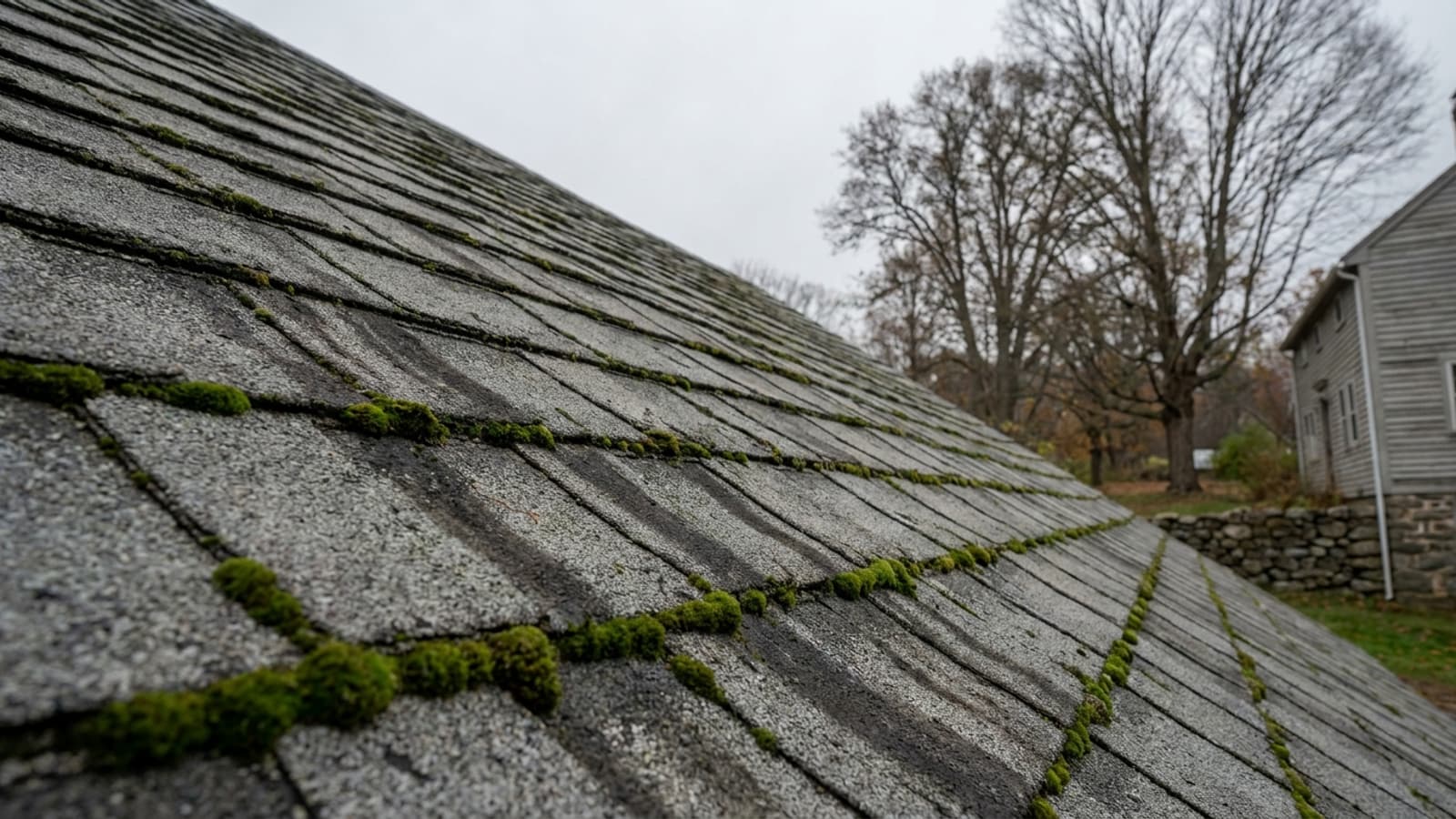
Moss is a plant. It has structure, it holds water like a sponge, and it grows upward from the bottom edge of a shingle course. Left alone it does three things that algae does not.
- It keeps the shingle edge wet, so the surface goes through far more freeze-thaw cycles than the rest of the roof.
- As the clump thickens it physically lifts the shingle tab, which breaks the seal strip and creates an entry point for wind-driven rain.
- It traps debris in valleys and behind chimneys, which slows drainage and can back water up under the course above.
So the rule is simple. Algae can wait until you feel like dealing with it. Moss should come off.
Telling staining apart from a worn-out roof
Walk the perimeter with binoculars and check the gutters. Then compare what you see against this.
| What you see | What it means | Reasonable action |
|---|---|---|
| What you seeDark vertical streaks, shingles flat and intact | What it meansAlgae on the surface | Reasonable actionClean, then manage shade and runoff |
| What you seeGreen clumps along shingle edges, tabs lifting | What it meansMoss holding water and breaking the seal | Reasonable actionRemove now, inspect the lifted tabs |
| What you seeStreaks plus heavy granule sediment in gutters | What it meansSurface wearing through, not just staining | Reasonable actionGet the roof assessed for replacement |
| What you seeCurling or cupped corners across whole slopes | What it meansAsphalt has hardened and shrunk with age | Reasonable actionReplacement, cleaning changes nothing |
| What you seeRoof is 20 to 25 years old and streaked | What it meansAge, with staining as a symptom | Reasonable actionPlan replacement rather than spend on cleaning |
The distinction that matters is whether the granule layer is still there. Granules are the sacrificial surface. Once they are thin enough that the black asphalt shows through, the roof is on a clock no cleaning can reset. A roof inspection should tell you which side of that line you are on, in writing, with photos.
Cleaning it correctly
The roofing industry's own guidance for asphalt shingles is a low pressure chemical wash. A dilute solution of sodium hypochlorite and water is applied, allowed to dwell, then rinsed at low pressure. The colony dies, and the remaining discoloration weathers off over the following months. Done properly, nothing is scrubbed, scraped or blasted.
What not to do
- No pressure washing. A pressure washer will take granules off an asphalt shingle by the handful, and manufacturers routinely exclude that damage from warranty coverage. It also drives water up under the courses.
- No wire brushing or scraping moss. Kill it, let it dry and let rain carry it off. Pulling live moss off takes shingle surface with it.
- No walking a wet, treated slope. A chemically wet roof is dangerously slick, and this is the most common way homeowners get hurt on a job they thought was simple.
- No ignoring the landscaping. Runoff needs to be diluted and plantings need to be pre-wetted and rinsed, or you trade a roof stain for dead shrubs.
Keeping it from coming back
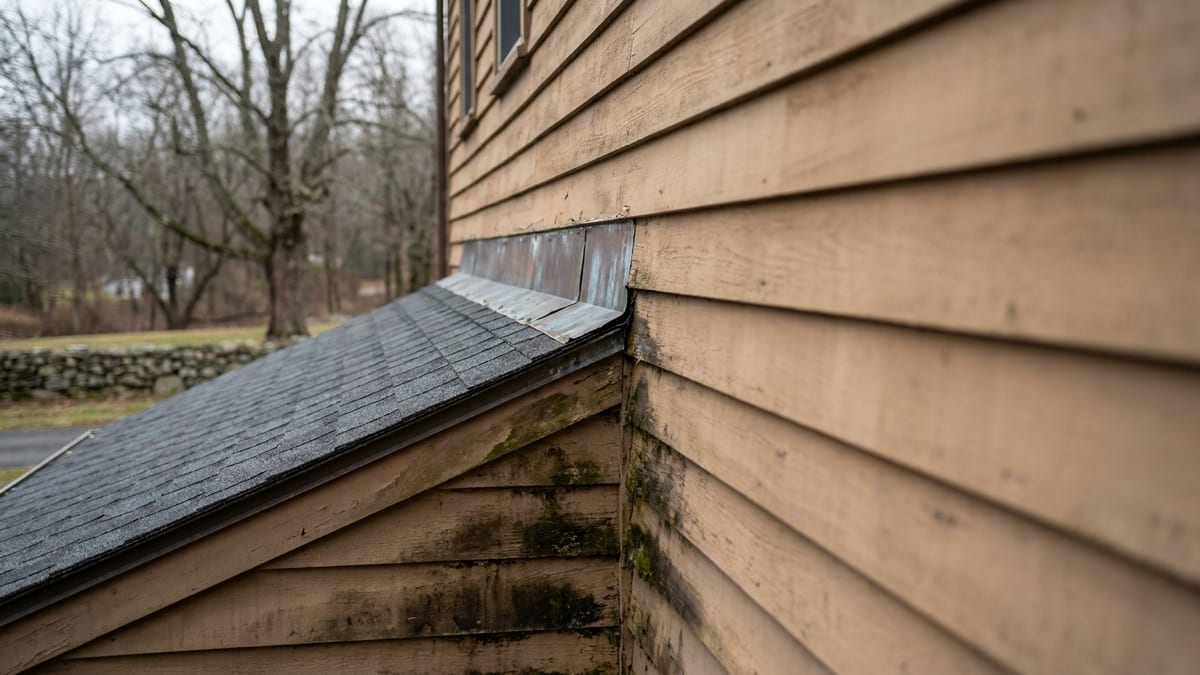
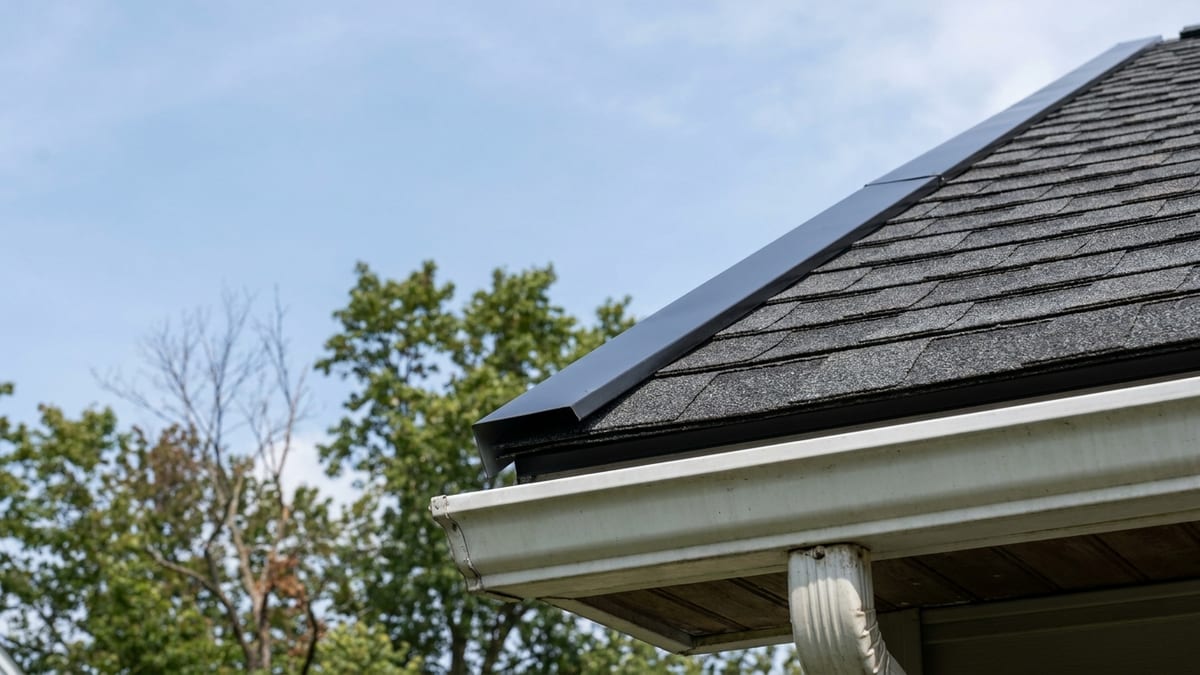
Cut back branches that shade the slope, which is the single most effective step. Then look at metal at the ridge. A strip of zinc or copper installed under the ridge cap releases metal ions into the runoff and suppresses regrowth on the slope below. It is not permanent and it does not reach the bottom of a long slope evenly, but it is cheap and it works where the water goes. You have probably already seen the effect as a clean stripe running down from a galvanized vent or copper counterflashing.
If you are replacing anyway, specify the stain resistance
Every major manufacturer offers shingle lines with copper-bearing granules blended into the surface. GAF, Owens Corning, CertainTeed and IKO all make them, and the versions we install are listed under roofing materials. The upcharge over the standard version of the same line is modest relative to the whole job.
Two things to ask before you sign. First, which specific product line, because a brand name alone does not tell you whether the algae-resistant version was quoted. Second, what the stain warranty term is, since it is a separate limited warranty with its own duration, not part of the main shingle coverage.
For the shoreline the calculation adds one more item. Salt air is hard on metal, so if you are adding zinc strips or replacing flashing on a house in a town like Guilford, the fasteners and accessories need to be corrosion resistant. We cover the coastal detailing on our Guilford roofing page.
The honest case against cleaning
Cleaning is worth doing when the roof has years left, when you are selling and the streaks are hurting first impressions, or when moss is present. It is not worth doing on a roof with five years left. You will spend money on appearance and then spend it again on the replacement, and the second roof would have come with stain-resistant granules from day one.
The same logic applies in reverse. Do not let a stain be used to sell you a roof. Streaking alone is not evidence that shingles have failed, and a contractor who leads with the streaks rather than with granule loss, deck condition and age is arguing from the wrong evidence. If the number quoted is inside the general Connecticut ranges we lay out in our post on what a new roof costs, you still deserve to know what specifically justifies replacing rather than washing.
What to do next
Start with a look, not a decision. Check the gutters for granule sediment, check whether the streaks are on one slope or all of them, and check whether there is moss lifting shingle edges. Those three observations usually settle the question before anyone climbs a ladder.
If you want a second opinion on which side of the line your roof falls, request an estimate. Someone comes out, gets on the roof, photographs what is actually happening to the granule surface and the flashing, and gives you a written price for whichever course of action the condition supports. If the roof needs cleaning rather than replacing, that is what the report will say.