Short answer
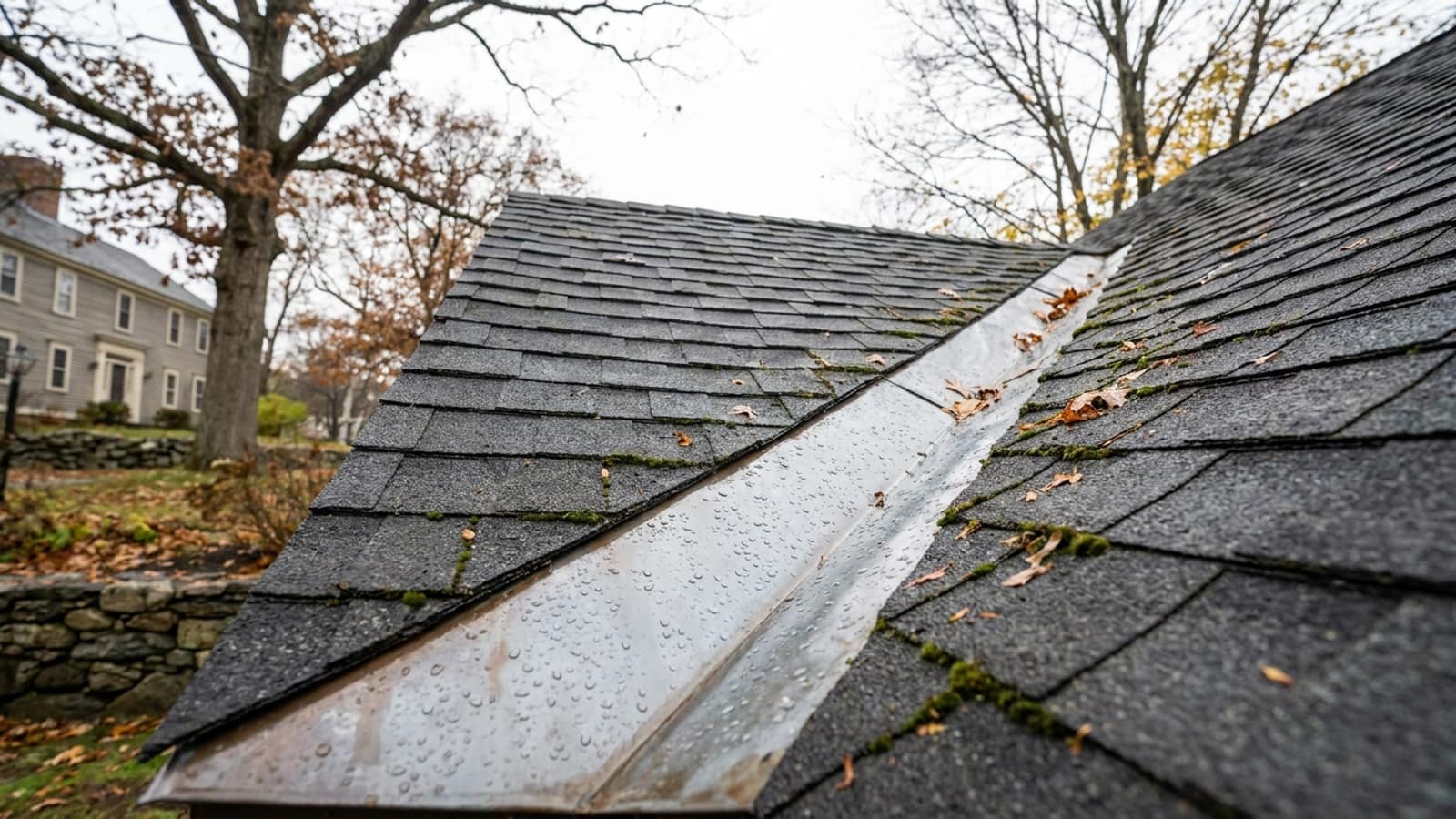
An open valley lines the joint with a sheet of metal and leaves that metal exposed, so water and sliding ice run down a smooth channel. A closed cut valley carries the shingles from one roof plane straight across the joint and cuts the shingles from the other plane back a couple of inches from the center. Both are code-compliant and both are warrantable, but open metal holds up better on long, steep or debris-heavy valleys, while closed cut is a reasonable default on simple roofs.
On this page
Two roof planes meeting at a valley is the hardest-working square footage on a house. Every gallon that lands on either slope funnels through that one channel, and in Connecticut it does it while carrying ice, grit and whatever the maples dropped in October. How a roofer finishes that channel is a genuine decision, and it belongs on the estimate in writing.
This post covers what each method is, what the code requires underneath both of them, where each one is the right call, and the honest case against paying extra for metal.
The three methods, plainly
Open metal valley
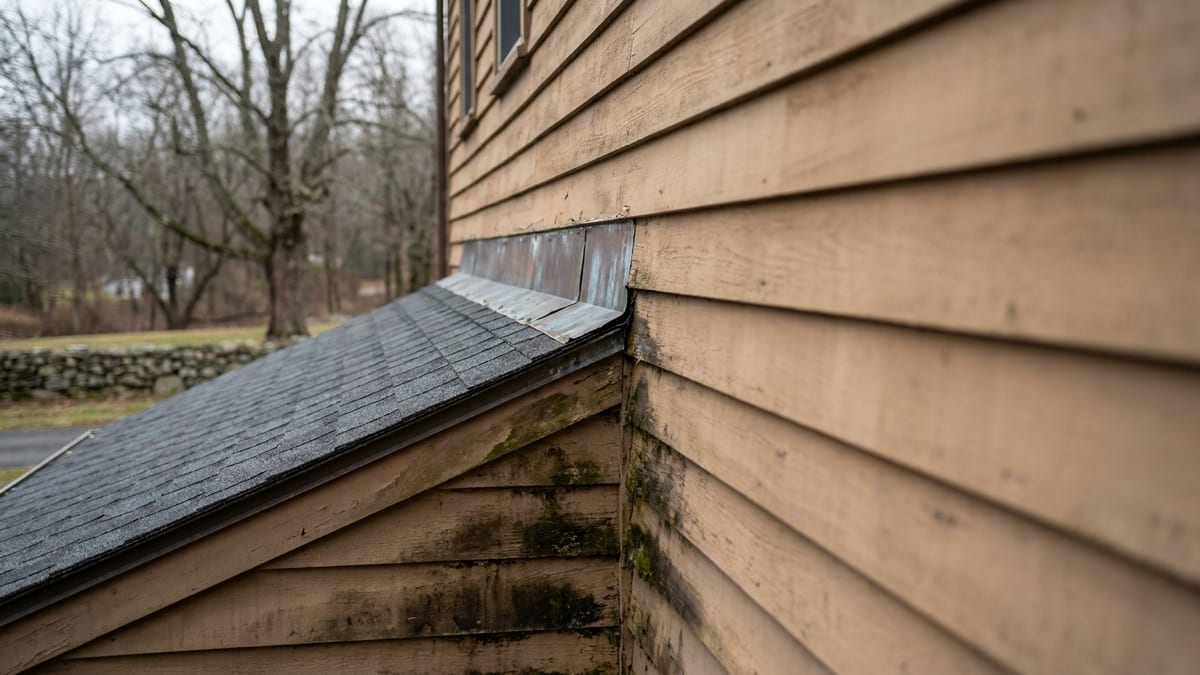
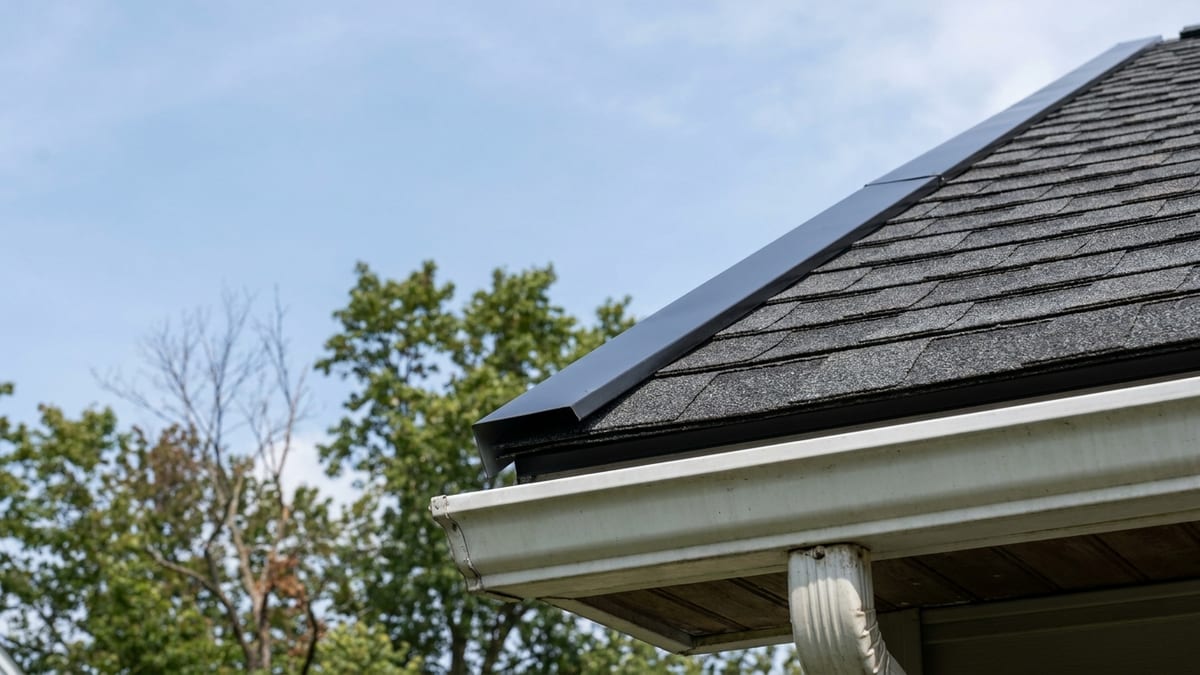
A sheet of corrosion-resistant metal is set into the valley over the valley lining, and the shingles from both planes are cut back so a strip of metal stays visible down the center. The metal is usually formed as a W, with a raised rib running down the middle to stop water from one slope from washing up under the shingles on the other during heavy runoff.
The metal is held with clips or nailed only at its outer edges, outside the water path. Nothing should penetrate the center of the channel. Common materials are painted 24 gauge galvanized steel, painted aluminum, and copper on homes where the rest of the detailing justifies it.
Closed cut valley
Shingles from one plane run straight through the valley and up onto the opposite slope by at least a foot. Shingles from the second plane are then laid over the top and trimmed along a line roughly two inches back from the valley center, so the cut edge never sits in the deepest part of the channel. The corner of each cut shingle is clipped at an angle to push water back into the valley rather than letting it run along the cut edge.
The fastening rule matters more than the cut. No nail goes within six inches of the valley center line, and the shingle that crosses the valley gets an extra fastener at its upper outside corner to hold it down.
Woven valley
Shingles from both planes alternate across the valley, interlacing. This worked on thin three-tab shingles. Laminated architectural shingles are thicker and stiffer, they do not lie flat when woven, and several manufacturers no longer allow a woven valley in their published installation instructions. If a quote specifies woven on an architectural shingle, that is worth a question before signing.
What has to be under the shingles either way
The valley lining is not optional and not a judgment call. The residential code sets out acceptable valley linings by type.
| Valley type | Minimum lining called out by code |
|---|---|
| Valley typeOpen metal | Minimum lining called out by codeUnderlayment at least 36 inches wide, plus metal at least 24 inches wide in a corrosion-resistant material and gauge |
| Valley typeClosed cut | Minimum lining called out by codeA lining of at least 36 inch wide smooth roll roofing, or a self-adhering polymer modified bitumen membrane |
| Valley typeWoven | Minimum lining called out by codeSame lining requirement as closed cut |
In practice, a self-adhering ice and water membrane is the standard lining in Connecticut for both methods, because the valley is one of the two places on a roof where meltwater is most likely to back up and sit. A valley that is dressed in metal but laid over plain felt is a worse assembly than a closed cut valley over a full membrane. If you take one thing from this comparison, take that one.
Where open metal earns the money
Four conditions point toward metal, and they are easy to check from the ground.
- Long valleys. The further water travels in a channel, the more volume and velocity arrive at the bottom. A valley running two full stories moves far more water than one over a dormer.
- Steep slopes feeding the valley. Fast water tends to jump the cut line on a closed valley. The W rib on open metal keeps it where it belongs.
- Two planes of different pitch. When a steep plane dumps into a shallow one, the flow crosses the center line instead of running down it, and granules abrade off the cut shingles over time.
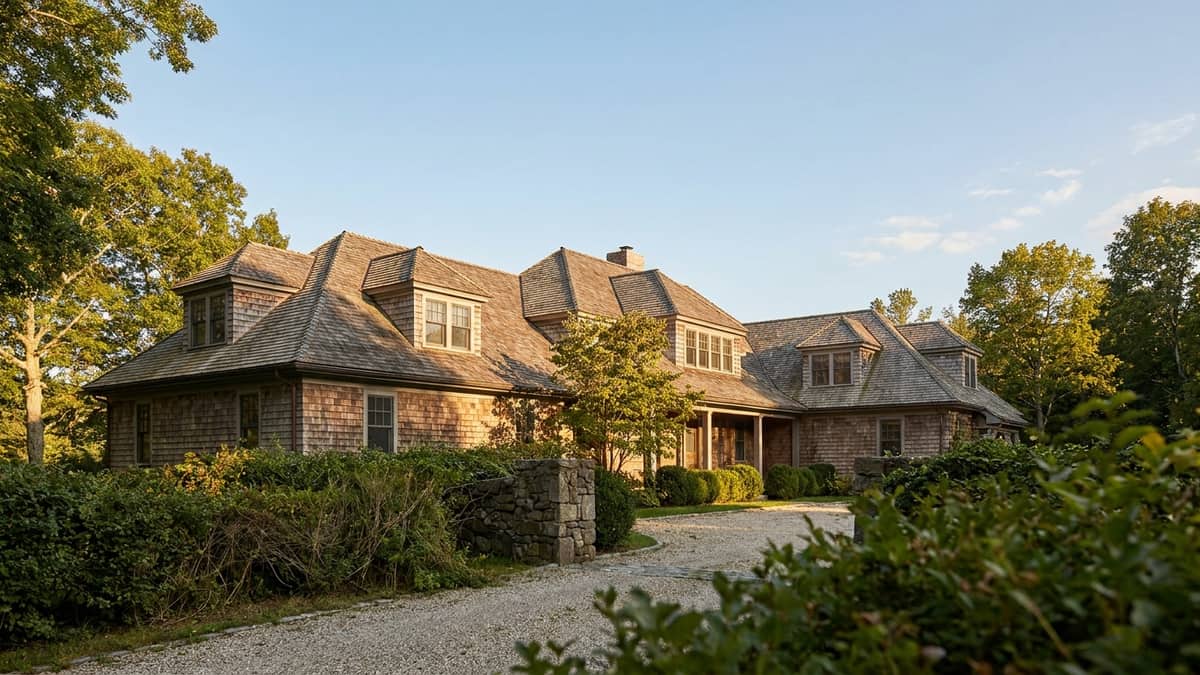
- Debris load. Valleys under mature trees collect needles and leaf mat. Wet debris sitting on shingle granules holds moisture against the shingle. Sitting on metal, it mostly washes or blows out. Older neighborhoods with heavy canopy, which describes a great deal of the housing stock we see on Glastonbury roofing projects, are the clearest case for metal.
Snow adds a fifth. Every town we serve carries a ground snow load of 30 or 35 psf, and valleys are where snow lingers longest because they are shaded by both planes and because sliding snow from one slope piles into them. Ice that forms in a valley and then releases drags across whatever surface is under it. Metal takes that better than a granulated shingle edge.
The honest case for closed cut
Open metal is not automatically the better roof, and it is worth saying so.
It costs more. Metal, forming, clips and the extra cutting all add labor and material. On an architectural shingle roof in the general Connecticut range of roughly $10,000 to $30,000, a few open valleys are a modest share of the total, but it is still money that could go to better underlayment or a ridge vent upgrade.
It is visible. A metal stripe down the roof is a design choice. On a dark shingle with a mismatched valley color, it reads as a repair. Painted metal in a matched color solves this, but it has to be selected deliberately.
It introduces fasteners and seams. Metal has to be lapped, hemmed at the edges and held without penetrating the channel. Done casually, face-nailed through the middle, an open valley is worse than a competent closed cut valley. The method does not fix the crew.
It is not required for warranty coverage. Every major manufacturer we install, including GAF, Owens Corning, CertainTeed and IKO, publishes closed cut valley instructions and warrants a roof built that way. You are not buying coverage with metal. You are buying service life in a specific spot.
On a straightforward gable roof with two short valleys over a garage, closed cut with a full membrane underneath is the right answer and the extra money is better spent elsewhere. Our roofing materials overview walks through where upgrade dollars generally do the most good.
Shoreline and metal choice
Salt air corrodes fasteners and thin metal faster than inland air does, and it punishes mixed metals. Aluminum valley metal next to copper flashing, or galvanized steel with copper nails, sets up galvanic corrosion at the contact point. On the central shoreline, where Guilford roofs and the towns around them carry a 125 mph design wind speed and constant salt exposure, the valley metal, the fasteners and any adjacent flashing should be the same family of material, and the gauge should not be the thinnest available.
Wind matters here too for a reason that has nothing to do with the valley itself. A shingle earns its wind rating only when it is fastened the way the manufacturer specifies to earn it, which for high-wind coverage usually means six nails per shingle in a defined nail zone. That requirement does not stop at the valley, and the six-inch no-nail setback from the valley center has to be honored at the same time. A crew that understands one rule and not the other produces a roof that passes a glance and fails a close look.
What to look for on the estimate
Valley work is one of the easiest places for a quote to go vague. Ask that it reads specifically:
- The valley method, named: open metal, closed cut or woven.
- The valley lining, by product type and width.
- For open valleys, the metal type, gauge and finish, and whether it is W-profile.
- Confirmation that fasteners stay at least six inches off the valley center.
- Whether all valleys get the same treatment or only certain ones.
If two quotes differ by a few thousand dollars, details like this are frequently where the difference lives. Our guide to reading a roofing quote covers the rest of the line items that separate a real scope from a one-page total. If you are not sure what your current valleys are made of or how they are holding up, that is a reasonable thing to settle with a roof inspection before you decide anything.
Deciding
Short valleys, simple roof, open sky overhead: closed cut over a full self-adhering membrane is sound, warrantable and cheaper. Long or steep valleys, mismatched pitches, heavy tree cover, or a shoreline house taking wind and salt: pay for the metal, and pay for it in a proper gauge with the fastening kept out of the channel.
When you are ready for a real number on your own roof, request an estimate. Someone comes out, measures the roof, looks at every valley on it, and gives you a written price with the valley method stated on it.